82nd Air Education & Training Command, Sheppard AFB, Wichita Falls, TX.
April -June 1971
What is an Air Passenger Specialist? I had no clue, but I was selected to train for it and now I was entering school at Sheppard Air Force Base, Wichita Falls, Texas for five weeks of training.
82nd Air Education & Training Command, Sheppard AFB, Wichita Falls, TX.
October 1974 -February 1974
I arrived at Sheppard Air Force Base sometime in October of 1974. Texas was now freezing, not hot like it was the first time. The winter wind in Texas will blow right through you. It was chilling to the bone. One great thing about my second round at Sheppard was that, as a prior service person, I didn't have to march to and from school everyday. I drove my car.
I was going to be at school this time for 3 months, so I brought my wife and lived off base in a one-room apartment. It was cool driving past the recruits as they marched to school each morning. It was a completely different experience this time at school because I had an advantage over everyone else; I had prior experience in the 'real military'.
School was again uneventful. I trained on Vietnam era FB-111 fighter jets (left photo), F-4 Phantom fighter jets (right photo), and some smaller T-38 trainer jets. We learned about all the ejection systems, carrier hooks, cockpit controls, landing gear, and everything else about the fighter jets of that time.
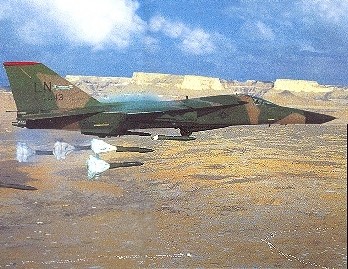
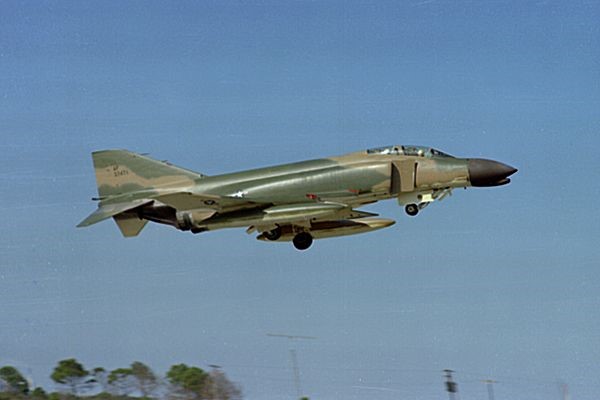
Little did I know it at the time, but all of this training was for not. On March 11, 1975, I received a letter from the school's commander, Colonel John E. Cadou, telling me that I graduated among the top ten percent out of 30,000 students. After completing my tech school, I received my orders to the 402nd Aircraft Maintenance Group, Robins Air Force Base, Warner Robins, Georgia.
Charleston Air Force Base, Charleston, S.C.
437th Military Airlift Wing - June 1971
The duty of an Air Passenger Specialist is to process military passengers for flights within the United States or anywhere outside of the U.S. In other words, we were military airline ticket agents. Our job was to check passengers in for flights and to check their credentials, such as, orders or passports if flying overseas. We had to ensure that their medical shot records were in order for overseas flights. We checked their baggage just like you do at a civilian airline. The air passenger terminal at a military base ran pretty much like a civilian air terminal except it only processed military passengers.
Because it was still the Vietnam era, a great deal of our passengers were young recruits coming from nearby Army boot camps at Ft. Benning and Ft. Jackson, South Carolina to be shipped over to Germany for additional training before going onward to Vietnam. Busloads of these young recruits would arrive and we would herd them into this large room and brief them on what they could and could not bring onboard the flight.
During our briefing we told them that we were going to grant them a 'one-time' amnesty to bring forward any guns knives or ammo that they may have on their person or in their hand-carried baggage. We had a metal box at the front of the room and they had to drop their weapons into it. You would be surprised at what we collected. We had a security policeman there to watch. If they didn't give up the weapon at that point and they were caught trying to board the aircraft with it, they would be arrested.
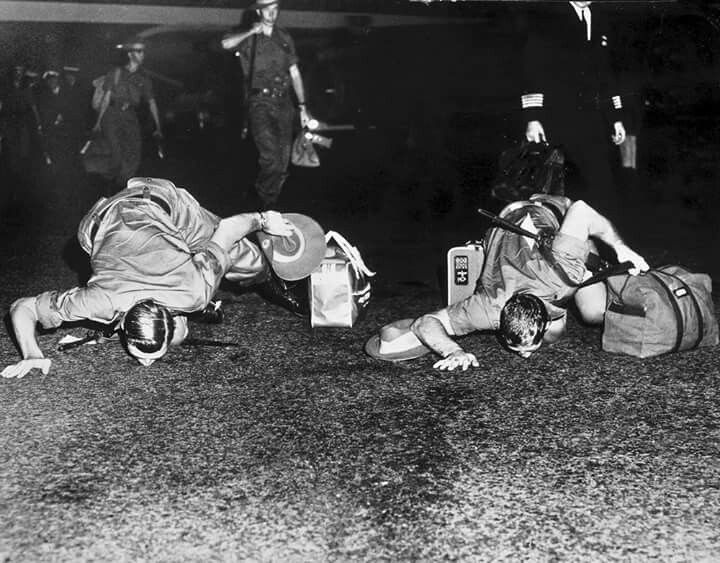
The sad part about this job was the fact that we were sending those young men over to Vietnam and that most of them would not come back. It was very touching at times when an aircraft returned from over there and the GI's would, after stepping off the aircraft, literally kneel and kiss the ground.
I spent nearly two years at Charleston Air Force Base, but got out of the Air Force early on February 8, 1973 because my father had injured his back and was having a difficult time running his business. Because I was the oldest, he was able to get a doctor to verify that he needed me to assist him in his business and that would get me out early. At the time, I thought it was a good idea, but later turned out not to be such a good idea. That is another story in itself.
After I had enough of the starving civilian life and had put up with broken promises from my dad, I wanted to get back into the Air Force. I had a steady income in the Air Force and could depend on knowing what was going to happen next. The civilian world was too uncertain at the time.
The recruiting office worked very hard at getting me back in. In fact, the recruiter moved my name up the list. There was actually a waiting list for people to get back into the service. You would think that the military would want prior service people over fresh enlistees because they were already trained and the government wouldn't have to spent so much money training them, but that wasn't the case, I was on a waiting list.
I finally got back in on October 18, 1974. I retained my time in service and my time in rank as an Airman First Class. They adjusted my active military duty start date to October 18, 1973, but I came back in with my original rank, which gave me some seniority at school.
I wasn't able to come back into the Air Passenger Specialist field because there were no openings. I did, however, get to come in as an Aircraft Mechanic, which was pretty cool.
I was off again to Sheppard Air Force Base, Wichita Falls, Texas, but this time, I was training to be a fighter aircraft mechanic.
19th Bomb Wing, Warner Robins AFB, Warner Robins, GA.
February 1974-1979
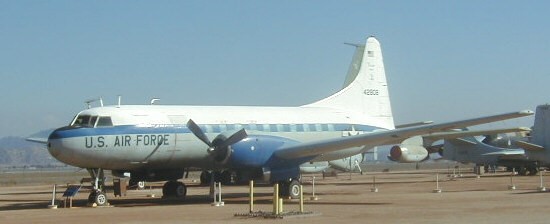
Like I said before, all of that training would become useless. Someone at headquarters had a real since of humor and sent me to the 402nd Aircraft Maintenance Group, which maintained an aging squadron of C-131's (See photo below) and T-29's, you know the type of cargo aircraft that you see in those old movies with crazy pilots delivering suspicious cargo into some South American country. Later, after they mothballed these aircraft, they became popular with drug runners.
I arrived to a maintenance squadron of aircraft that were soon to be obsolete and with a sinking feeling that I was going to be stuck there. It was not long that the maintenance chief met with me and asked, "What are you doing here?" I, of course, had already asked myself that very same question. He made some calls and arranged for me to go across the base to the 19th Organizational Maintenance Squadron. I didn't want to go over and retrain on big aircraft; after all, I had already spent all that time training on fighter aircraft.
I went directly to the Personnel Building where they handle assignments and asked them to reassign me to a fighter base, because, after all, the Air Force had already spent all that money on training me. They told me that it wasn't going to happen because the military was short of funds at that time and couldn't send me anywhere. I was now destined to go over to the heavy's and retrain.
The next day I drove over to the other side of the base on a road through a swamp and reported to the maintenance office for the 19th Air Refueling Maintenance Squadron which was located on the other side of the base. They were as confused as I was as to why I was sent over to them. At first, they didn't know what to do with me, but they finally assigned me to the KC-135 Phase Team. The Phase Team performed major inspections on the KC-135A refueling tanker.
The Phase Team's job was to wash the aircraft, tow it into a huge hangar, remove several inspection panels from the aircraft and perform an in-depth inspection of aircraft flight controls, landing gear, cockpit controls, hydraulic systems, engines, and overall physical and mechanical condition. I was assigned to the tail of the aircraft. An airman was assigned to help train me. The funny thing was that I out-ranked him because of my prior service and rank. I didn't mind because I needed someone to train me.
I received new books to study and had to essentially go through training all over again on a completely different aircraft type. After several months, I became efficient at my job. There were six phases of inspections that these KC-135's had to go through.
A different inspection was performed after each 200 flying hours of airframe time which is considered a Phase.
On some inspections, I had to lubricate flight control cables that were located in a tight crawl space in the very end of the tail section. These cables were for the rudder and the elevators. During the hot and humid Georgia summer months, it was like an oven inside.
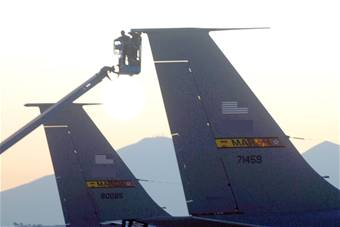
I also had the responsibility of pulling inspection panels and lubricating an area up on the top of the vertical stabilizer (see photo above). I had to operate a high reach that had a basket on the end of a long boom. It used a hydraulic boom that took me about 60 feet into the air. I had to take other people up there so that they could do other work, such as, sheet metal, hydraulic, and machinist. They didn't appreciate the ride up sometimes, but I had gotten used to it.
After I earned my way up to a 5-Level (this is where you are deemed proficient in your job and do not need supervision) I was given the opportunity to move into another inspection position.
I began training on the aircraft engine inspections. This was a very important job in the Phase Inspection hangar. I eventually became a proficient engine inspector. I used to upset the jet mechanics because during inspection; I would find hairline cracks in the engine stator blades. There was no allowable tolerance for cracks in that area, so the engine had to be taken apart and repaired in shop. This involved some heavy detailed work in their shop. The engine had to be removed from the aircraft and taken to their shop.
After the engine came back from repair it was hung back on the aircraft. Later, after the entire Phase Inspection was complete, we towed the aircraft out onto the flightline and performed maintenance engine runs. I was certified to run engines on this big heavy aircraft, which was pretty cool. To get certified, you had to go through a lot of training and be certified by an actual pilot (See video below. This is a maintenance run.)
After about two years in the KC-135 Phase Docks, I was sent 'on loan' over to the B-52 Phase Dock as an engine inspector.
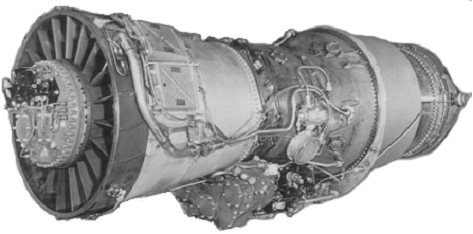
The B-52 Phase Docks were short on inspectors and since the B-52 (See photo at left) had the same J57-P-59W Pratt & Whitney engines, it was not a problem for me. I became engine run certified on the B-52, which was an entirely different experience. They have eight engines and the KC-135 only had four. There were twice as many oil pressure gauges, oil temperature gauges, fuel gauges, and throttles to deal with on the B-52 (See photo below left).
Photo of J57-P-59W Pratt & Whitney Engine, Right
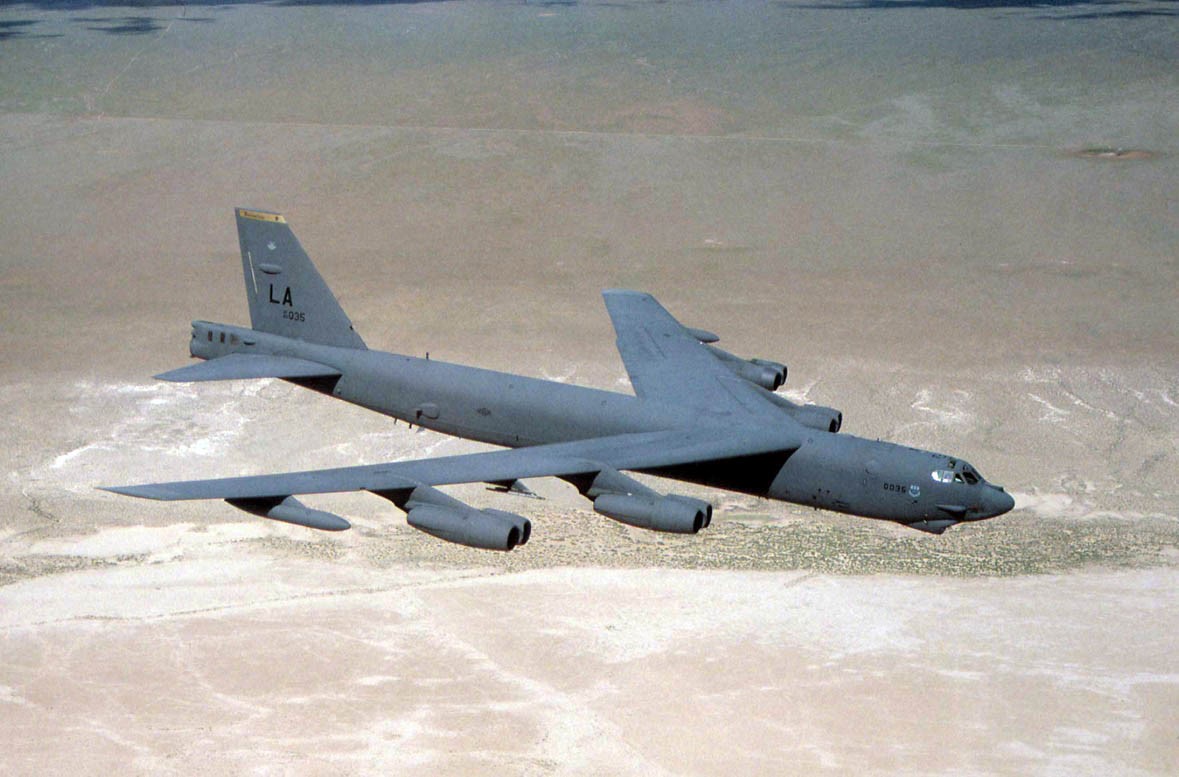
I spent five years at Robins Air Force Base. I received order to my next permanent duty assignment, Castle Air Force Base, Atwater, California.
93rd Organization Maintenance Squadron, Castle AFB, Atwater, CA.
1979-1981
My next permanent duty assignment was good ole 93rd Organization Maintenance Squadron at Castle Air Force Base, Atwater, California. Castle was a unique place. It is located in the San Joaquin Valley amidst grape vineyards and almond trees. The base has since closed under the Defense Base Closure and Realignment Act of 1990.
This is the base where all KC-135A and B-52 pilots were trained to fly the "heavy's". It had one of the largest flightlines that I had ever seen. As far as you could see, there were KC-135 tankers and B-52 Bombers.
Castle Air Force Base was where I saw my first and thank God, only live aircraft crash.
Prior to an early morning launch on September 19, 1979, my aircraft commander and I had just gone through testing the flight controls and I had just plugged my intercom cord into the aircraft and put my headsets on when I heard one of the crewmembers shout over the intercom, "My God!" Seconds later, I heard a loud explosion and turned in the direction it came from and saw black billowing smoke and fire over the top of the blast fence that protruded behind the aircraft across the flightline.
58-0127's crew was completing a local training flight at Castle AFB, consisting of touch-and-go maneuvers. Upon touchdown, the airplane went out of control and crashed in flames. Five crew members were killed while two others were injured.
I immediately rushed up the crew ladder to get a better look. The pilot and copilot were stretching attentively forward in their seats and the boomer was pinned up against their backs as we all stared out at what none of us could believe.
One of our own KC-135 tankers, 58-0127, was cartwheeling down the runway end-over-end with engines and landing gear flying off as fuel tanks erupted into balls of reddish-orange flames. Everything seemed as if it was in slow motion.
Because everyone was huddled so close together, we could feel the cringed of each other's body with each explosion or tumble of the aircraft. As the tumbling mass of metal continued to obliterate into pieces and spew mangled parts across the runway, you could hear the sound of the metal scraping into the concrete's surface. It reminded me of fingernails dragging across a chalkboard, but much louder and metallic sounding.
When the cockpit broke loose from the aircraft's frame, we all moaned at the same time and could only imagine the horror that the pilot and copilot were experiencing as they traveled defenselessly while strapped into their seats. When the tail section separated, we knew it was fatal for the entire crew onboard. We lost seven aircrew members that day.
Everyone turned ghostly pail. We couldn't believe what we were witnessing. As my whole crew exited the aircraft, crash trucks, ambulances, and emergency response personnel were already speeding down the taxiway.
We noticed that our boomer was in tears by the time we reached the bottom of the crew ladder. He turned to us immediately and said in a broken shaky voice, "I… was supposed…to be…on that flight this morning." He then proceeded to tell us that he had exchanged flights that morning because the instructor boomer who was now in that crash needed to get some additional flying time for a check ride.
Our maintenance expeditor swung by my aircraft at that time and picked me up on his way out to the crash site. There was dead silence inside the truck. Everyone was fixed on the swells of smoke and fire down the far end of the runway.
On our way out to the crash site we passed unrecognizable hunks of metal that were strewn across the fields and runway. As we rushed down the grass along side the runway, we saw the left landing gear that had broken off while tumbling down the runway. Red hydraulic fluid was still squirting from broken and twisted lines. It was a horrible metaphor to what we were about to witness. It was surprisingly in one large assembly; just as if someone had plucked it off the belly of the aircraft and sat it gently upright in the grass.
Skid marks along the runway was a familiar site, however, the black marks that were now on the runway were etched within the concrete and gave way to the image of dashed markings that would days from now tell the tragic story of what happened here today.
Upon arrival at the crash, I could see the pilot and copilot's charred bodies still strapped into their seats. Their fate was sealed when the nose broke away during impact. I turned my head and for a moment felt sick to my stomach. I can't and won't describe the rest of the scene. Everyone wants to see a crash, right? Trust me, you don't!
The fire department requested that we leave the area. I was more than willing to leave.
The positions of the crew at the time of the crash were as follows: The pilot and co-pilot were, of course, in their seats controlling the aircraft. The instructor pilot was in the jump seat between the pilot and co-pilot. The boomer was in the cargo compartment and the instructor boomer, our boomer's replacement, was seated in the cargo compartment. We lost five crewmen that morning. All flight training was suspended for next two weeks.
The NTSB (National Transportation and Safety Board) invested the crash and determined the cause. Apparently, the pilot over compensated for power on the wrong side of the aircraft during the takeoff portion of his touch and go. He had been instructed that he lost an outboard engine on approach and that he would have to correct it upon landing and taking off. He powered up the wrong engine on lift off and drove the wing tip into the surface of the runway causing the cart wheeling of the aircraft down the runway.
There were numerous occasions when the flight crew would request that a crew chief fly with them. It was difficult getting back into flying again after that incident.
One morning, about a week later, the expeditor drove up to my aircraft while I was preflighting my aircraft and told me that I would need to go and get my flight helmet because I was flying that day.
We were heading out to San Diego International Airport to do some egress training. This training was for the fire crew at San Diego as much as it was for my crew. I was going along to be on headset for communication during the flight.
The crew was not your typical training crew. It consisted of instructor pilots, which was good. No trainees. A CFIC (Central Flight Instructor Crew) crew who oversees the quality of training at Castle Air Force Base was evaluating the instructor pilots.
After we were airborne awhile, the CFIC crew started pulling circuit breakers and shutting down hydraulic systems. This caused the wing flaps to be uncontrollable. The pilot radioed back to me to start manually extending the flaps by using the emergency flap extension handle located in the floor of the cargo area. The aircraft was now loosing altitude rapidly, so I was holding on for dear life with one hand while grasping for the emergency extension handle and rotating the 102 turns it took to extend the flaps with the free hand.
The aircraft finally leveled off and the CFIC crew reset the circuit breakers to return control of the flaps. Later, after eating lunch, which was a bad idea, they decided on some more tricks. They shut down number four engine, so we had to do an emergency approach into San Diego with an engine out. What fun!
Our landing was a little rough and we taxied to the end of the runway where the crash crews came out in their big lime green fire engines to extract us from the aircraft. We were supposed to be overcome by smoke and incapable of exiting the aircraft on our own.
It must have been 95 or more degrees outside when this fireman came crashing through the over wing hatch wearing this huge aluminum fire suit and large spacesuit-like helmet. I looked through the helmet and all I could see was this poor man sweating up a storm inside. He and his fellow fireman had carried the crew and me out of the aircraft to safety. When we got on the ground, I asked him, "How in the hell could he stand it in there?" He just pulled off the huge helmet and with rivers of sweat pouring down his face and a deep breath, he said, "I can't!"
One of my worst experiences at Castle Air Force Base, other than the crash, was a time when the 93rd Bombardment Wing Commander decided to implement an Emergency War Exercise plan called "Super Valley Alpha" that was 'on the books', but never put into action. The commander wanted to find out if there were any kinks in the plan and boy was there!
The plan involved generating and launching every single tanker and bomber on Castle Air Force Base. It had never been done before. The term 'generating or generation' means to upload life support equipment, refuel, service liquid oxygen, pre-flight (type of inspection) the aircraft, receive the aircrew, call flight controls (along with the pilot you verify from the ground what movement the ailerons, elevators, and rudder are doing as the pilot moves his controls). The term 'launching' refers to calling engine start (along with the pilot to verify engine rotation), marshalling (hand signals to guide the pilot out of his parking spot) the aircraft).
To understand the scope of this plan, you have to understand a few things. There were thirty-five KC-135A tankers and thirty-four B-52 bombers on station at the time. When the plan kicked off, we had to bring each and every aircraft up to EWO (Emergency War Operations) capable (same as generation).
This meant that each aircraft had to meet EWO criteria. That wasn't easy due to the fact that there were still aircraft flying around on their daily training missions. We had to wait for those planes to land and 'turn them around' (means to park and generate) to EWO status.
If a plane landed in halfway decent condition, it didn't take very long to generate, however, if a plane landed with major problems, such as, engine or hydraulic, you would spend a much longer time getting it ready. These types of problems entailed removing engine cowling or panels to gain access for hydraulics or engine work. If hydraulic components were changed, you had to run the engines in order to bleed out the excess air in the lines.
Unfortunately, my aircraft, 57-1486 landed with some of those very same problems. After all the maintenance that was done on my aircraft, it took over twelve hours to generate my plane to EWO status.
I was sent home by my Aircraft Commander after my aircraft was 'Cocked On' (A term used to indicate that the aircraft was EWO ready, kind of like when a gun is cocked and ready to fire).
About the time I had undressed and slid my feet under the covers, I get a call. This new untested plan was now calling for all crew chiefs to report to the Base firing range for small arms qualification.
Being a good trooper, I throw back on my uniform and drive back to the base and over to the firing range. I fired the 9mm pistol and qualified as expert. This was great considering the fact that I was dead tired from being awake for so long.
I left the range and drove back home to once again crawl under the covers. Just as I had closed my tired little eyes, the phone rings again. "Damn, who can it be this time?" I thought. This time some Major was on the other end telling me that I had to report to my aircraft. I explained to him that my AC (Aircraft Commander) released me and that I worked for him now and was considered 'in crew rest'. Crew rest is a term used to describe the guaranteed time that aircrew member's are given to rest after performing a certain amount of duty time. Because I was considered part of the crew, I was given 'crew rest'.
The Major strongly suggested that I report back to my aircraft because the exercise called for it. As a military law abiding NCO, I put back on my uniform, and reported back to the flightline.
I parked my car and walked out to the flightline where I flagged down the Expeditor. As I stepped up into the truck, he asked me, "What the hell are you doing back here?" I explained to him about the phone call from some Major who strongly suggested that I come back. The expeditor said that I should go over to Base Operations where my AC was hanging out and check with him.
The Expeditor dropped me off in front of Base Ops and I walked in and found my AC talking with some other crewmembers. When he saw me, he asked, "Gary, what are you doing here? I released you hours ago!" I explained to him about the phone call that I got from the Major.
It so happened that the very same Major was now standing across the room from us. My AC, who was a Lieutenant Colonel, walked over to the Major and told him that he was releasing me into crew rest and that if he or anyone else had a problem with it, to take it up with him. I went home again. I had been awake at that point a full 36 hours. I slept like a baby.
When the alert horn sounded off, it signaled the start of the EWO launch part of the exercise. The starter cartridges ignited and engines began to roar as the pilots pushed the throttles to full power. This allowed them to use the thrust from the started engine to move air pressure over to the remaining three engines for start.
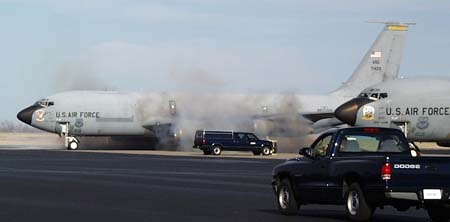
The gray smoke with the odor of ammonia consumed the air of the flightline (This was caused from the starter cartridges that were used to start the outboard number four engine on the aircraft. It was a metal bell-shaped device that twisted and locked into a chamber on the engine. When the pilot threw a switch in the cockpit, it ignited explosives inside the cartridge that created pressure within the bell. This pressure was forced into the turbine section of the engine and caused it to rotate at a fast speed. Once the engine reached a certain speed, the pilot advanced the engine throttle to the START position which ignited the fuel that was spraying into the burner cans. He could then power up the started engine and use the high pressure to start the other three engines).
The sound was almost deafening as multiple aircraft jet engines accelerated to power. The sound subsided a little once all the aircraft had all their engines running, but the noise was still louder than I have ever heard. Fortunately, we wore earplugs as well as headsets during the engine starts.
The thick California Tule fog (some of the most dangerous fog in the country) was still covering the flightline, which delayed the aircraft from taxing. Crew chiefs gave their report to the AC, "chocks removed, aircraft cleared for taxi, have a safe flight sir"), disconnected their intercom cords and positioned themselves in front and to the right of the aircraft; stood at Attention and saluted the American Flag on the tail of the aircraft (a tradition among crew chiefs and a patriotic gesture) with a return salute from the AC which signaled that everything was cleared for taxi.
The fog finally burned off with the morning's hot sun and moment's later aircraft began taxing everywhere. Crew chiefs began marshalling their aircraft out of their parking spots and into a massive lineup on the center taxiway.
Aircraft were lined up in position from the beginning of the runway all the way down the taxiway. After the tower gave takeoff clearance, aircraft after aircraft began rolling down the runway at full power with water injection. (Example of Minimum Interval Takeoff "MITO" with B-52's and KC-135A's)
With the amount of aircraft taxing, I thought that there would be accidents, but surprisingly, every aircraft on station taxied and launched that morning without incident. It was a once-in-a-life-time event and will probably never be accomplished again. It was spectacular seeing that many aircraft take off one after another.
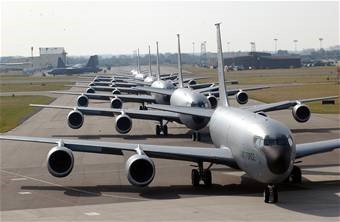
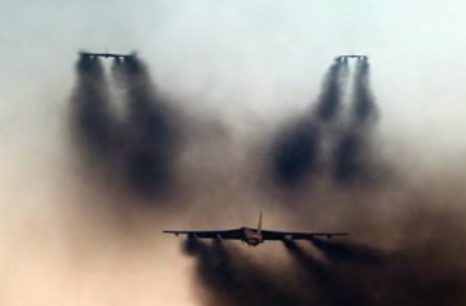
There were times when as many as three aircraft were on the runway at one time. If one aircraft had aborted, there would've been hell to pay because none of the following aircraft would have been able to stop their takeoff roll. As the aircraft rotated off the runway black engine exhaust smoke streaked the skies like crop rows for miles into the distance. Aircraft stacked in patterns to avoid each other. It was awesome! (See above photo on right)
As a crew chief of my own aircraft, I was responsible for the entire aircraft. My name was stenciled on the left side of the nose of the aircraft along with my assistant's indicating who was the master mechanic of that flying machine.
My assistant's name was Rick Schafer. He was six feet eight inches tall and had a voice that reminded me of Paul Bunyan. When he spoke, everyone listened. His demeanor intimidated most people, but what they didn't know was that Rick was a real gentle guy. We not only kept the maintenance up on the aircraft, we also kept up the physical appearance of the interior by painting, polishing, and replacing seat cushions with bright red ones when they became dirty and torn. After all, we didn't want our pilot's flying around on a dirty airplane! Being a crew chief was a proud job. My aircraft won "Aircraft of the Month" three months running.
On September 26, 1979, I was performing a preflight on my plane, I was told that I had to fly with it that day because we were transporting the Secretary of the Air Force, Hans M. Mark, back home to Washington D.C. His brother had just died. It was a solemn trip, but I did get to talk with him a bit and I invited him down into the refueling pod area to watch an actual B-52 get refueled.
I think it helped him take his brothers death off his mind for a short. It was a long and boring flight. We flew 5 hours from the west coast to Andrews Air Force, Maryland, refueled, and turned back around and flew back 4 hours (we had a tailwind) to Castle Air Force Base. I got home at around 11 p.m. that night. Such was the sacrifice of a crew chief. I was awarded the Outstanding Performer Award.
While at Castle, I pulled alert on my aircraft. Alert is where you spend three days on and three days off within a maximum-security facility. No, it wasn't prison. It was a special facility with parking ramp that kept four KC-135A refueling tankers and four B-52 bombers with real nukes uploaded on alert.
A red painted line circled each aircraft. If you crossed that red line without the proper notification, you could get shot, literally. Each aircraft was "cocked on" alert. This meant that they were ready at a moments notice to respond to a "real world" situation. Entrance into the aircraft area required a minimum of two people. It was called, "the two man policy".
The alert facility required extreme security procedures to enter. You entered into an enclosed 7 foot fenced area with razor wire along the top and the gate locks behind you. It is where you handed your military I.D. card along with a special alert I.D. badge (required a Secret clearance) to a security policeman behind a window in a guard building. He would match up the I.D.'s and ask you for a pass code word. The pass code changed daily. If you didn't know it or gave the wrong one, you were apprehended and someone would have to come and vouch you in.
One of the more publicized U.S. false alarms took place on June 6, 1980. Failure of a computer chip within the NORAD Control System caused false missile warning data to be transmitted to Strategic Air Command, the National Command Center, and the National Alternate Command Center.
How did this event affect me? I happened to be on alert at the time and we'd just finished dinner and settled down for the night to watch a movie. We had our own theater at the alert facility and received movies on reels that were playing at the downtown theater. I'll never forget the movie that we were watching; it was 'The Electric Horseman', with Robert Redford.
During the movie, a muffled inaudible voice comes over the theater's intercom. The orderly room admin, who was sitting next to the speakers, stood up and shouted, "Didn't you guys hear that?" We all replied simultaneously with, "No!" He shouted out, "It said, report to your aircraft, no engine start!"
We all jumped out of seats and ran toward the nearest exit. I still had my flight suit on, but had earlier kicked off my boots to watch the movie. With boots in hand, I ran out and jumped into the fast ride vehicle (which was a double-cab pickup truck used to transport crew members out to the aircraft during an alert exercise) where my pilot had jumped into the driver's seat and taken control of the wheel. Just like a pilot. We barreled out onto the taxiway as I was rolling around in the back of the pickup trying to put on my boots. I suddenly feel this hot blast of air rush across the truck. I looked up and saw the tail end exhaust of an F-104 fighter jet, which felt like a giant blow dryer, rolling at a fast pace toward the runway. I thought it was strange that it was actually taxing. Most of the time, the fighters, as well as our jets, only started engines and never taxied.
As we arrived, the pilot parked the truck out at the wingtip; the first F-104 took off. At that moment I knew something was wrong. There could only be one reason that the fighters would take off and it concerned me.
When the crew got out of the fast ride, they took notice of the fighters taking off one-by-one. The crew rushed up the crew ladder to prepare for engine start. I grabbed the headsets that were stored up in the lower nose compartment and put them on quickly. I called over the intercom, "Cleared for engine start!" which was the same old hum drum procedure we went through when an alert horn kicked off.
All of a sudden, I heard the pilot say, "Are you sure? Check it again!" I then heard the navigator say, "I did. I checked it twice!" I was getting more concerned at this point, first the fighters and now this. I climbed up the crew ladder and went into the cockpit where the navigator had the launch codes spread out onto his table. He was frantically matching the opened secret codes up with his launch codebook. I asked him, "What's up?" He said in a solemn tone, "It says that we are launching when we get the OK."
Of course we didn't know at the time what was happening in the real world. All I could think of was, "Is this real?" I climbed back down the ladder and walked over to one of the other crew chiefs who were as dumbfounded as I was about the situation.
We had practiced this stuff, but never thought of what it would be like if it really happened. Shortly, a security policeman arrived at the aircraft and boarded with his bags and M-16. That sealed the deal. At no time had I ever been on alert and had a security cop come onboard. It seemed like hours, but was only about forty-five minutes before we got the codes to stand down. It was days before we found out what had happened at NORAD. I will remember that feeling the rest of my life.
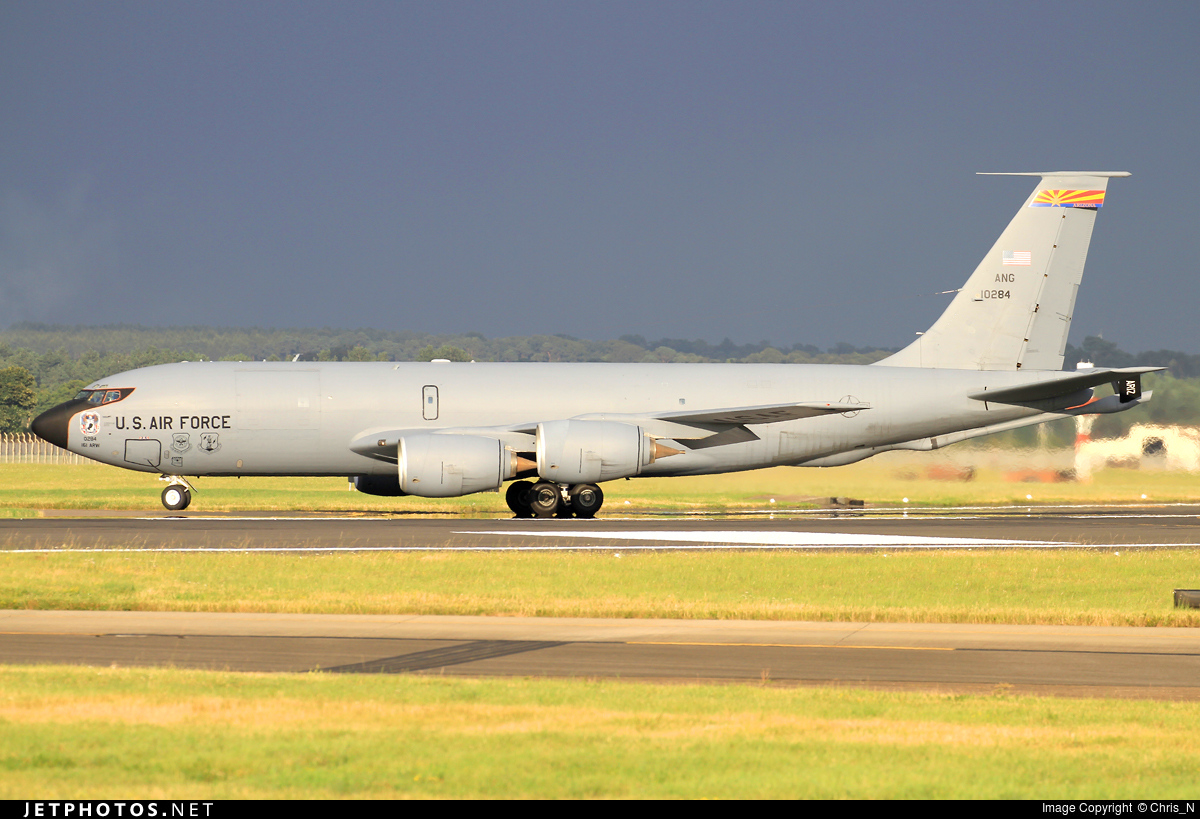
I was the crew chief for KC-135, Tail Number 61-0284 (See photo on above). Now retired, like me!
My first extended TDY (Temporary Duty) was to RAF Mildenhall (Royal Air Force), England December 1979 to January 1980. On our flight over, we stopped off at Pease Air Force Base, New Hampshire. We picked up five Navy F-14 Tomcats that we were to provide air-refueling support to Europe.
It was part of the European Tanker Task Force. On our flight over to Europe, one of the F-14's (See photo below) snapped a refueling drogue off of another tanker in our group.
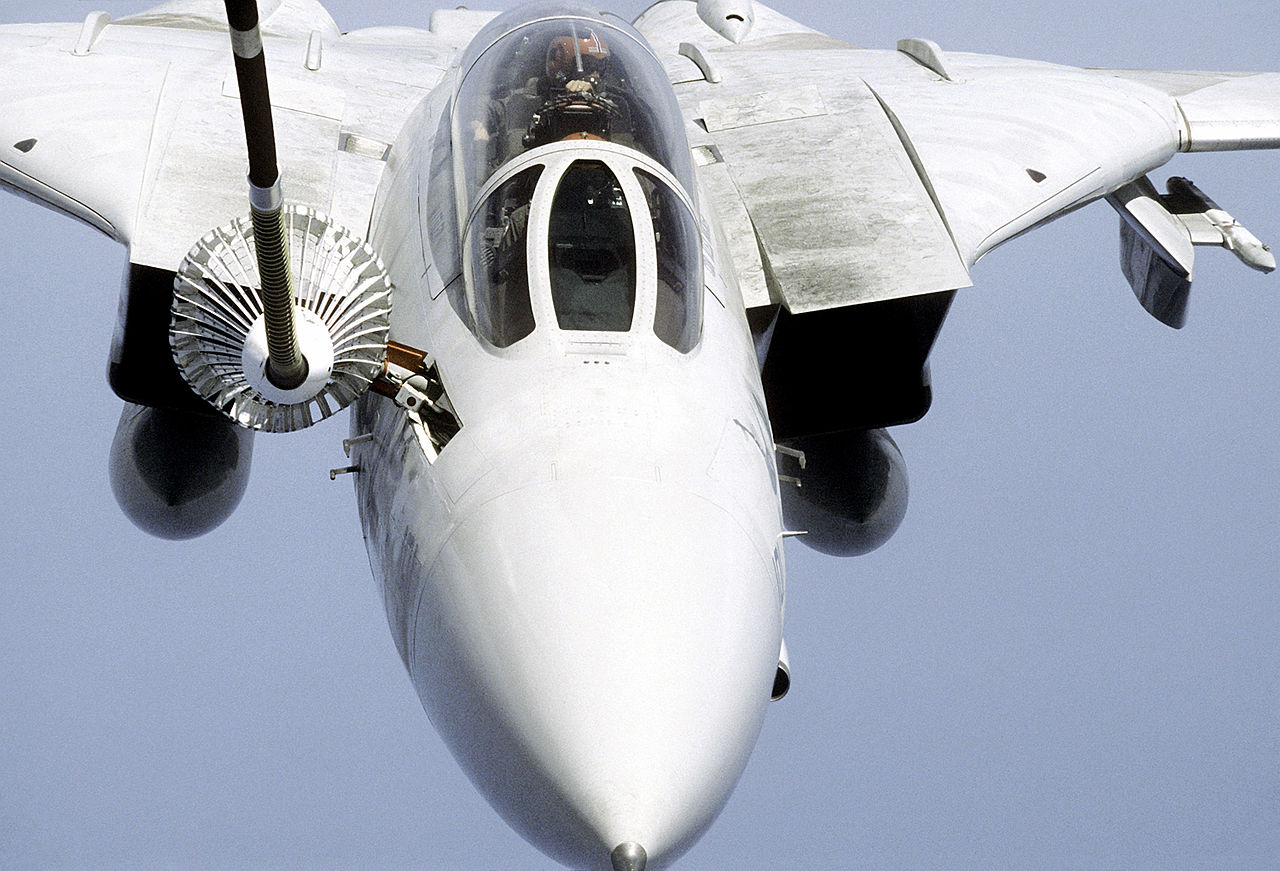
My plane had to divert into Rota Naval Air Station, Spain to support the crippled F-14. The 8,000-foot runway at Rota NAS was, at that time, an alternate landing site for the space shuttle during inclement weather. When we touched down, the runway seemed to go on forever. We used very little of it for our landing and it took us a long time to taxi to the parking ramp.
After we parked and offloaded the crew, we locked up the aircraft and walked over to their billeting quarters, which was right off the flightline. As we were walking away, a skid steer drives up and sits down a small portable guard shack next to my aircraft. I thought, cool, we have Marine's watching over my plane.
At billeting, we approached the navy guy behind the counter and asked for a "room", which we were accustomed to in the Air Force. He just smiled and handed us each a stack of linen, which consisted of a pillow, a sheet, and a blanket.
He said, "Second floor, lights out at 21:00." We looked at each other kind of confused because we had never heard of a "lights out" request from any billeting office. We climbed the stairs to the second floor and to our surprise; it was an open-bay barracks with people stacked in military styled bunk beds. It reminded me of Basic Training all over again.
No individual rooms? I thought. The people on the floor were loud and we realized right then that we weren't going to get any sleep that night. We immediately decided to go back out to my aircraft and sleep onboard. We dropped off our linen and told the seaman behind the counter, "No thanks!", and headed back to the plane.
As we approached the aircraft, this young Marine corporal dressed in fatigues and armed with an M-16 stepped out and blast, "Who goes there?" I replied, "Calm down soldier, it's my plane and we are tired and decided to come out and sleep onboard because the accommodations at your hotel aren't quite what we expected." The Marine, calming down a little, asked, "How do I know that this is your plane?" I told him to turn around and read the name on the nose of the aircraft, where it read, "Crew chief: SSgt Gary Moland". I handed him my military I.D. card and after realizing that it was my plane he begged, "Please don't tell anyone that you are out here because my supervisor will send me out to another site and I won't get this warm guard shack". I told him not to worry because all we wanted was to get some sleep. We unchained the hatch that we had secured earlier and climbed aboard for some much-needed sleep.
The next morning we left Rota NAS after very little sleep and continued onward to the UK.
After landing at "Moldy Hole", which was a nickname for RAF Mildenhall, we helped the crew get their flight gear off the plane and onto the bus. I was one of the only two crew chiefs at Castle that were actually on flight status, so I had to go with the crew to maintain what is called, "Crew Integrity". I checked into the base hotel and headed over to the NCO Club for a nightcap, which was conveniently located behind the hotel. (I and one other crew chief were awarded the USAF Chief Enlisted Aircrew Wings: See photo below)
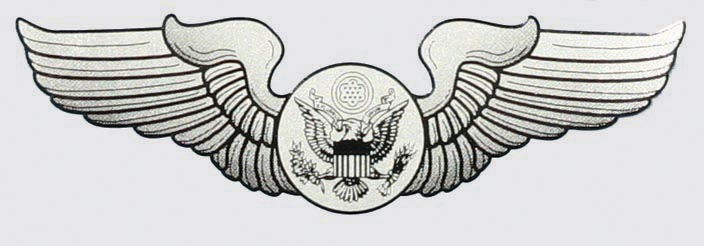
After a few beers, I was dead-to-the-world, and walked back to the hotel and crashed for the night. I wasn't aware of it at the time, but part of our mission at RAF Mildenhall was to directly support the rescue attempt of the hostages in Iran. The Iran hostage crisis was a diplomatic crisis between Iran and the United States where 52 U.S. diplomats were held hostage for 444 days from November 4, 1979 to January 20, 1981, after a group of students took over the American embassy in support of Iran's revolution.
I spent six weeks between RAF Mildenhall and RAF Fairford. I thought our original mission was to bring equipment and supplies to reactivate RAF Fairford as a refueling squadron.
Like I said, I didn't know at the time that I was there to support the rescue attempt; however, I knew that something special was going on. I came to realize it because one night while working on the flightline at RAF Mildenhall, the maintenance expeditor came up to me and handed me a list of tail numbers. He said, "I need you to put a team together and change the brakes and tires on all of these."
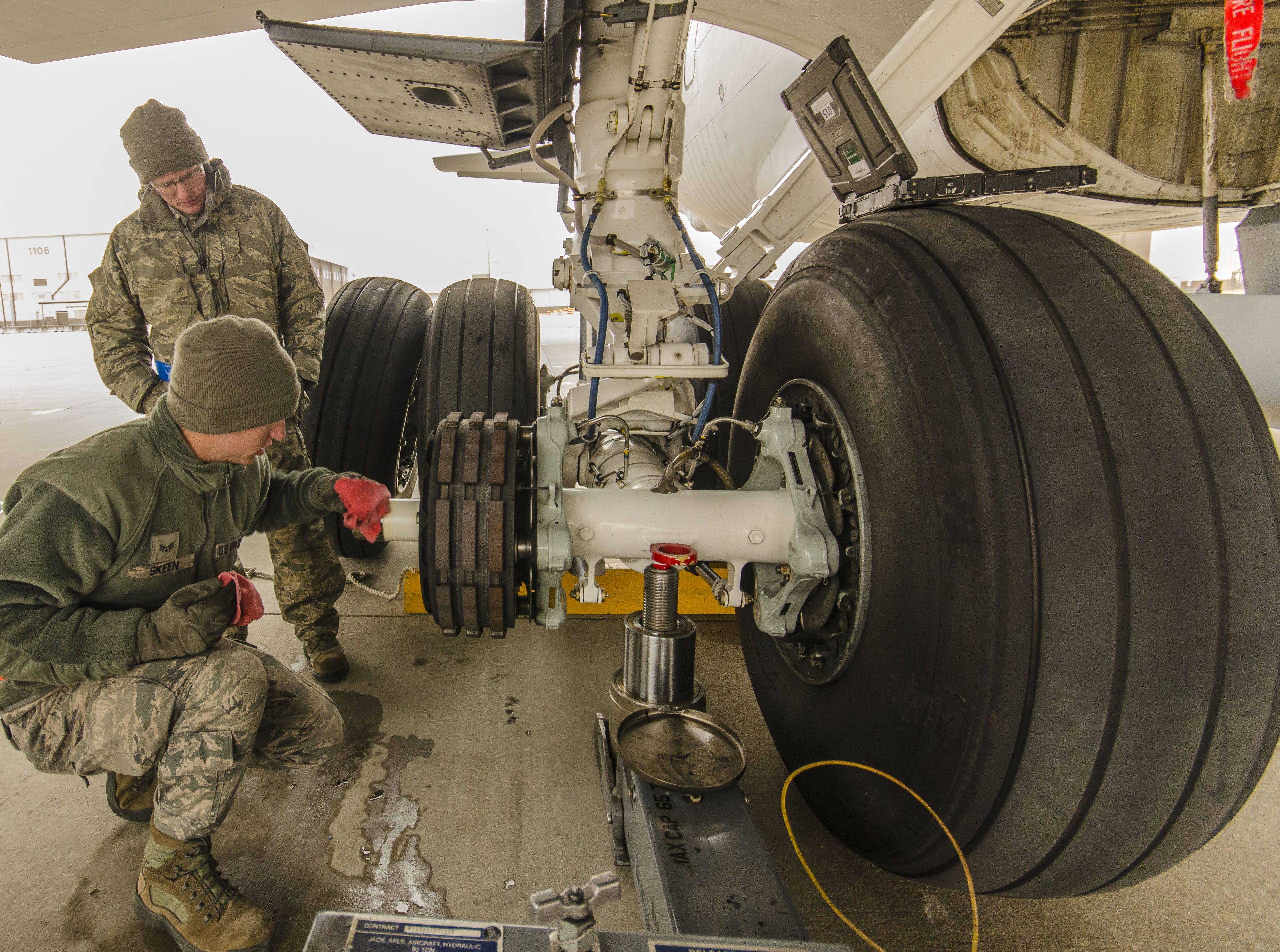
Dutifully, I put together a brake and tire changing team and collected all the necessary jacks and equipment that I needed and proceeded out to these aircraft and do the job. Before changing the brakes and tires, I checked the brakes and tires for wear and found that all of them were within tolerance. I called for the expeditor and asked him, "Why are we changing these brakes and tires when they are all perfectly within limits?" He replied, "Because I said so!" That was good enough for me, so without hesitation I took my team and started changing brakes and tires. I was later told that the location these aircraft were going, they wouldn't have the opportunity to get new brakes or tires.
We later flew into RAF Fairford. This was an inactive military base that had been used in the late 60's to test the Concorde SST. The runway was exceptionally long and was used for flight-testing these supersonic passenger jets.
I spent a shivering cold Christmas at 'Fairford-on-the-Farm'. That is what we called RAF Fairford at the time. It was my first Christmas away from my family. I did, however, get to spend Christmas day with a nice English family who had invited military personnel to come eat dinner and spend the day with them, which was a local program.
I don't remember how I got to the family's cottage, but I do remember that it was way out in the country in what was called, "The Cotswold's", which basically means rolling hills. I also remember that the cottage was built of stone and had some goats wondering about chewing up the yard. In countryside of England, walls of stone line the entire property and mark the landowner's boundary. Some of these walls have been there for centuries. The rolling hills were beautifully green and the countryside was spotted with herds of sheep. The air was crisp, but not too cold. A light low-lying fog rested in the valleys.
In England, they have this odd tradition for Christmas. The children cannot open their gifts until the Queen comes on TV and blesses the occasion.
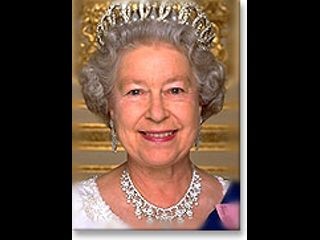
I remember the excited looks on the faces of the farmer's two children when the Queen appeared at noon on the national BBC channel.
She gave this long speech while the children eagerly watched in anticipation. After the Queen had completed her speech and in that pompous English accent, she regally announces, "Children, you may now open your gifts". "What?" I thought, "There was no fucking way that my kids would have ever waited for some Queen to, via TV, tell them when they could open their gifts!"
It was a nice experience. I got my first and last taste of Figgy Pudding, which is an old English Christmas dessert tradition. It was this burnt cake with figs and apples baked into it with real cream custard poured over the top. The farmer's wife had just milked a goat that morning for the special cream custard. Yummy! The farmer then poured rum over the top and lit it on fire. I could hardly eat it, but for posterity sake, I ate as much as I could. It was nice getting away from the base for a day.
When New Year's came, a group of us loaded up in the back of a military pickup and traveled across country to RAF Upper Hayford, where a huge New Year's party was going on at the NCO club. The club was serving all the free beer that you could drink and boy let me tell you, we took advantage of it and got wasted. We stacked empty cans of beer on top of the table to form this huge wall until they came crashing down. We were told to leave the club. On our way out, we were so wasted that we tried to cross an open ditch and because it was so dark, we all tumbled into it on top of one another. I rode back in the back of the pickup again, but this time, it was in the freezing boggy night. I didn't remember much after that.
One cold December evening it rained about three inches on the flightline. That night, the temperature dropped below freezing and it snowed about four inches. The following morning the wheel chocks (large wooden blocks that were placed in front of the aircraft's tires to prevent movement) and aircraft tail stand (an extending support that helped support the tail during refuels) were frozen solid into the ice. Before we could launch the aircraft, we had to pound the chocks with another chock to break them free. The base of the tail stand, which was a circular steel plate, had to be whacked with a sledgehammer to break it free.
There was a small guard shack as you entered the base and on top of it for Christmas, the Security Police had mounted a small tree. One late night sometime between Christmas and New Years, about four of us crew chiefs took it upon ourselves to steal it. It was real cold out and the security guy stayed snug in the shack. We didn't have a real plan, but we decided to distract him with one of us while one boosted me up. The tree was not very well tied down, so it was pretty easy to rip it off the roof. The security guy didn't know what happened. It was easy to distract him anyway, because car loads of young English girls were coming in to the base to visit the NCO (Non Commissioned Officer's) Club.
RAF Fairford was located outside of a little charming English village that it was named after, which was within walking distance of the base, so one Saturday we ventured into the village. The little villages around England always made me feel like I had been transported back in time. All the buildings and countryside looked as if they were frozen in medieval times. (Below right - St. Mary's Church, Fairford, UK)
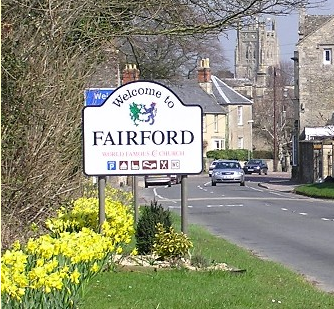
The village of Fairford (See photo at far left) was no exception. It had stone cottage-like shops with their bellowing chimneys lining the narrow streets. The local people were dressed in simple clothing that could have been mistaken for earlier wears. We had to squeeze through this archway that led into the village. It had no sidewalk and when the lorry's (name given to English trucks) past us, there was little room to breath.
We flew missions back and forth from RAF Fairford to RAF Mildenhall. On our return trips to RAF Fairford, we had to take off out of RAF Mildenhall in the early evening so that we could land at RAF Fairford before 7:00 p.m. The Fairford locals had an agreement with the Air Force. Runway lights were turned off at 7:00 p.m. because they didn't want the heavy jets landing after that time because of the noise.
One late afternoon, my plane landed at RAF Mildenhall with number four engine problems. The engine had to be changed before returning to RAF Fairford. We couldn't get an engine change crew out soon enough, so my assistant, Rick and I started disconnecting all the engine electrical connections, hydraulic and fuel lines to get a jump on the engine removal before the engine change crew arrived.
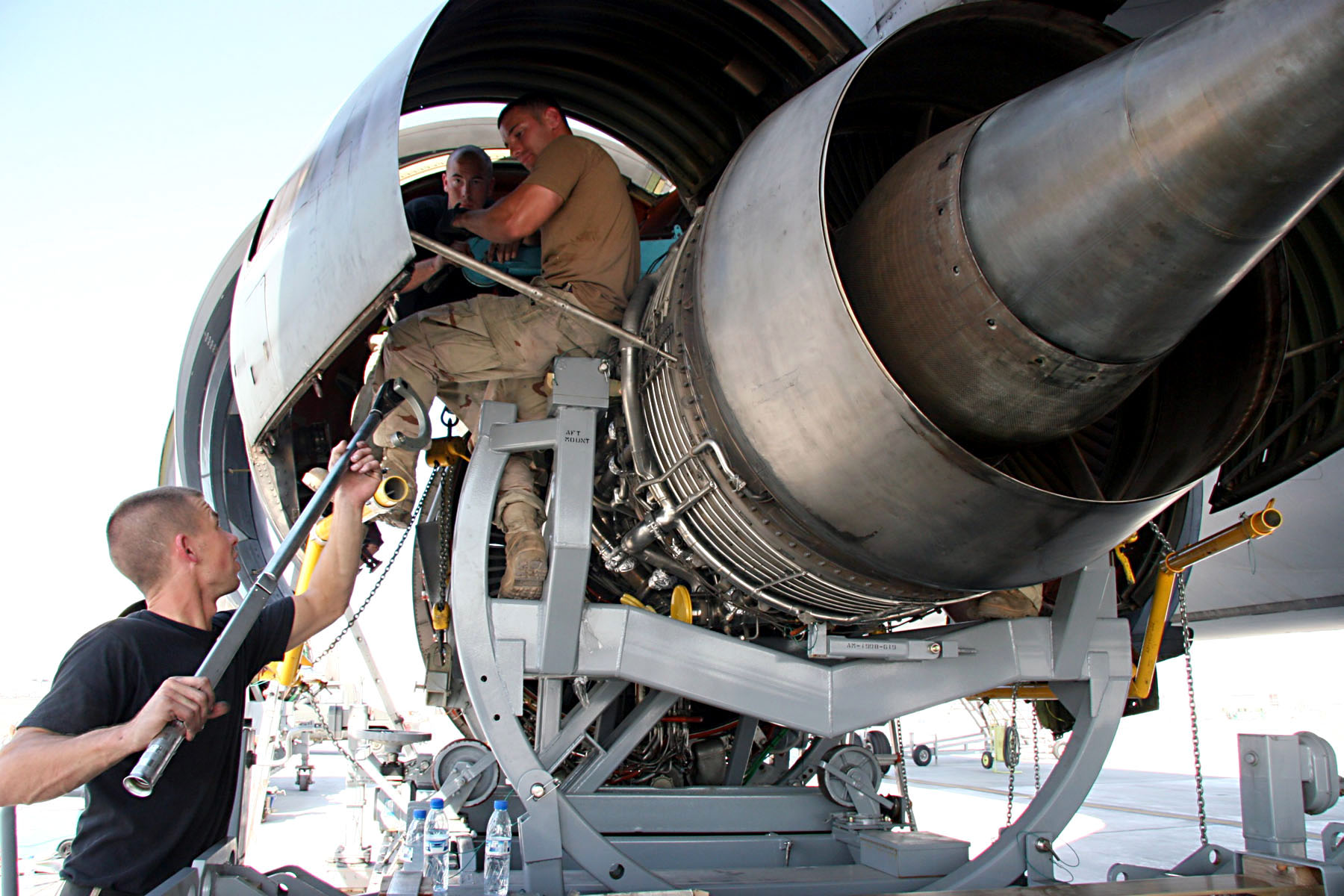
The engine was ready to drop when the change crew arrived and were able to get the new engine hung and connected in about 45 minutes. The crew did a quick engine run to check the engine's fuel, oil, and hydraulic lines for leaks.
We took off from RAF Mildenhall and landed at RAF Fairford just minutes before 7:00 p.m. The runway lights were turned off as we were taxing.
Our accommodations at RAF Fairford were these old World War II barracks that looked as if they needed to be torn down years ago. The heat ducts throughout the building were lined with Asbestos. I reported it to our First Sergeant, but because we weren't going to be there long, nothing was done to move us out. Our rooms were cold and damp, but of course, most buildings in England felt that way.
One night Rick, who I mentioned earlier as my assistant on this trip, got pretty wasted on a bottle of Mad Dog 20/20 (Morgan David, a very strong cheap 18 proof wine). He started bellowing out, "Where the hell is my bottle? Where the hell is MY BOTTLE?"
Needless to say, everyone moved away from him. I heard him shouting from down the hall and came down to his room where he was picking up the metal-framed bed and tossing it aside like it was a toy. He misplaced his bottle. He was looking under the bed, his way.
I came into the room as everyone else was backing away. I stood directly in front of his face, slapped him and demanded, "What's all the damn yelling about Rick?" From his towering nearly seven-foot frame, he look's down at me and replied in his deep bass voice, "I'M HUNGRY!" Everyone backed up further at that time. Here was this big giant, drunk, and he now he was hungry. Not a good combination, they thought.
Fortunately, the chow hall across the street was serving up midnight chow. I turned to Rick and said, "Get your damn flight suit on Rick (because you had to be in uniform) and I'll take you to chow." Somehow he managed to slip on his flight suit. I escorted him across the street to the chow hall and as we entered, I noticed that there was a table of Security Police eating breakfast, and then I look down at Rick's feet. He is wearing bright red socks with his flight suit and to top it off, he's wearing slippers instead of his boots (completely out of uniform). I thought to myself, "Oh shit, we are in trouble!"
I tried not to make eye contact with any of them as we pick up our trays. Rick just couldn't help himself when he bellows out loud enough for the whole dining hall to hear, "I WANT SOME EGGS!" I thought for sure that one of the cops was going to come over and give him a citation or drag him off to jail for being publicly drunk and out of uniform.
Apparently these cops were off duty and eating breakfast was more of a priority and didn't give a rat's ass about handling such a big guy at that moment, especially a big drunk giant.
Rick got his chow that night and went peacefully back to the barracks and flopped down on his overturned bed and slept like a baby.
One night in the barracks, it seemed like everyone was wasted. We had bought these huge magnum bottles of Spätlese sparkling wine and chugging them. Sometime during the night, someone got the asinine idea to take the fire extinguishers and discharge them under the covers of people who were trying to sleep. The next morning, the First Sergeant came in and verbally reprimanded everyone since he couldn't get anyone to confess to the mayhem.
Crazy, crazy pilot! - RAF Mildenhall, England
Crazy, crazy pilot! - RAF Mildenhall, EnglandThe KC-135A tanker engines use water injection into the burner section to augment thrust. All four engines indicated that they were taking water. You could tell because the exhaust became blacker.
The aircraft began its takeoff roll when about a third of the way down the runway the two inboard engines lost water injection. The pilot pulled back on the throttles and aborted the takeoff with plenty of runway left to safely abort. He began taxing back down to his original starting position when the other crew chief and I overheard on the radio that he was going to make another takeoff attempt without the water injection.
The aircraft was over the max takeoff weight for that runway distance without the assistance of water injection. The tower was warning the pilot as the he continued taxing to the end of the runway. The pilot started powering up the engines as he made his turn onto the runway. Normally, a pilot will move onto the end of the runway and set his brakes, power up, and then release the brakes while throttling forward.
Balls-to-the-wall with 10,000 lbs of thrust from each engine, the pilot proceeded down the runway. The other crew chief looked at me in amazement and said, "No fucking way!" I just stood there with my jaw hanging down in amazement. The aircraft continued to roll faster and faster down the runway. We kept expecting the pilot to abort, but onward he went. We were looking for the worst.
In an unrealistic effort to assist the aircraft in lifting off, we started to move our hands up, up, up in a lifting motion as the aircraft raced down the runway. You didn't want to look, but you just had to. It appeared as if he wasn't going to make it because he was quickly running out of pavement (Note: That is NOT runway in the photo below!).
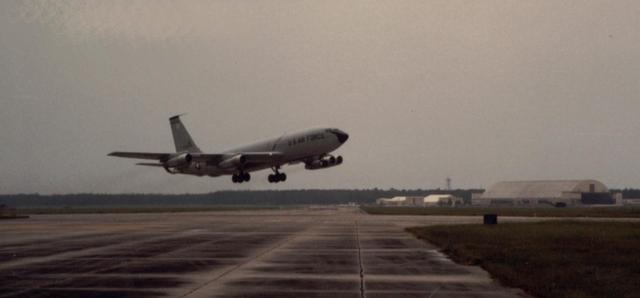
Crash trucks and emergency response vehicles were already responding in anticipation just as the heavy aircraft finally began to lift slightly as it reached the very end of the runway. The aircraft used up every inch of the runway's overrun and barely skipped over the treetops. If the runway had been any shorter, we would have had a different mission. The pilot was reprimanded for his actions.
I had my own scary experience while taking off from RAF Mildenhall one evening. The late winter afternoon was clouding over as my assistant and I finished the preflight on our aircraft. It had started to rain when the aircrew showed up to do their preflight. My assistant and I helped the crew offload their bags from the bus because it was really starting to pour. Later, during calling flight controls to the crew, I had to stand under the tail just to stay a little dryer. It didn't help much because the rainwater was trailing down the edge of the elevators and I had to dance around to try and miss the waterfalls.
After engine start, we climbed aboard and pulled up the crew ladder. Both of us were cold and soaked. It was not only pouring down rain at this time, it was getting windy as hell. The max allowable crosswind for takeoff was 39 knots and the winds were now gusting to 40 knots.
I folded the jump seat down just behind the pilot and copilot and strapped myself in. I often enjoyed sitting there while taking off and landing, however, this time I was wishing that I had sat in the cargo compartment.
We taxied to the end of the runway and as we sat there waiting for takeoff clearance from the tower; I could feel the aircraft swaying back and forth from the powerful wind gust pounding the body of the aircraft. I could barely see out the cockpit windows so I knew that the pilot was going to be relying on instruments during takeoff.
As I looked down at the runway marker lights, they blurred red and blue as the wipers washed across the windows. The pilot received our clearance, which I was hoping he wouldn't, and we started our takeoff roll.
Engines began roaring louder as the pilot pushed the throttles forward. I could tell that he was fighting the crosswind with the rudder because he was nearly standing on the rudder pedals at this time.
I kept losing site of the runway's centerline as the aircraft accelerated down the runway. The runway reflected every light on its wet and shiny surface and occasionally disappeared in the blackness.
We drifted left then right. The takeoff roll seemed to last forever. At one point I could have sworn that our right landing gear was riding in the grass. We reached our takeoff speed and rotated (a term used for the first liftoff of the nose of the aircraft, which is rotation).
We lifted up and up, but all of a sudden, just feet off the ground, our right wing dipped hard toward the ground. Just missing the pavement, I'm sure. I held my breath and closed my eyes; just waiting to feel an impact. After a few seconds, I realized that we were still airborne.
Wind shear is one of the most dangerous phenomena during a storm. At the end of the runway huge downdrafts can push an aircraft back down into the ground. The aircraft rattled and shook a few more times, but the pilot fought and finally won control over the elements and the aircraft pushed upward into the darkness of the night. It's a weird feeling sitting in the cockpit and flying at night. You look out ahead and all you can see is pitch-blackness. Thank God for instruments! After a few more roller coaster rides up and down, we finally soared above the storm and as we gently leveled off, a sense of calm entered my body and it was almost as if the storm never existed.
Sometime in the first week of January 1980, we headed back to Castle Air Force Base.
I was stationed at Castle Air Force Base for two years. I received new orders for an old job. I got orders to Incirlick AB, Turkey as an Air Passenger Specialist. Yes, my old job. Apparently, the Air Force can pull you back into an old job if there is a shortage of personnel. There was a shortage of Non-Commissioned Officers (NCO) in that career field. I tried to get out of it, but it was off to Turkey.
728th Air Mobility Squadron, Incirlik Air Base, Incirlik, Turkey
1981 - 1983
I was a little upset about going back into a career that I had very little knowledge of anymore. I was only in it for less than two years and now I was proficient in my aircraft maintenance job and enjoying it.
My assignment to Turkey was accompanied (means family comes with you), but after about 8 months in Turkey, my wife decided to leave with the kids. That's another story. I was now stuck in Turkey for an extended two year tour.
When I first arrived at the terminal for my new job of NCOIC (Non-Commissioned Officer In Charge) of Passenger Reservations, people were very suspicious of me. They thought that I was OSI (Office of Special Investigations). I couldn't blame them because; here I was, arriving as a Technical Sergeant with little or no knowledge of the job. It had been several years since I had even worked in this job. Of course it looked like I was a plant by the OSI.
Before my arrival, there had been other OSI agents who had infiltrated the ranks and busted people for drugs, so I was a prime candidate. It took awhile, but eventually everyone began to trust me and came to the conclusion that I wasn't OSI, but just an unfortunate sergeant who got screwed.
Incirlik AB, Turkey was an interesting place. It's located in the southeastern corner of the country just outside of the town of Adana. Adana is an old town to say the least. Ancient roman built bridges from around 77-78 AD are still in use today. History abounds around the city. Roman aqueducts still tower through the countryside as broken ruins. Roman bathhouses are used daily by the Turkish men.
There was also a great deal of poverty. When you went downtown, beggars would lie sleeping in the street gutters. In downtown Old Adana you could find small children using primitive tools to make shoes from raw leather, men forging copper pottery and tin coating it using old blacksmith techniques, wall-to-wall gold shops, hand-made rug shops, and of course, street vendors.
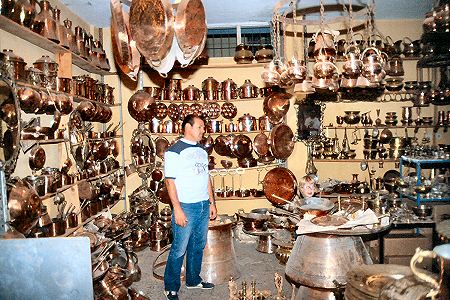
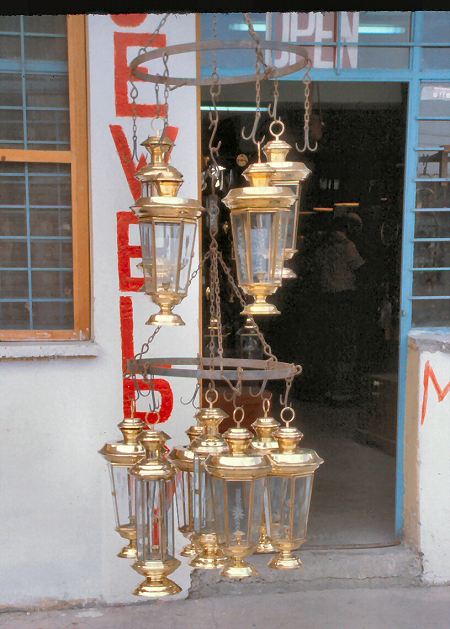
It was amazing at what you could get made in the different shops. A tailor, for instance, could take a picture of a thousand dollar suit from a GQ (Gentleman's Quarterly) magazine and reproduce it using top wools for only $150. I purchased beautiful Turkish carpets for a fraction of the costs by purchasing them on time and paying it over months with their Turkish Lira.
The balance actually reduced each month because the value of the Lira was declining and the US dollar was stronger. Unfortunately, that is not the case today. The carpet dealer's shop name was 'Ali Baba's Carpets', no kidding!
The 'Alley' as it was called, was a strip of old shops along the clay dirt entry road into the base. They sold everything along that alley. If you needed something made out of brass, they could make a sand casting of it and have you an exact duplicate made in a couple of days for a very reasonable price.
Ali Baba's carpet store was one street over from the alley. Upon entering the store, one of the sales people, probably the owner's son, would meet you at the door and offer you chi tea, a Pepsi, or a beer.
The inside walls of the shop were line with hundreds of beautiful hand-made Turkish and Asian carpets rolled up and standing vertically next to each other. It didn't matter how many rugs you wanted to look at, they would spread them out onto the floor one over another until you found the one you wanted.
At the end of the alley and next to the highway was this BP (British Petroleum) truck stop. It had a restaurant at one end that we would visit frequently and eat their 'Lahmajoun', which is a small Turkish style pizza. They also served the best home-made french-fries. We could order a plate of little lahmajouns and a huge plate of fries for about a thousand Lira (about three American dollars). The ketchup was unique. It was a spicy type that went really well on the fries.
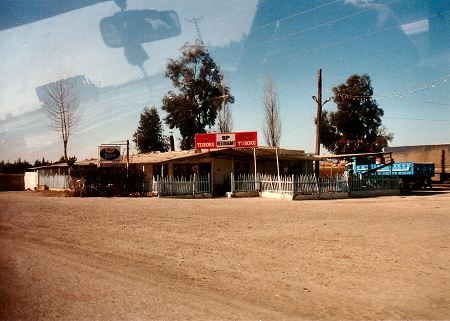
The fact that truckers from around Europe stopped in there to eat and buy petro made it an unusual truck stop. We often talked to German, Greek, and even Australian and German truckers who were passing through Turkey. Don't ask me how the Australians got there with their trucks. They may have been driving for another country.
The base was made up of a mixed military community. Everyone knew everyone. On Friday nights the routine was a steak dinner and a movie. The local short order restaurant somehow transformed into a low keyed intimate steak house on Friday night by simply covering up the lunch line and kitchen with large red drapes to hide the cafeteria styled lunch line.
The staff changed from their white serving uniforms into red dinner jackets. The cafe's lights were turned down and candles placed on each table to provide a little romantic ambience. If you squinted just right, you could almost image that you were in a nice restaurant back in the states. I said almost.
The steaks were not the best, but at least it was something different from the regular shish kabab.
After a 5:00 p.m. dinner, it was a mad rush across the street to the 6:00 p.m. movie. Most of the time, you just finished dinner in time to make it. The whole dinner crowd migrated from the restaurant over to the theater. You greeted your friends as you passed in line. It was like you were at your own personal theater. The base did not have a huge population. It was more like a very small town.
I had the opportunity to live downtown Adana for a short time. The apartment that I rented took up an entire floor of the building. It had three balconies and large French doors that opened into the living room. The bathtub was made of red clay tile and was very large and deep. It took a lot of water to fill it. Hot water was actually heated on the roof by a kerosene heater. It couldn't heat much water at a time and didn't provide enough hot water to fill the tub. We often took shallow baths. We couldn't fill the apartment with our furniture because it was so huge, but we didn't pay that much a month.
The military wouldn't let you wear uniforms downtown because there was always a threat of terrorists. A bank was bombed downtown while I was living there.
I took the bus into work each day. The buses were nice air conditioned Mercedes that were fairly new. The only problem with riding on these buses was that the Turks smoked these nasty cigarettes. We used to say that they were smoking Camel shit.
While in Turkey, I got to swim in the Mediterranean. The color of the water was a very bluish green. When the Turk's came to the beach, they would pitch an Arabian style tent and spend the day swimming. The men would strip down to their underwear and dive into the water. The women, of course, had to wear very modest clothing, not a swimsuit.
On one trip to the beach, some friends and I came across this fisherman who had built a crude wooden structure on the beach where he prepared his nets for fishing. He invited us to drink beer and eat some of his fresh local catch. I couldn't turn down a free beer.
Another man was also visiting him. Neither of two men spoke good English; in fact, I think only the visitor spoke some broken English. From what I could gather, he was a famous Turkish opera singer. He showed us a poster of himself that looked as if he was singing, but we couldn't make out the writing on the poster because, of course, it was in Turkish.
The fisherman cooked up some fish over a crude wire mesh and served it to us with lemon slices and some rice. We enjoyed the fish and beer and told them how nice it was to meet them. Even without the language gap, we all seemed to understand each other.
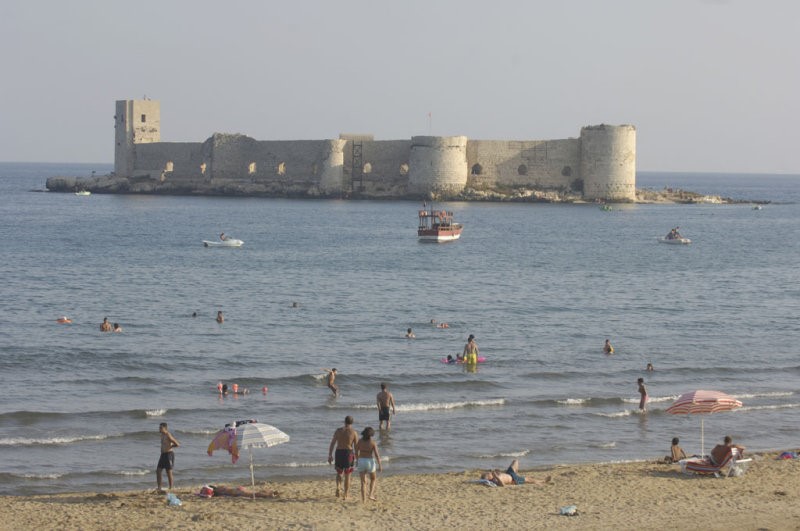
I went on trips to see the Kiz Kalesi or Castle in the Sea (above), which was an actual ancient castle located just off shore.
You can go HERE to find out more.
You could swim out to it or hire a boat for two bucks. The boat was the best choice because there were sea urchins in the water and if stepped on one, it hurt like a bitch.
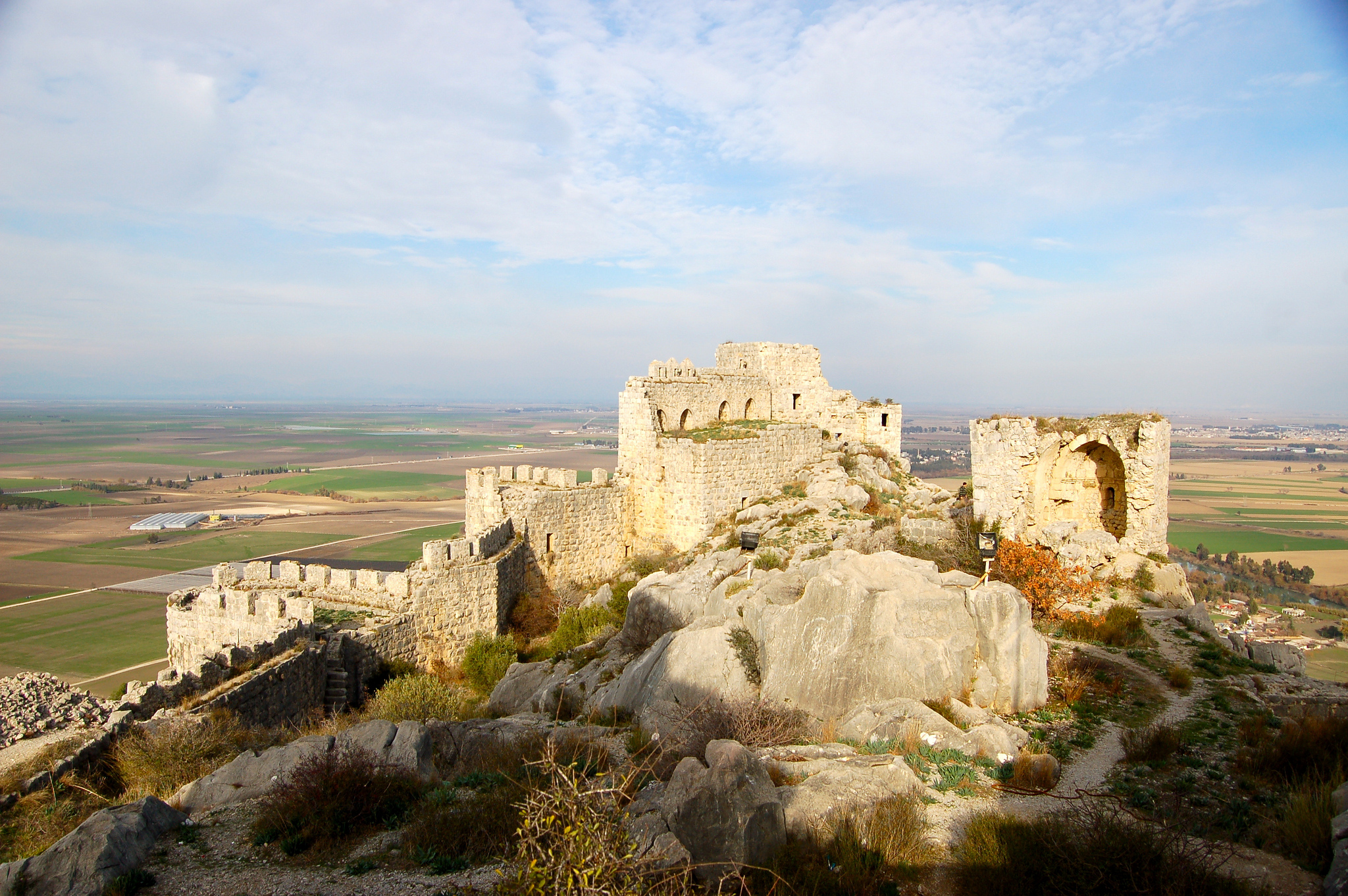
I also visited Yılankale, also known as Snake Castle, is a historic Armenian fortress located in Adana Province, Turkey. It was built in the late 12th to 13th century, likely by King Leo I of the Armenian Kingdom of Cilicia.
When you visited these castles, there were no vendors there to try and sell you stuff.
While stationed at Incirlik AB, I met this guy, John, who worked out at one of the defense radar sites. I can't remember the name of the site and I can't find any information about it on the web. It may 'not exist', if you know what I mean? He came into Incirlik on several occasions to pick up supplies for their site. I got to know him after talking with him on those trips. He and I both were going through a divorce and had a lot in common.
He invited me out one weekend to visit the site. I had never been to a radar site before and thought it would be interesting. His commanding officer was a Captain who wore a cowboy hat and robe like Hawkeye from the TV series M.A.S.H. (a TV series back in the 70's about an Army hospital unit in Korea-had wacky characters). Visit HERE for more information.
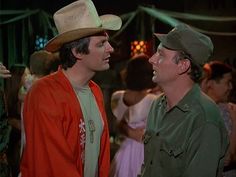
The Captain cooked up a load of Mexican enchiladas and served them up to all the troops. We sat around at their homemade bar and drank beer and eating enchiladas' while singing the chorus of Grand Funk Railroad's, "I gotta get out of this place, if it's the last thing I ever do!"
It was pretty laid back at the radar site. John took me up to the top of one of the radar antennas. It was huge. The circumference of the dish was about the size of a baseball in field.
We climbed up the metal zigzagged staircase to the top and stood on this metal mesh walkway. I could swear that the hair on my arms was pulling toward the dish. (See photo below)
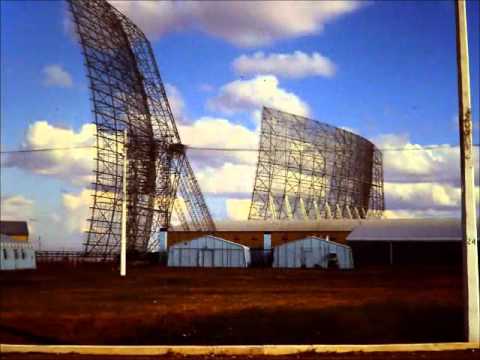
John pulls a steel wool dish pad, which he had copped from the kitchen, out of his jacket pocket and said in a sinister voice, "Watch this!" He tosses it gently upward over the mid-top edge of the antenna and as it passed into the concave mesh valley below, it began to glow brighter and whiter until it finally went up in a flash of flames and landed on the antenna floor in a ball of molten ashes.
He told me that the microwave from the antenna is so intense that it could cook a person inside out in just seconds. I couldn’t help but wonder who they tested that on? After he told me that, I stepped back and was ready to climb back down, but he pulls another pad from his pocket and in an invitational tone, asked, "Do you want to throw one?" Although I was still digesting what he'd just told me about the barbeque body scenario, I excitingly replied, "Hell yeah!" I'm sorry, but it's a guy thing. You know, to watch anything go up in flames. It was cool! It was a strange weekend.
While stationed in Turkey, I had the opportunity to visit Germany, Austria, Italy, Spain, Greece, and other countries.
I went on a 10-day TDY with my supervisor, Roger Drudge, to Aviano Air Force Base, Aviano, Italy to attend a conference. We had to stop off at Frankfort, Germany for a night. I got terribly sick while in Frankfort. I had bronchitis and was hacking so bad that I thought I was going to have to cancel the trip. I got better and went on to Italy.
The landing approach into Aviano Air Force base was awesome. It brought us over the top of the Swiss Alps (See photo below) and suddenly dropped us down into the valley. The view as we came in over the Alps and into the valley was breath taking. Sorry, but I don't have a picture of that view.
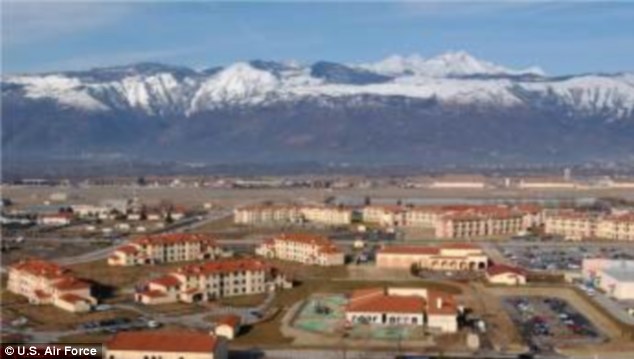
The conference was boring, as usual. I suffered through it. I did get a chance to visit some of the shops downtown. It was winter in Aviano and the streets were filled with locals shopping for Christmas gifts. Decorations hung in the shops as well as on the street lamps outside. The Alps formed a backdrop for a postcard like picture.
After the conference meeting one day, a group of us attending the conference decided to take a trip up to the mountains and patronize a four star restaurant.
Our group consisted of Air Force pilots and others who took an interest in chartering a bus to the restaurant. I remember the bus struggling up the mountain on this tiny twisting road that hugged the mountainside. There was snow and ice along the road so I just resisted looking out the window. The sun had just gone down as we arrived and for some reason, I can't recall what the outside of the restaurant looked like. I believe that it covered in stone, but I can't be sure.
I do remember that the inside wasn't all that big and our group of 15 was seated at this long wooden table in a room off to ourselves.
Our hostess, a young Italian girl dressed in the local traditional clothing, brought a bottle of house wine per two people at the table and placed it down the center of the table. The staff was made up of a large Italian family who actually owned, as well as, operated the restaurant.
I ordered quiet a large meal without knowing it. I can't read Italian. They brought me several different meal courses consisting of antipasto (like hors d’oeuvres), pastas, smoked salmon, ravioli, spaghetti, and various squashes and vegetables. It is needless to say that when I was finished I was stuffed.
The Italian's version of spaghetti is a great deal different than our American version. They don't use thick tomato sauces. They pour a thin watered down tomato sauce over homemade spaghetti pasta. The ravioli was stuffed with a meaty sauce that was a little bland, but hey, they have a completely different idea of what their Italian food should taste like. We are so spoiled here in America with flavors such as Chef Boyardee ravioli, which is NOT Italian at all.
My cut of the total meal was only about $15.00 American. You can't beat that kind of meal for that price.
I had a great time, but I drank way too much wine and can't recall the trip back down the mountain. It was probably a good thing that I didn't remember because it was snowing.
I spent two years in Turkey and wished that I had more time to travel while I was stationed there. It was very inexpensive to travel on the buses. Mersin (Mehr-seen) was about 70 miles west of Adana and rest along the coast of the Mediterranean. The bus fare was only about four American dollars each for a round-trip ticket. The bus was a comfortable air conditioned Mercedes.
What was cool about the trip to Mersin was that if you wanted to stop at a roadside fruit stand along the way, all you had to do was tell the driver and he would pull over and let you get what you wanted. You could even buy beer and bring it onto the bus. Unfortunately, because of the world situation today, it would not be as safe to visit or travel within Turkey.
15th Aircraft Maintenance Squadron, Hickam AFB, Honolulu, HI.
1983 - 1986
I was assigned to the 15th Organization Maintenance Squadron's EC-135J Phase Docks. That's right, from crew chief back to being a dock rat. The reason that I was assigned to the docks this time was that I needed to become more familiar with the EC-135J model aircraft and they felt that I would learn more about the aircraft from working in the docks. They were right of course.
I had to pick up the books once again and learn about a different breed of C-135 aircraft. The 'Airborne Command Post' as it is so fondly called, is America's second line of defense in the case of a nuclear strike. Its main mission is provide the President of the United States to command all the nuclear assets from this aircraft.
There was always an 'Airborne Command Post' aircraft in the air every hour of the day. If ground command forces are destroyed, the President through, as the name implies, the 'Flying Airborne Command Post', can control and launch all ground based and sub based nuclear missiles in the United States.
A secondary mission of the EC-135J aircraft is to search and locate enemy submarines off the coast of the United States. The aircraft houses, under its belly, a mechanical reel wrapped with spool of antenna wire that is extended out into the jet stream about a quarter of a mile behind the aircraft when airborne (See second photo below). The bell shape at the end helps the antenna to keep stable while extended. The aircraft then flies over the coastline and uses the length of the antenna along with the ARC antennas to provide a radar signature back to the operators onboard.
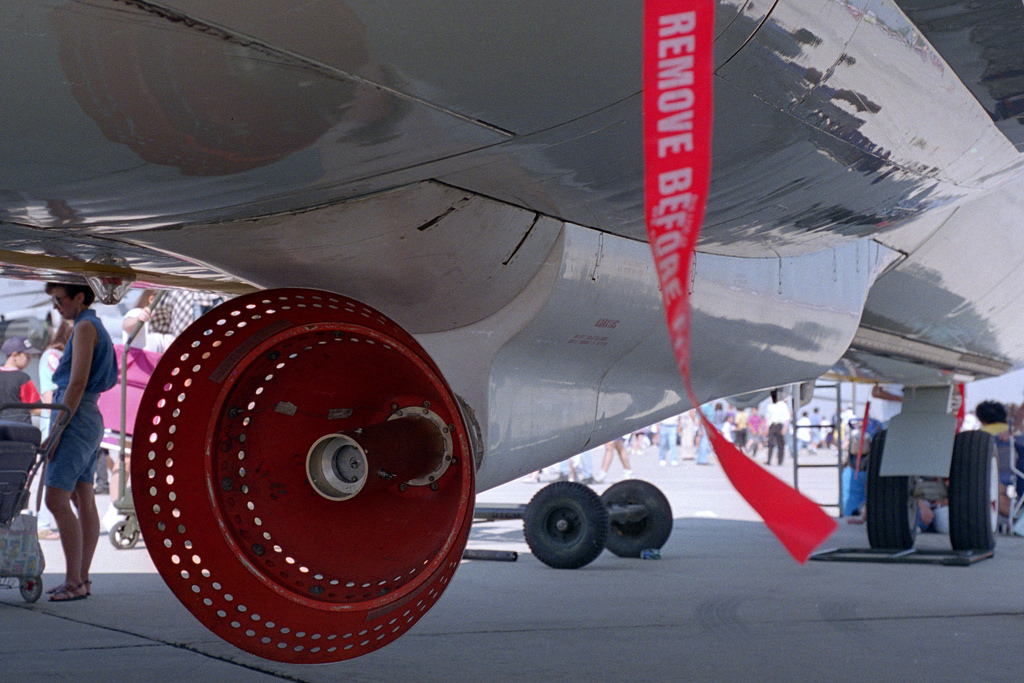
The purpose of the 'Trailing Wire Antenna' was:
- Communication Capabilities
- The trailing wire antenna was primarily used for very low frequency (VLF) communications. This allowed the EC-135 aircraft to maintain contact with submerged submarines, ensuring reliable communication during critical operations.
- Telemetry and Data Transmission
- It facilitated the transmission of telemetry data, which is essential for tracking and monitoring various military operations, including missile tests and other airborne missions.
- Enhanced Signal Reception
- The trailing wire antenna improved the aircraft's ability to receive signals from various sources, enhancing its overall communication capabilities during missions, especially in nuclear command and control scenarios.
- Operational Flexibility
- By utilizing a trailing wire antenna, the EC-135 could operate effectively in diverse environments, ensuring that communication links remained intact even in challenging conditions.
This combination of features made the trailing wire antenna a vital component of the EC-135's mission to provide airborne command and control capabilities.
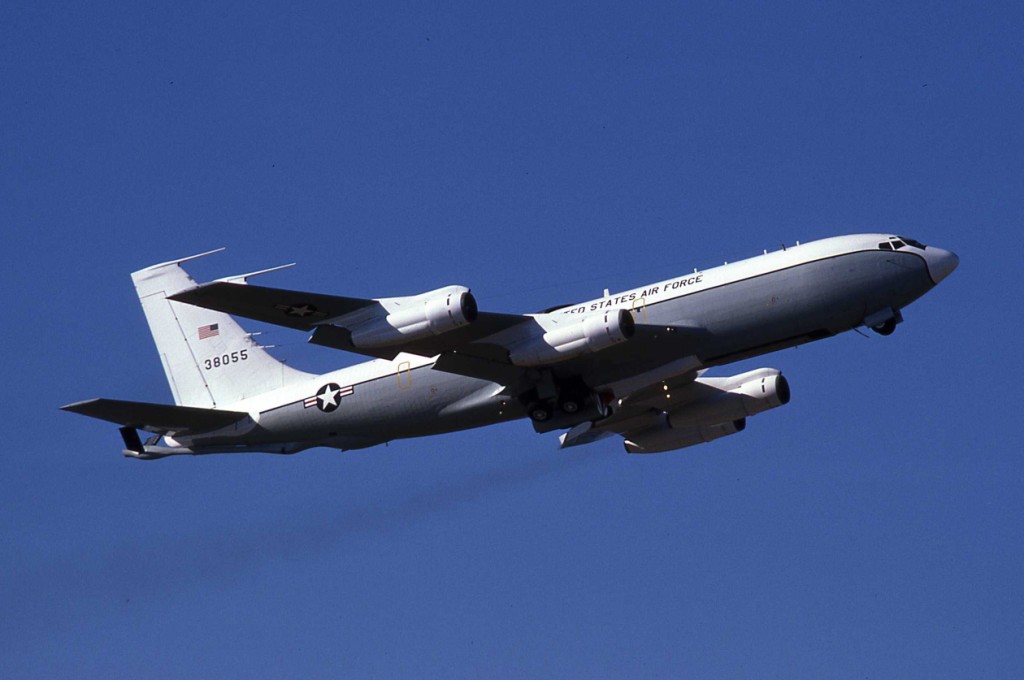
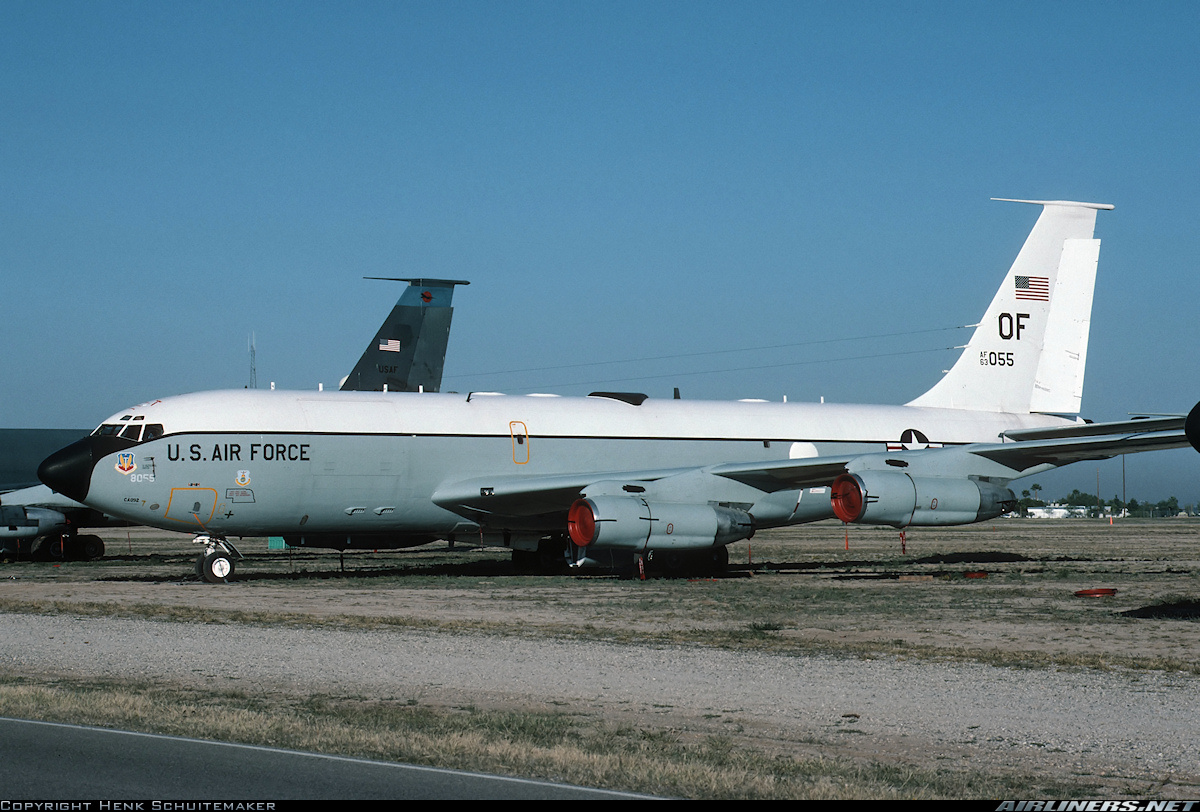
I spent about a year in the docks and moved back out to the flightline once again as crew chief on EC-135J aircraft 63-8055. (See photo right above. NOTE: Aircraft is retired, like me!)
Preparation for the position of crew chief on the EC-135J 'Flying Airborne Command Post' was the most strenuous and had the most requirements for qualifying than any other job that I had ever held. I was on worldwide orders. In fact, as a crew chief, we were given blanket orders to travel anywhere in the world at a moments notice. You can see the interior pictures that have been declassified because they have changed aircraft HERE. NOTE: They are black & white.
Information about the EC-135J Aircraft is here:
Because of the nature of the mission of this aircraft, I can't cover all aspects of my training or what my complete mission was; however, I can tell you that I had to undergo some tough training. Some of it was psychological, while other parts were physically demanding. It included, but was not limited to, air-sea rescue training, survival training, small arms weapons training, and protection of Top Secret materials, Hypobaric Altitude Chamber (photo below) and traveling to classified locations. Enough said.
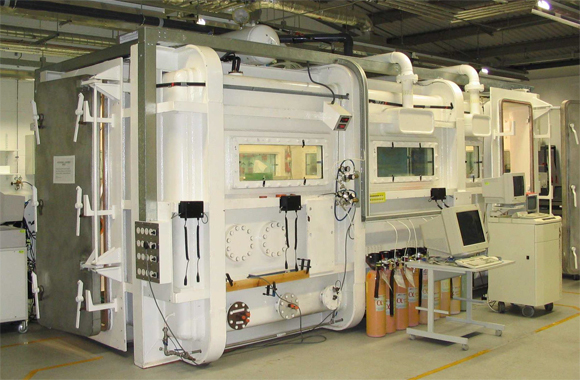
The 15th OMS had an extra duty. We had to pull alert at March Air Force Base in Riverside, California for a four day period. It wasn't bad because on our turnover day, we would land at March and have that night to rest while the previous outgoing crew chiefs would prepare the aircraft for alert.
Our rest consisted of going into San Bernardino and getting some real food and drink before assuming alert the next day because the food at the alert facility chow hall sucked!
In 1984 my aircraft was scheduled for an upgrade to the AFSATCOM (Air Force Satellite Communications). The aircraft was sent to a government contractor's site at Love Field, Dallas/Fort Worth, Texas. Three weeks later, the contractor requested that I fly down to Texas and pick up my aircraft. I flew down and picked up a rental car (Mustang) that the contractor had arranged for me at the airport Marriott.
I drove over to the hangar where my aircraft was undergoing its scheduled modification. I went into the contractor's office and asked them about the readiness of my aircraft. The contractor from Hickam was there and he kind of giggled. He said, 'Follow Me'. We went through the back door of the office and into this huge aircraft hangar where my aircraft was parked.
We boarded a maintenance platform that was resting next to the cargo door. As I walked onboard the aircraft all I could see were strands and strands of wire bundles stretching from one end of the aircraft all the way down to the other.
The plane was full of busy avionics specialist. I turned to the contractor and asked, "Why did you have me come down here to pick up my plane and it isn't even finished?" He replied, "I always bring the crew chiefs down early so that they can get away at Uncle Sam's expense."
I didn't quiet know how to respond to that other than enjoy myself the next few days. The contractor took me to a real good Mexican restaurant deep down into the sleazy part of town. When we arrived at the restaurant, there were all these expensive cars parked outside. The food was authentic Mexican and delicious!
My plane was ready in two days and on the morning of my acceptance, I fully expected to preflight and launch my own aircraft. After all, that was the purpose of my coming, right?
I arrived at the contractor site and went out to my aircraft. They were in the process of towing it out of the hangar. I had brought a launch kit with me and proceeded to drag it out to the airplane. One of the civilians towing the aircraft asked me, "What I was doing?" I replied, "I'm getting ready to preflight my aircraft." He said, "Relax chief, we'll take care of your preflight." I didn't have to lift a finger that morning. They refueled my aircraft, performed the preflight inspection, and even launched it for me. That was a cool trip!
There were two other aircraft at Hickam that belonged to our flight. They were the C-135 CINCPACAF Command Aircraft (See photo below), which was a primary and secondary carrier for the Commander and Chief of the entire Pacific Air Forces.
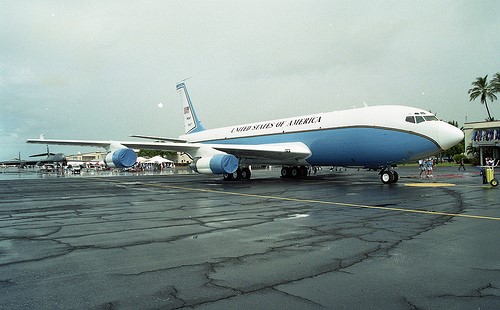
This aircraft had the same priority as Air Force 1. The maintenance crew belonged to "Blue Eagle", which was an elite group of mechanics that flew with the aircraft. They did not dress in the typical fatigue uniforms. They wore dress blues during maintenance whenever the Commander and Chief was flying. The Command Aircraft flew into some pretty interesting locations around the world. They flew to Bangkok, Thailand and the ground crew stayed in the same hotels, as did the commander.
One of the crew chiefs was having marital problems and was leaving the flight. I was offered the position to replace him. I interviewed with the flight chief and he was impressed, so he wanted me and your mother to go on a incentive flight with just us aboard the aircraft.
The aircraft is very plush inside. It has lounge chairs, tables, large conference rooms, and a kitchen. Although I have never been aboard, it reminded me of what the President's Air Force One would have looked like.
Your mom and I boarded the aircraft on the evening of the flight and were welcomed aboard by the flight attendant. Yes, I said flight attendant. We took off out of Hickam and set out for a quiet evening flight. The pilot took us for a low level pass along the cliffs of the island of Molokai.
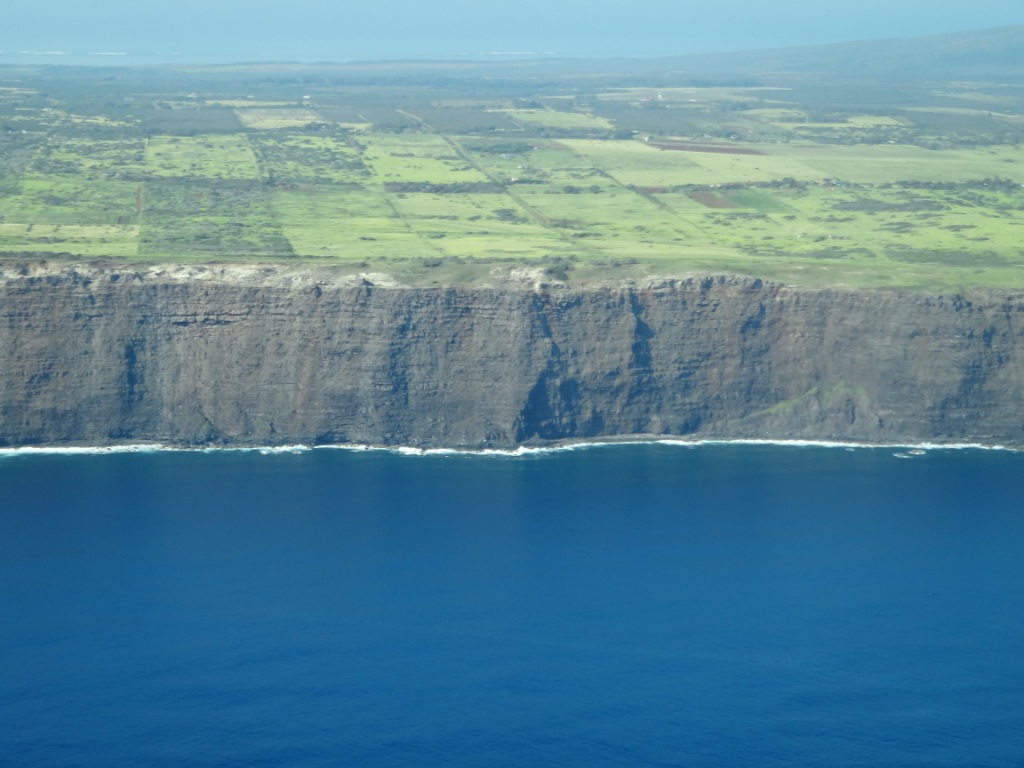
It was breathtaking. I had never flown that low and that close to anything before.
The radio operator came around and asked if I or your mom would like to make a call to one of our relatives. I called my brother, Larry and told him that I was calling from an aircraft and flying low level next to some cliffs. He didn't believe me at first.
Later during the flight, the chef came around and took our orders for diner. Yes, I said chef. We sat at regular tables and enjoyed a nice meal while looking out the windows at the beautiful sunset. I was impressed and it was making it easier for me to make a decision to join the crew.
A couple of days after the flight, the crew chief changed his mind about leaving and I didn't get the opportunity to crew that aircraft. It was just as well because the crew goes out for six months out of the year and I don't think that would have been healthy for our marriage either.
The EC-135J Aircraft was later replaced by the Boeing E-4B Nightwatch Aircraft seen below
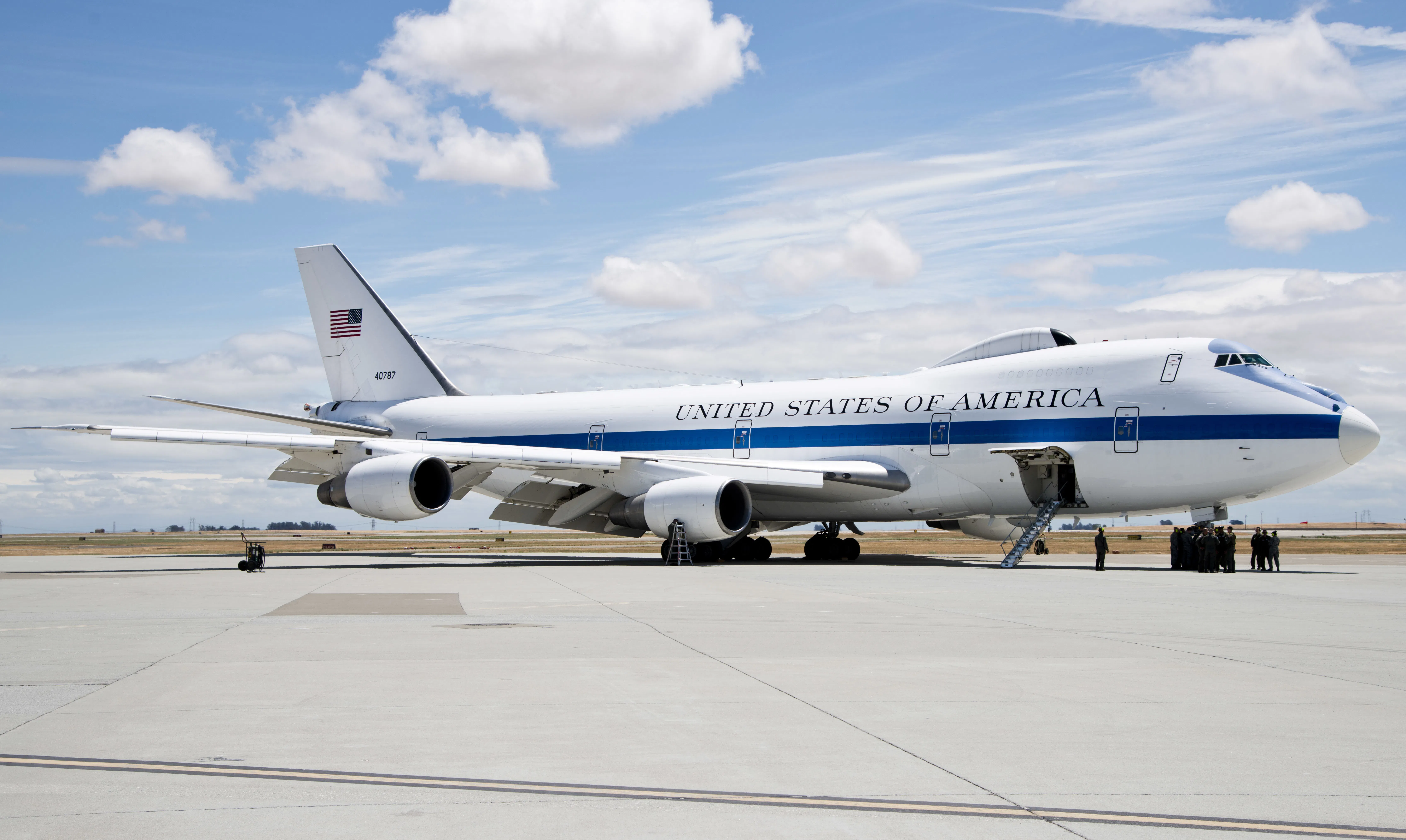
Sometime in 1984, I left the flightline and moved into a position as Senior Aircraft & Weapons System Controller at Job Control. The mission of the personnel in Job Control was to dispatch aircraft specialist out to the flightline, designate aircraft parking, control aircraft ground movement, and manage exercises. Job Control consisted of me as the Senior Controller and three other controllers.
The centerboard controller managed a map board that represented the flightline. He or she was responsible for communicating with the supervisor of the flightline to coordinate parking spaces on the ramp. He or she also relayed ground equipment request from the flightline to the other controller.
The last controller was responsible for dispatching repair specialists out to the flightline and maintenance docks.
As the Senior Weapons System Controller, I experienced many stressful situations. On one occasion, I was managing a base-wide exercise that consisted of several different simulated accident scenarios. I was dealing with a simulated accident at one of the maintenance shops where someone had severed a couple of fingers and needed immediate emergency medical assistance.
On the flightline, there was a simulated aircraft fire where I had to dispatch the fire department and emergency medical personnel. At some point during the exercise, I received a call from the base weather service. A major shift in the platonic plates off the coast of Alaska had created a Tsunami. The Tsunami was on course toward the island of Oahu. This was a "real world" alert.
I immediately terminated the base exercise and pulled out the checklist to begin a base-wide alert for the Tsunami. The checklist included contacting a list of key personnel to handle specific tasks.
This list included the base commander, emergency response organizations, maintenance officers, and base operations. A Tsunami is a shock wave that creates a wave that moves at a constant rate across the ocean. It could be as small as three foot; however, that three foot wave will push a continuous force of water across the island. If the wave is larger, it can cause considerable damage.
Because of the potential damage that a Tsunami could cause, all aircraft on station had to leave. This created a challenge for me and the other controllers. We were very busy for several hours into the night. We were mentally exhausted at the end of our shift.
The Tsunami came without incident. It withered out during its travel to the island. That was a good thing. There were actually some crazy surfing hounds who wanted to the wave when it hit the island, but they were greatly disappointed. I drove down to Waikiki Beach and witnessed a micro wave of a Tsunami.
I was also responsible for briefing the Wing Commander on the daily status of all the aircraft. I prepared slides (No, we didn't have computer screens) to show the EWO (Emergency War Operations) availability of our on-station aircraft.
A great part of living on the island of Oahu was the Naval Base. It was amazing to watch the various ships pull into harbor. Hickam Air Force Base and Pearl Harbor Naval Base were attached to each other. We could sit on the beach on the Air Force base and watch aircraft carriers cruise by with the deck lined with sailors in their whites. It was a tradition for a vessel's crew to pay respects to the sailors who died at Pearl Harbor by standing at Attention and saluting the underwater grave of the Arizona. (see photo below)
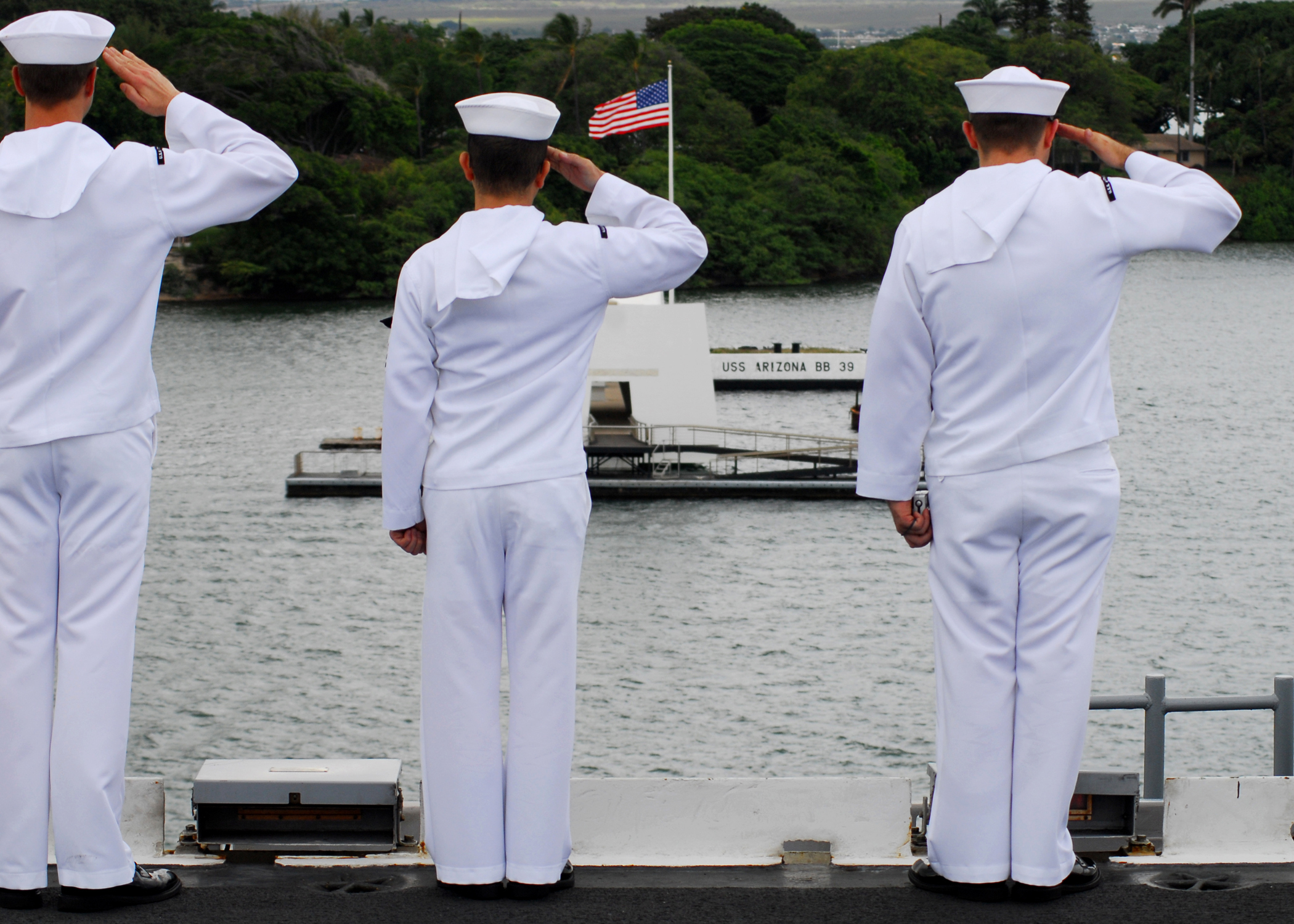
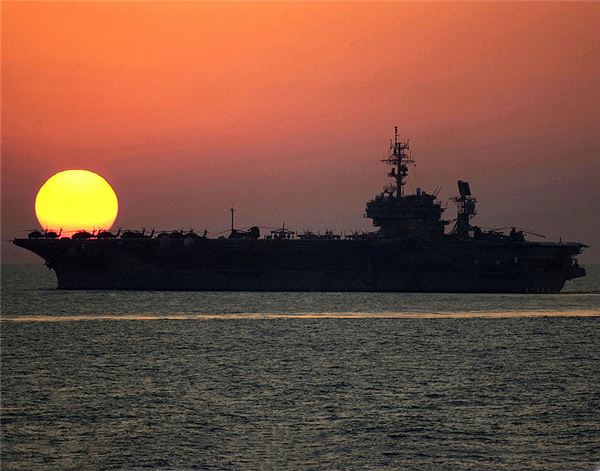
You could sit on the beach and watch the ships as they waited out in the distance to come into port. It was especially exciting when the fleet came in because there would be hundreds of ships cruising through the canal into the main harbor.
I spent three years at Hickam Air Force Base. September 1983 - November 1986. I received orders to Minot Air Force Base, North Dakota. Brrrrrr!
5th Organizational Maintenance Squadron, Minot AFB, Minot, ND.
1986 - 1993
I arrived at Minot Air Force Base in November of 1986 during one of the largest blizzards in Minot's history. The snow towered 15 feet along the outside wall of the transient quarters where we were staying. Out of paradise and into snowy hell. Nothing like coming from beautiful sunny year round days to blizzard winds at 60 knots and wind-chills of -65 degrees.
I immediately went back to the KC-135 flightline and started crewing. Coming back to the KC-135 was like riding a bicycle. Things didn't change much except for computers were now being used to track maintenance trends on the flightline.
During the summer of 1987, my aircraft was selected to travel around to various Air Force bases to perform static displays and to attend an air show out in California. The trip was supposed to include an "all female" aircrew; however, there was no female crew chief available at the time, so I, sadly, had to go.
The first part of the trip had an "all male" crew. Minot Air Force Base was undergoing heavy runway reconstruction at the time so we operated from the civilian airport downtown. On our first mission, the wing commander, Colonial Gann, was traveling to a Strategic Air Command Headquarter meeting at Wright Patterson Air Force Base, Ohio.
We arrived at Wright Patterson in the late evening and the Base Operations people asked if we could setup for a static display the next morning for some of the local military retirees. Although not on our schedule, the aircraft was spotless and already prepped for static displays.
Early the next morning, my assistant and I came out to tidy up a little after our flight the day before. The ground crew brought out a set of mechanical stairs to assist the elderly up into the aircraft. We put out our static display sign that provided interesting facts about the KC-135 and started to exit the aircraft when the flight crew drives up in there car.
They was a little jealous attitude from the crew because the car that they were driving was a plain sedan and the car that we picked up at motor pool the night before was actually a more luxurious model that was the base commander's spare.
As we were exiting the aircraft, Colonial Gann rides up with a driver. The aircraft commander looks at me and asks, "Where do you think you guys are going? You have to stay here and host the static display." The Colonial turns to him and says, "They're done here fellas. That's why I called you out here! It's Miller time for these boys!" Of course it was a little too early for beer, but I think the aircrew got the message. Colonial Gantt was always looking out for the maintenance guys. He understood who made the aircraft fly. It wasn't the pilots.
After we left Wright Patterson, we made some uneventful stops to do our static displays. We returned back to Minot after being out for a couple of days. The second leg of our trip out of Minot was with the "all female" crew, except for me of course.
We had been invited out to sit for a static display at an air show at Brown Field, San Diego, California. It was the 1988 Air/Space America Air Show
The flight out was pretty smooth and a little weird because I had never flown with an all female crew before. Not that they can't do the job, it was just weird.
Upon landing at Brown Field, this young man, with what looked like a brand new tan flight suit with sharp creases, met us at the end of the runway after we had come to a stop. He was not in a follow-me vehicle; he was on foot. He actually walked while flagging us down the taxiway. He did this all the way into where we were parking. Ann Sparkman, the Aircraft Commander, laughed so hard I thought she was going to fall out of her seat.
I had never seen anyone do such a stupid thing. Normally, a driver in a truck with a 'Follow Me' sign escorts the aircraft down the taxiway. Once we got to our parking spot, the AC shut down the engines. The airport had no staircase to push up to the cargo door opening so that we could exit; instead, we had to lower all our bags and exit down the crew ladder. We were promised ground support equipment prior to arriving, however, they provided none. I asked the idiot who had led us down the runway, "When can I get some fuel? Is there going to be any air cart or other ground support equipment delivered later?" He didn't appear to have any answers other than he would be bringing me a fuel truck out shortly.
The crew left and I prepared the aircraft to bed down for the night and waited on the fuel truck to arrive. The same young man who had parked us earlier was now driving up in a small fuel truck. I approached him and asked, "How much fuel does this truck hold and how long does it take to refill it?" He looked back at me kind of puzzled and said, "It holds about 2,000 gallons and I can refill it in an hour." I calculated the time that it would take to refuel 40,000 pounds of fuel. JP-4 jet fuel weighs about 6.4 pounds per gallon. I needed 40,000 pounds of fuel. The truck he brought out holds 2,000 gallons. Take 2000 gallons and divide it by 6.4 lbs and it comes to 312.5 pounds of fuel for the truckload. If I take 40,000 lbs and divide it by 312.5 lbs, that gives me 128 trips that this truck would have to make in order to give me a minimum of 40,000 pounds. Plus the time that it takes to pump the fuel out of the truck and the time it takes 1 hour to refill the truck. It was not practical or feasible.
I brought this good news to Captain Sparkman and she laughed. There was no way that this airport could support large aircraft. Rhetorically she asked, "How in the world were they going to support an air show with large military aircraft?"
Captain Sparkman's laughter soon turned to anger. She and I drove over to the main airport building and asked to use their phone. She called SAC (Strategic Air Command) headquarters and requested permission to takeoff from Brown Field with a light fuel load. We only had about 15,000 lbs of fuel onboard when we landed. SAC gave her a waver to takeoff from there and fly the short distance to Norton Air Force Base for refuel.
While she was on the phone, an Air Force Reserve KC-10 landed (See photo below). That's a big aircraft. After they parked, they waited for a staircase to assist them in offloading. It never came. In order to exit, the crew had to use the emergency escape ladder. This is a flimsy rope ladder that should only be used in the case of emergency egress. The crew had to use this to offload their baggage as well. They were pissed.
The captain and I went to find the owner of the airport. Captain Sparkman was concerned about the ground support equipment that never came. If we didn't get an air cart to start the engines, we would have to use a starter cartridge.
The owner, a woman, was on the phone when we arrived at her office. She was in the middle of a heated discussion with the FAA. Apparently, she had arranged for this air show, invited several military elements, as well as, professional stunt flyers, and left out a very small detail. She never got a permit to have an air show from the FAA.
It was 4:15 p.m. the day before the air show and aircraft were landing left and right now. Captain Sparkman said, "I can't believe this shit!"
I can't remember the woman's name who owned the airport, but she did do something right. She had arranged for all her guest to have a rental car and an executive apartment. Yes, I said executive apartments. This place was swank. It had beautiful furniture, a full sized kitchen, and a terrace.
The FAA granted the permit, reluctantly, I'm sure, for the air show. They didn't have much choice.
The following day, the airport was abuzz with patrons enjoying the air show. The stunt flyers put on an exceptional show. This one pilot had landing gear on top of his plane and he would land upside down. The "Happy Hooligans" were there from the Fargo Air National Guard out of North Dakota. They were flying F-4 Phantoms. They did some pretty cool stuff. (See photo below)
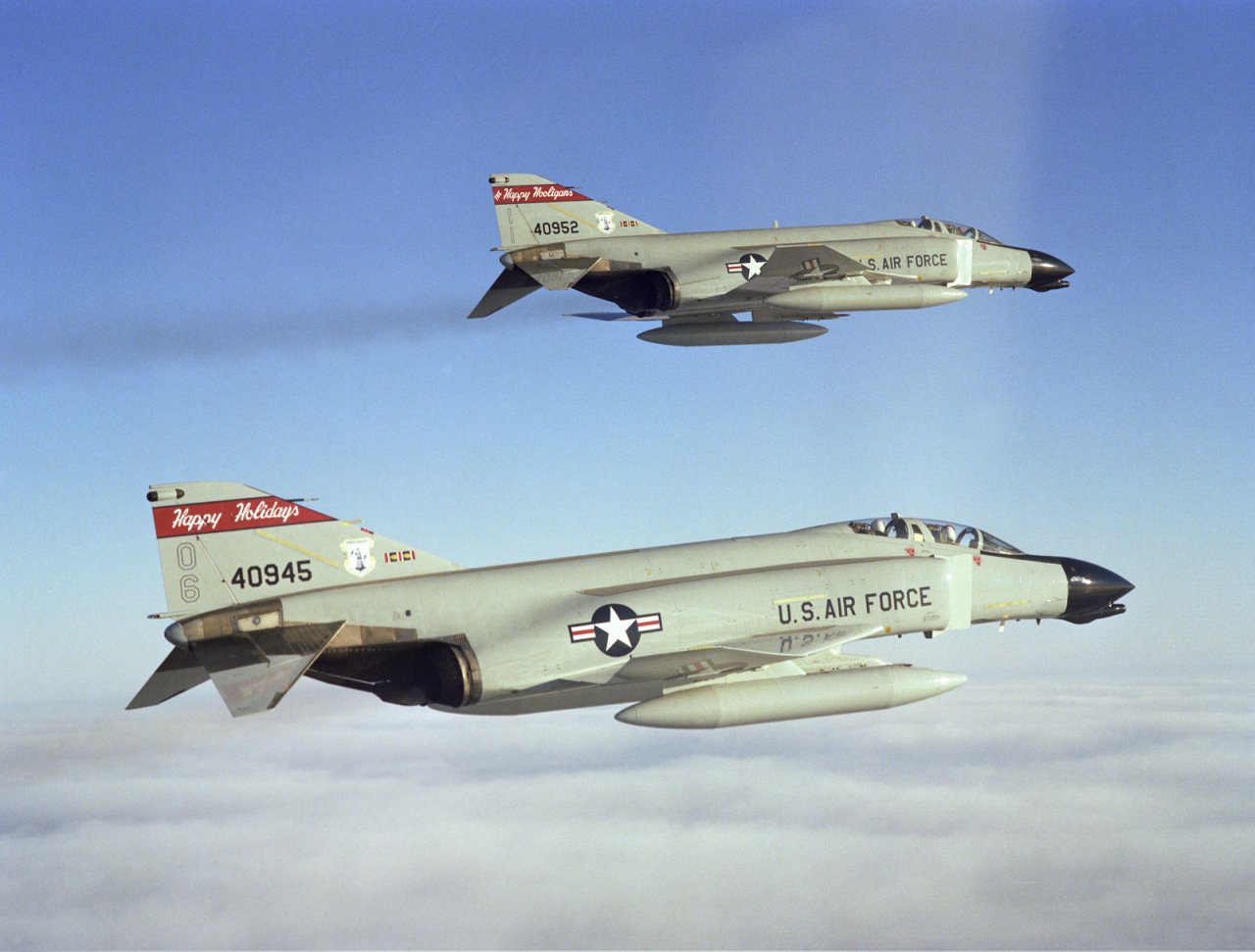
I met the crew of the F-4's the night before and one of the pilot's, a Major, told me to watch their final run the next day. The next day, after the F-4's did their final stunt, they flew out almost to the Mexican border, turned around and at full speed rotated sideways and the two aircraft split and buzzed the control tower. They left the air show and headed back home. I bet the people in the tower had to change their pants after that.
On the final evening of the show, the airport owner threw a hell of a cocktail party. Her guest of honor was the infamous crew of the Voyager, Dick Rutan and Jeanna Yeager. Voyager's flight was the first-ever, non-stop, unrefueled flight around the world. It took place between December 14 and December 23, 1986. You can read more HERE about the flight.
At the cocktail party, I saw Ms Yeager, this famous person, walking around and picking up crumbs that had fallen on the carpet. I walked up to her and asked, "Why is a famous person like you picking up after everyone?" She shyly replied, "I just can't stand a mess." She looked a little embarrassed. I got to talk to several stunt pilots and Dick Rutan for a short. He seemed a little too much into himself.
We had to leave early the next morning before light. We arrived out at the aircraft about 4:00 a.m. The airport had hired this mom and pop security team to watch our aircraft overnight. I literally mean mom and pop. It was an elderly retired couple.
Because there had been so much activity on the taxiway's and runway during the air show, the navigator and I decided to check them for debris before takeoff. We drove our rental cars with headlights down slowly to the end of the taxiway looking for and picking up anything that could cause a hazard. We then drove slowly down the runway doing the same. On the way back from our search we decided to drag race. Oh yeah! That was fun!
After loading the aircraft and starting engines, we closed up and began to taxi. There were no runway or taxi lights. The sun was just beginning to rise and the dusk gave us a slight orange California peep out into the horizon.
Captain Sparkman taxied to the beginning of the runway, set the brakes, advanced the throttles and after reaching power, she released the brakes. Because we were so light, the aircraft shot down the runway like a pebble from a slingshot.
It didn't take much runway before we lifted off. The captain brought the nose up and we banked to the right and the tiny little airport soon disappeared into the twilight.
After a short 20-minute flight we landed at Norton Air Force Base. The aircraft was bouncing on its struts because we were nearly empty on fuel. A refuel crew showed up and we pumped the aircraft to our next fuel load to get us home.
It was cold at Minot, no, let me correct that. It was freezing at Minot during the winters. It wasn't unusual during parts of the winter to have temperatures dip down to 20 degrees below zero and have a wind-chill of 60 degrees below zero. The 40 knot winds across the flightline would pierce your skin. On days like that we were only allowed to work for 15 minute intervals before warming up again. (See photo below. Deicing aircraft.)
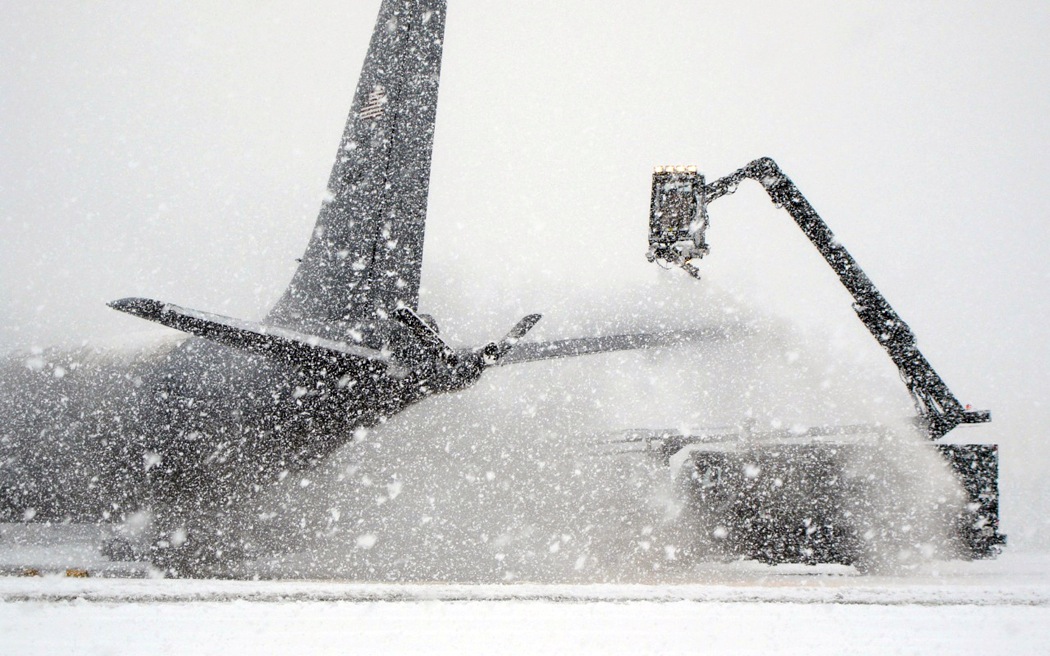
If you've ever seen those men on TV at the North Pole and they had these white ice crusted mustaches and beards, well, that is exactly how I looked after spending a few minutes in the weather.
On weekends, during the winter months, we had to tow the Monday and Tuesday flyers into hangars in order to prevent ice buildup between the flight controls surfaces. One weekend, I had the duty and was in charge. I had let the entire weekend duty crew go home because we had finished for the day. I was making one more drive around to check things out when this Major, who had the duty as the avionics officer, flagged me down.
He jumped in my truck and said, "Pretty cold out today." I replied, "Yep." I was in a hurry to get out of there and here was this jerk with idle chatter. He throws out, "I guess you should tow 'some aircraft tail number I don't remember' into a hangar because it is a flyer!" I rechecked next weeks flying schedule and that tail number was a Wednesday flyer, not a Monday or Tuesday flyer. I replied back, "I don't think so, can I drop you off somewhere Major?" I was on my way to Job Control to give them a turnover of what was done and the condition of the aircraft. He said, "I'll just go in with you."
We both walked into Job Control and the DCM (Deputy Commander for Maintenance) happened to be in there. The Major cuts tail over to the Colonial and starts with, "Colonial, MSgt Moland refuses to tow aircraft whatever into the hangar as I suggested to him!" The Colonial looked up at the main schedule on the board and turned to him and said, "If MSgt Moland is telling you that he isn't going to tow that aircraft, then he isn't going to tow it, besides Major, he's in charge of this flightline, not you!" The Colonial always stood up for NCO's who had the weekend duty responsibility.
On the 9th of November 1989, the Border separating Western from Eastern Germany was effectively opened. This brought about a unique experience in the summer of 1990.
Minot hosted its annual Minot Air Force Base Open House air show and our guests that year were a team of Russian Mig-29 pilots. It was, to say the least, strange seeing Russian Migs sitting on the ramp. I volunteered that year for the show simply to be around these legendary jets.
The Mig was a ripoff copy of the Air Force's F-15 fighter (See photo below). What was so funny about the Mig's was that they were hand painted. I worked around them during the air show. We would push them back into their parking spaces once they landed. You could see where someone had painted the inside of the engine intakes. They reached as far in as they could with a paint brush. You could see the brush strokes.
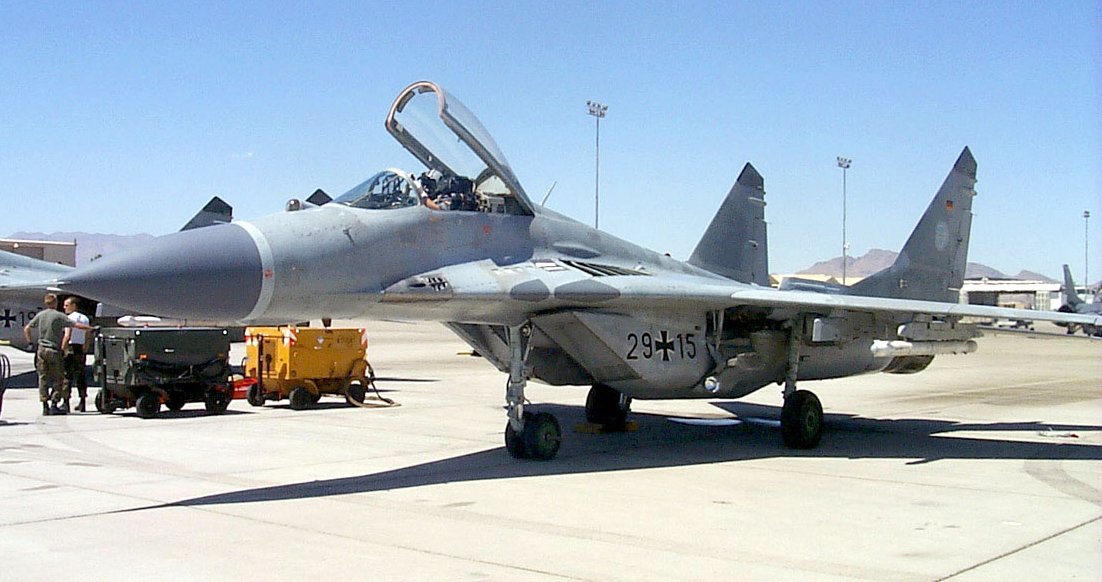
The Russians were a big fan of putting stickers inside their wheel wells. You know the kind of travel bumper stickers you see from different places of interest. That's the way their inside of their landing gear wheel well looks like.
During the air show, one of the Russian pilot's would go vertical. They would fly up and up until you barely see him. He would then do the unthinkable. He shut down his engines once he reached his apogee and slowly turns and head back down to earth. All the spectators gasped when they saw that he shutdown his engines.
The Mig sped downward toward earth at an alarming rate. It seemed like a long time had passed when the pilot finally restarted the engines. Some of the local Air Force pilots on the ground said that they were impressed but would never attempt such a stunt.
January 1991-March 1991, Desert Shield, Desert Storm
During the first Phases of Desert Shield, most of the aircraft at Minot AFB had been deployed over to Saudi Arabia. We were working 12-hour shifts 7 days per week. The pilots that were left at Minot were continuing their flight training and maintaining the same hours that they were before the deployment. This was putting a huge strain on all the maintenance personnel who were working their asses off to accommodate the pilot's schedule.
Because of the priority of support for the aircraft now in the Saudi Arabian theater, parts were very scarce at Minot. If one aircraft landed with a radar problem, the avionics guys would have to cannibalize a radar from a perfectly good aircraft to put on the next scheduled training mission. It was double the work because after that plane landed, it would have to be removed again and installed onto another plane.
People were getting exhausted and supervisors were getting fed up with having to support the pilot's training when their own troops were not able to have time to do their own certification training. I called a group of flightline supervisors to a meeting with the DCM (Deputy Commander of Maintenance) and the Air Refueling Flight Commander (He scheduled the pilots for training).
We met at the Bomber's Maintenance building. I told the DCM and the Flight Commander that our personnel were suffering from exhaustion and not able to meet training requirements. I told them that we could no longer meet their squadron's flight training requirements. I blatantly told them that if things continued as they are; a serious accident may occur because of the lack of training and certification of our maintenance personnel. Concessions would have to be made by the flight crews. They both agreed to cut back on their flying hours. After the meeting, I realized that I was the only one speaking on behalf of the maintenance personnel. The other supervisors were simply agreeing with me during the meeting.
After the Iraqi invasion of Kuwait, Saddam Hussein consistently threatened to strike Israel if his country was attacked. If the U.S. moves against Iraq, he said in December 1990, "then Tel Aviv will receive the next attack, whether or not Israel takes part". At a press conference, following his January 9, 1991, meeting with Secretary of State James Baker, Iraqi Foreign Minister Tariq Aziz was asked if the war starts, would Iraq attack Israel. He replied bluntly: "Yes. Absolutely, yes."
I was mobilized for deployment on January 15, 1991. I arrived at the base sometime in the evening to process for mobility. All maintenance personnel are considered for Worldwide Mobility. During processing, I received inoculation updates and an inventory check of my mobility bag (a collection of uniforms, personal hygiene items, cold weather gear, rain suit, chemical suit, etc.). I was briefed that we were going somewhere in-country where refueling would take place for fighter jets, but were not given any specifics. Our mission was classified. According to our maintenance Chief, we were supposed to be there yesterday.
On January 16, 1991, I left Minot Air Force Base with a team of eight men. I was selected to head the team. We departed Minot International Airport with a forty-piece baggage collection between the eight of us.
Our departure out of Minot was slightly delayed because the aircraft needed deicing. We were late arriving at Minneapolis International Airport, Minnesota and our connecting flight to Philadelphia Airport would be boarding shortly. As we taxied in, the Northwest flight crew notified the departure gate to hold for our arrival. I don't know who notified them, but I did know that our mission was essential.
We finally made it to the arrival gate and all of us ran down to the departure gate, which seemed to be a mile away. The gate attendant was waiting for us. We rushed to our seats and the aircraft departed late.
We arrived at Philadelphia Airport and of course our baggage did not make the flight. We reported to the baggage department and they told us to wait for the next arrival out of Minneapolis. They were kind enough to give us some meal tickets for our trouble. The last flight from Minneapolis wasn't due in until 10:00 p.m. that night so we decided to go have a few beers and pizza on Northwest Airlines.
It was a few minutes after 7:00 p.m., and we were sitting at the bar and watching television when we were interrupted by a news break and it wasn't good; Operation Desert Storm just began. The United States declared war against Saddam Hussein. Up to that point, I had the idea that we were going over for just a few weeks and everything would be over by that time, but I was wrong. Here I was sitting in a terminal, far from my family, and a war had just started. That meant that things were going to get nasty.
We chased back a few more beers. We turned to each other and said, "What the fuck!" It just got real! About that time a local Philly news crew was jaunting around the terminal looking for military people to get a reaction of what had just happened. We were in civilian clothing, but because of our haircuts I guess we stood out. The crew rushed over to us, stuck a camera, lights and a microphone into our faces asked, "What is your reaction to the war that just started?" We just looked around at each other and didn't say a word. We picked up our beers and continued drinking. They left disappointed. I think we were all in shock. It hadn't sunk in yet. I was numb.
The flight with our bags finally arrived and we dragged everything outside to find transportation to Dover Air Force Base, Delaware. We were supposed to catch a military bus, but we missed it because of the baggage. We found an airport limo driver with a van outside and contracted him for the transport. The van couldn't carry all eight of us and the baggage, so he took four guys and all the bags. He said that he had called for another van and it would be by soon.
We waited and waited, but no van. Four hours passed as we waited outside the terminal. A white van finally pulled up and it was the very same driver that left with half our crew four hours ago. He had taken them all the way to Dover AFB, a two hour trip, and drove back to get us. We were pissed, but unfortunately, it was the only ride that we could get at that time of night.
The sun was rising by the time we arrived at Dover AFB. As we approached the front gate I couldn't believe my eyes. It was the largest influx of people coming onto one base at one time that I had ever seen. Military personnel from all services were merging onto this one base by buses, cabs, and planes.
We caught up with the other half of our team. They were crowded into this hangar with all of our bags stacked in a pile. We tried to find a place to stay other than the hangar floor, but because of the massive overage of bodies arriving on station, it was impossible.
People were spread out as far as you could see. The aircraft hangars were the only shelters available and there was no food available because everything was consumed by the time we arrived. We put our names on a waiting list to get transportation to Dhahran, Saudi Arabia. We lived in the hangar and slept on our bags for two days before we were finally called for a flight out. It was strange seeing five or six C-5A Galaxy aircraft sitting on the ground at Dover, but there were no pilots available to fly them. They had all been deployed to the war.
We boarded a C-5A that had flown in to pick up as many personnel that they could carry, which is only about a hundred. The lower deck of the aircraft was carrying vehicles to be delivered in Dhahran.
The flight over was surreal. All that I could keep thinking of was that we were now on a different mission. We were going into an active war and didn't have a clue as to what to expect when we landed. It was a long flight over and I tried to get some sleep, but was nervous about the future. The group of us tried some idle conversation, but we all had the same thing on our minds; the war.
The loadmaster came into the passenger cabin and said, "We are approaching Dhahran, but we can't land just yet, the base in under SCUD missile attack!" That's when it hit me. We were about to experience a real war. It sounded bad.
We circled the area for about another hour. I think that was the longest hour that I had ever experienced. The huge cargo aircraft started its descent for landing and my mouth was dry, my hands were sweaty, and my head was swimming. We were getting closer and closer to uncertainty.
Sometime after 4:00 a.m. we hit the deck. The aircraft came to a stop after a long taxi. The front of the aircraft knelt down and the large clamshell doors open slowly with this loud hollow wining sound. We climbed down the upper deck stairway from the passenger section onto the lower deck. I could see outside and it was dark and foggy.
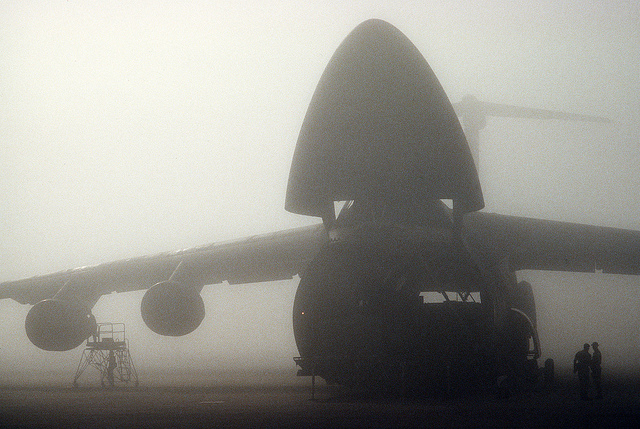
We moved further into the open cargo hold and forward to the opening. We had traveled over with an Army attachment and the Captain of that unit was asking if we wanted to go with them. I said, "No thanks, we can handle it from here."
As we exited the aircraft the war hit us right in the face. People were running around like chickens with their heads cut off. Sorry, but that is the best way that I could describe it. Everyone outside were wearing gas masks and chemical suits. "This isn't good", I thought. Our chemical gear was still tied down on a pallet in the middle of the cargo floor and we couldn't get to it.
There were rows of tents everywhere and pallets and pallets of cargo forming blocks and blocks of wooden crates. Visibility was difficult because of the fog, but it appeared to be lifting. We made our way to an open hangar with its inviting lights. I tried to find someone who could take us back out to the aircraft and get our baggage, but everyone was too busy doing something and couldn't help us.
We decided to walk out to the plane and carry as much as we could back and forth, until I suddenly see this bus driver passing. I stepped out in front of him and I think I scared him. He stopped and I stepped up onto the bus and said in a demanding voice, "Airman, take us out to that aircraft so that we can pick up our baggage and that's an order!" Thankfully he was a new recruit and still had some of the Basic Training fear in him. He may have had a different mission, but he was now driving us out to collect our gear. He dropped us back off at the brightly lit hangar.
Inside the hangar was the same familiar scene that we had just left in Dover; people lying around on top of their bags. The hangar floor was covered wall-to-wall with people waiting again to get transportation in-country. We still didn't know where we were going. Our orders were classified. In the middle of the hangar were a couple of personnel that were managing some sort of manifest. I walked over and asked them what they were doing. One of the airmen behind the desk said, "If you give us a copy of your orders, we can tell you where in-county you are supposed to be going." So, I opened my bag that I kept with me at all times and pulled out a copy of our orders and handed it to him. He thumbed through pages and pages of information and looked up at me and said, "I'm sorry sir, but I can't find your destination in here. Your orders are classified, so you will need to go over to Base Operations located over the next sand dune. They should be able to call headquarters in Riyadh."
I took SSgt Thompson and we treaded through the sand and over to the next sand dune. The sun was beginning to rise over the horizon and the temperature began to rise with it. Base Ops was dug into a dune with a lot of camouflage netting hanging over the entrance. SSgt Thompson and I walked in and introduced ourselves and told them that we needed to have someone decipher our orders and tell us where we are going.
A Staff Sergeant picked up a phone and transmitted in secure voice to Riyadh. He finished his conversation with whoever it was on the other end and turned to us and said, "You boys are going to Seeb, Oman. A transport C-130 (See photo below)will be here tomorrow morning at 0800 to pick your team up, so be ready."
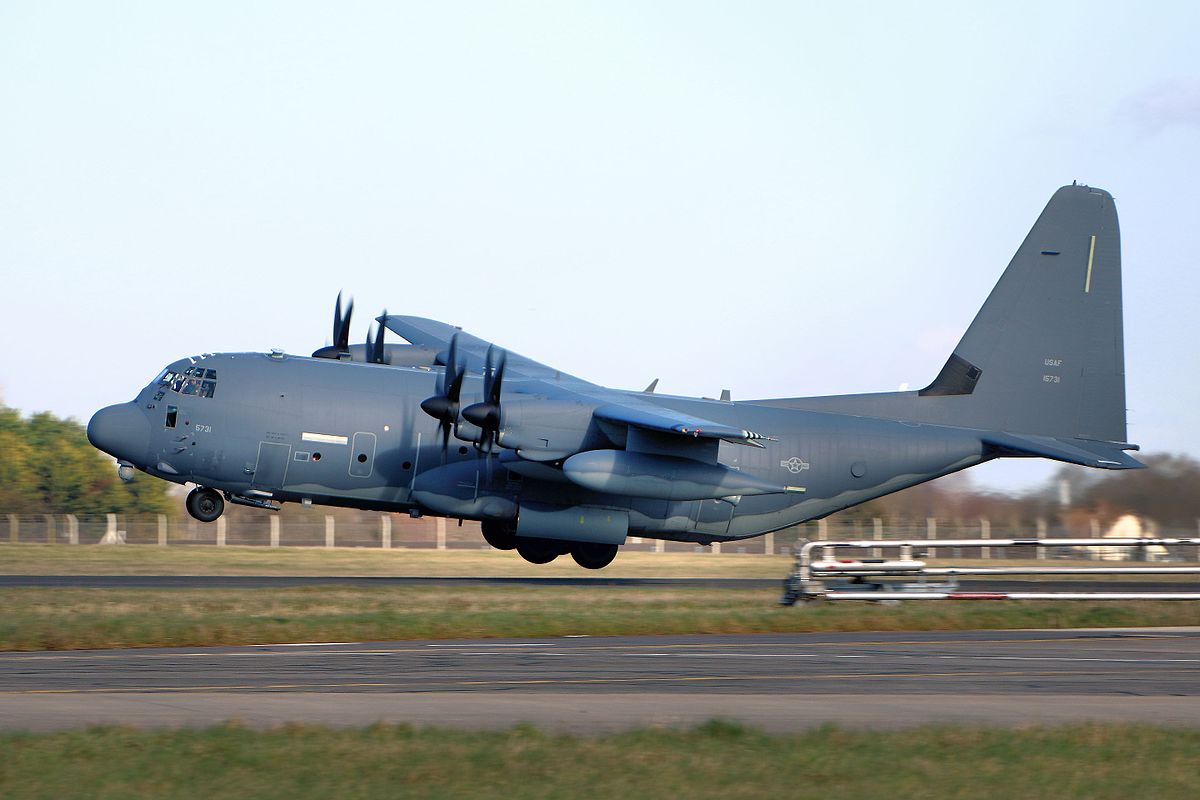
We shuffled back down the sand dune and back to the hangar. A siren sounds off just as we sat down on top of our bags to get the sand out of our boots. The siren meant that SCUDS were inbound. The use of chemical gas from the SCUDS was always a possibility. The Iraqis modified Scuds for greater range, largely by reducing warhead weight, enlarging their fuel tanks and burning all of the fuel during the early phase of flight (rather than continuously).
There were batteries of Patriot missile launchers (See photo below) staged all around. Shortly after you heard the alarm go off, a Patriot launched. It scared the shit out of us the first few times. One launched late and blew up near the chow tent and SCUD missile debris fell everywhere. I think that I was more afraid of large chunks of metal falling out of the sky than I was of an actual SCUD hitting the base.
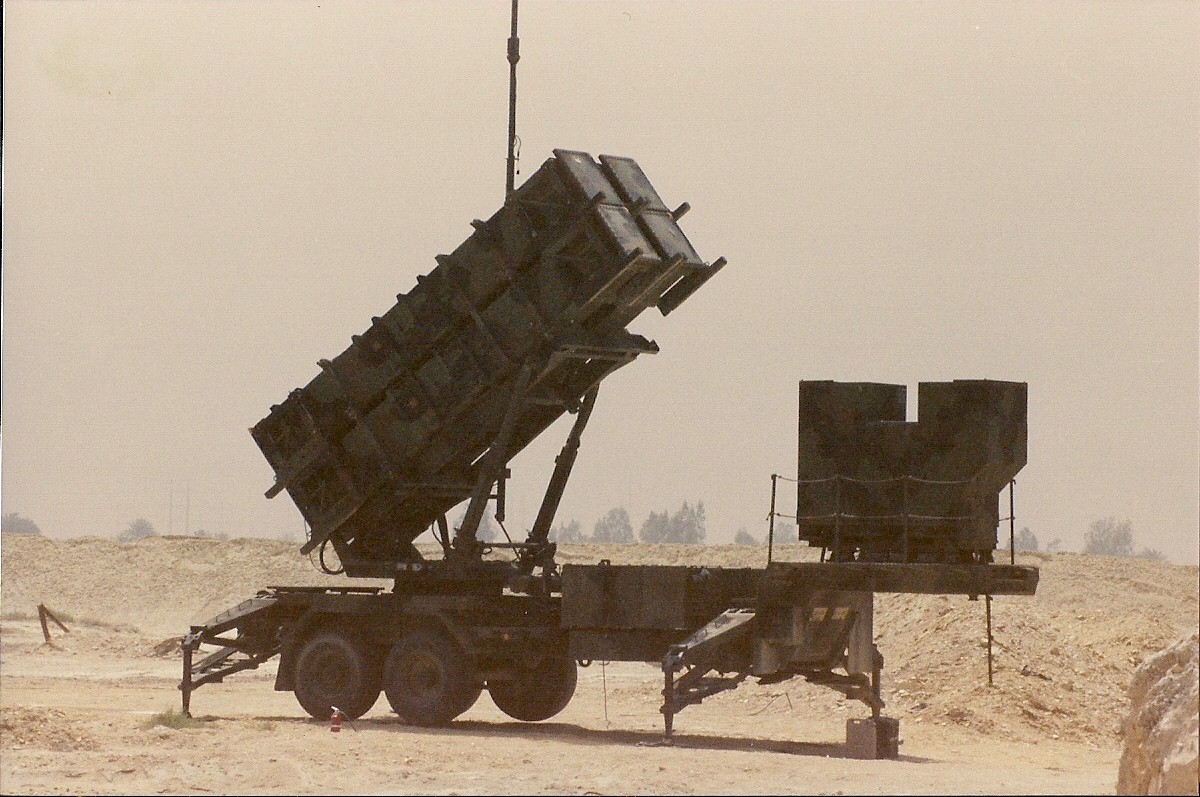
Grabbing your chemical gear (See photo below) and running into this corridor behind the hangar and watching the steel doors close down behind you soon became a routine. Everyone began frantically putting all their chemical training into 'real world' testing. I would nervously inhale, what I hoped was not my last breath, and held it while sliding my mask over my head and exhaled to test the seal around my face and mask. Some chemical gases are odorless, tasteless, and invisible so we never knew if we were taking our last breath.
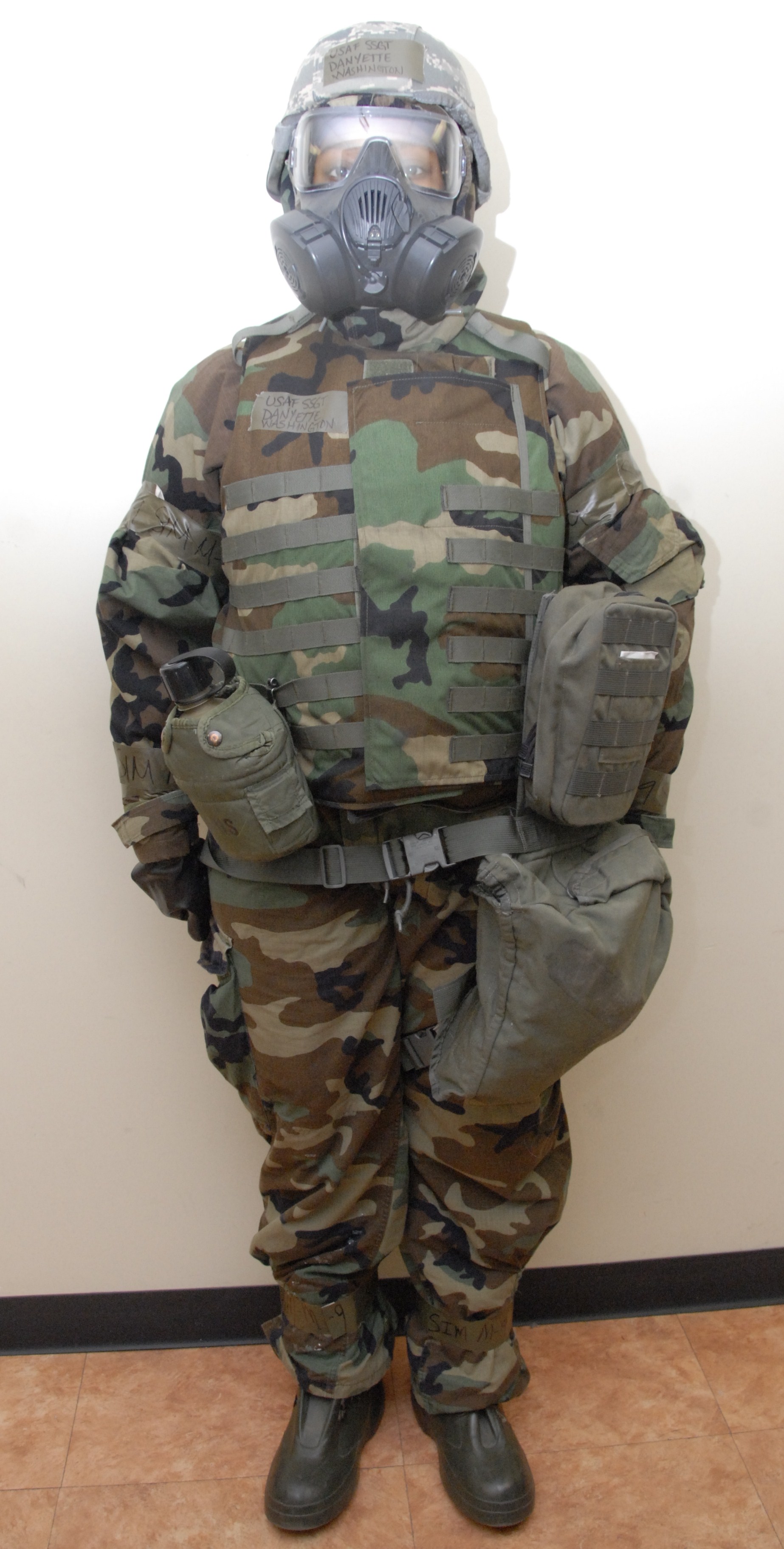
One morning, the siren goes off, and a couple of birds fell out of the hangar ceiling. Birds and small animals are usually a good indicator of gas in the area because their lungs are so small. We rushed back behind the door and went through our masking routine. You use the buddy system when getting masked up to ensure that everything is strapped down properly. As I was looking around the corridor to make sure that my guys were all set, I looked down and saw this young Army private who had just returned from emergency leave and did not have any chemical gear.
I had this sick feeling as I looked down at the fear in his eyes, because everyone, including me, was watching him to see if he was going to keel over from inhaling gas. When you're in a situation where someone's life becomes a litmus test, you feel almost ashamed of what you are feeling. The chemical Decontamination Team gave the "All Clear". Apparently, the birds had died from heat exhaustion.
I had remembered that there was an A-Bag (bag that holds your chem gear) sitting in the middle of the hangar and nobody had grabbed it so I knew that if nobody had grabbed it; it was available. The steel doors lifted and I could see that the A-Bag was still unclaimed. I rushed over and grabbed the bag and brought it over to the young Army private and without a word exchanged, he took the bag and dropped to the floor and sobbed like a baby. I turned and walked away feeling much better.
It was nerve racking every time the siren went off because you couldn't do anything without being interrupted. Most of us was already stopped up from all the tension and needed desperately to go to the bathroom, but you dared not. I was getting pretty scruffy because we had been traveling for the past few days without access to a shower, so I ventured over to a restroom that was around the corner between two hangars. People were waiting in line just to splash some water over their faces and take a sink bath. I finally got up to where it was my turn and I moved forward to the sink when that nasty siren sounds off in the background.
Everyone rushes around the hangar and races into the hangar, grab their A-Bags, run behind the doors, and become chemical safe once again. This was getting old.
Sleep was nearly non existent. I got some short catnaps, but never any real sleep. The incoming missiles made sure that you didn't.
The next day our transport arrived. A C-130 Hercules landed and ground control instructed us to upload into the back of the aircraft with engines still running. The maintenance truck took us out to the aircraft and backed up to the lowered cargo doors and we quickly uploaded. We taxied down the runway while we were getting seat belted into the side mounted web seats. The plane suddenly stops and we sat for a long time. I asked the loadmaster, "Why are we sitting on the taxiway? Are we waiting for takeoff clearance?" He leaned toward me and quietly replied back, "No, there are incoming SCUD missiles!" I thought, "Great, nothing like being a sitting duck!"
After about 45 minutes, we finally continued to taxi and took off. We landed at Seeb, Oman. The facility at Seeb doesn't exist or at least not until the Air Force needs it. Civilian contractors maintain all the vehicles at that location and store all the necessary equipment to support a fully functional military base. The name of our tent city was 'Camp Nacirema', which is American spelled backwards. The formal name was 1702nd Air Refueling Expeditionary Wing Provisional (AREFW).
The trip to Seeb only took about an hour. A maintenance truck was waiting for us when we arrived. We off loaded our baggage and equipment into the truck and the driver took us to Base Operations. A Senior Master Sergeant from the 301st Air Refueling Squadron, Malstrom AFB, Montana came up to me and introduced himself (I don't remember his name). He explained to me that they didn't need us anymore because another crew had arrived before us and they were maxed out on maintenance inspection crews.
He then gave us a choice, stay at Seeb and he would find something for us to do, or he could call Riyadh (pronounced 'Re-odd' and they would send us to another location.
I gathered my guys into a huddle and explained the choices. We liked the idea of being out of the SCUD missiles range here at Seeb and didn't really want to take our chances on going elsewhere so it was a unanimous decision to stay at Seeb.
The Senior Master Sergeant told us that we could handle the transient aircraft on station. I divided the eight of us into four two man teams so that we could cover two 12 hour shifts and allow a team to have some time off.
We were taken to our assigned tents. I entered through a make-shift plywood door and the first thing that hit me was how cool it was inside. The tent actually had an external air conditioning unit. That was a big plus because of the scorching heat. I asked around to see which cot was not already taken and found one near the front door. That was handy for when I took the hike to the latrine, I wouldn't have to disturb so many guys. There were two 12 hour shifts rotating out of the tent during the day, so you had to be quiet most of the time. That wasn't much of a problem, since there wasn't anything to do.
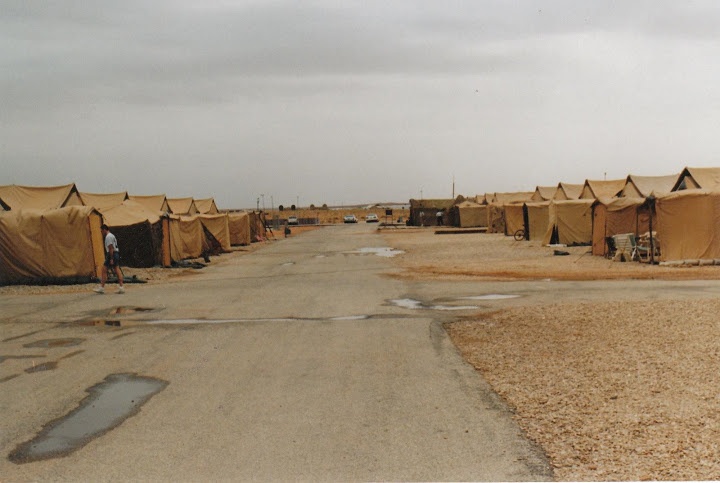
Our job was to manage parking for aircraft that were not part of the 1702nd Air Refueling Unit. We kept very busy with the C-130's that flew in and picked up portable runway materials. It seems like one was landing every hour. The C-130's were crewed by the Air National Guard and you could tell they were weekend warriors because they still had handlebar mustaches, long hair, and wore do rags. In other words, most of them looked like they just walked out of a biker bar.
It kind of reminded of some of the old Vietnam news clips that you see where all the Huey crews look like hippies. They were some hard working dudes. They were flying a shit load of missions within country.
We worked seven days a week, twelve hours a day and were recovering and parking aircraft one after another. It never seemed to end. Our daily routine started by waking at 0500 a.m., grabbing my metal mess kit (See photo below left) and drudging over to the chow tent.
The chow tent wasn't all that big and people rotated in and out pretty quickly. You didn't come to sit and chat, you ate and left. Outside of the chow tent was a row of metal garbage cans that were your field wash (See photo below). The first can held very hot water where you dipped your kit into and removed loose food. The second can had hot soapy water and a rack of brushes at its side. You dipped your kit into the hot soapy water and scrubbed them with the brush. The last can held fresh hot water where you did your final dip for rinsing. By the time you got back to your tent, the mess kit was dry.
After breakfast, we dropped our mess kit off at our tent and walked to the main gate of the compound where a military policeman stood guard with a 50-cal. That is the only large weapon that I saw the entire time that I was there. The compound was virtually defenseless against any attack from the coast. We were about a mile from the coast and Iran was a 60 mile flight from our base. According to CNN, Iran was sympathetic to Suddam Hussein and was allowing his pilots to land at local bases. There was always the real threat of one of them flying over low level under radar and bombing our compound. We had no protection against such an attack.
Helicopter's monitored the coastline for any coastal attack; however, there were no big guns to take out fighter jets if they chose to approach. I never really felt safe at the camp. Although the flightline was a quarter of a mile down the road, we had to take a bus to work every morning. It was dark when we left for work and dark when we returned. We stood outside the gate each morning and waited for the bus. It was always dry and dusty. When the bus rolled up it kicked up a dust cloud. I was told that the reason we had to take the bus and couldn't walk was that we would have been easy targets for snipers. I kept thinking, "And the bus wasn't?"
The ride to the flightline seemed ridiculously short. Our day consisted of parking all kinds of aircraft, but the main type was the C-130 because of its mission in country. The main parking ramp was reserved for the KC-10 and KC-135R refueling aircraft. The vehicle we used had no doors or roof. It was like a jeep, but wasn't. We fashioned a homemade sign on the back that said, "Follow Me!" which is what an aircraft would typically see in the States.
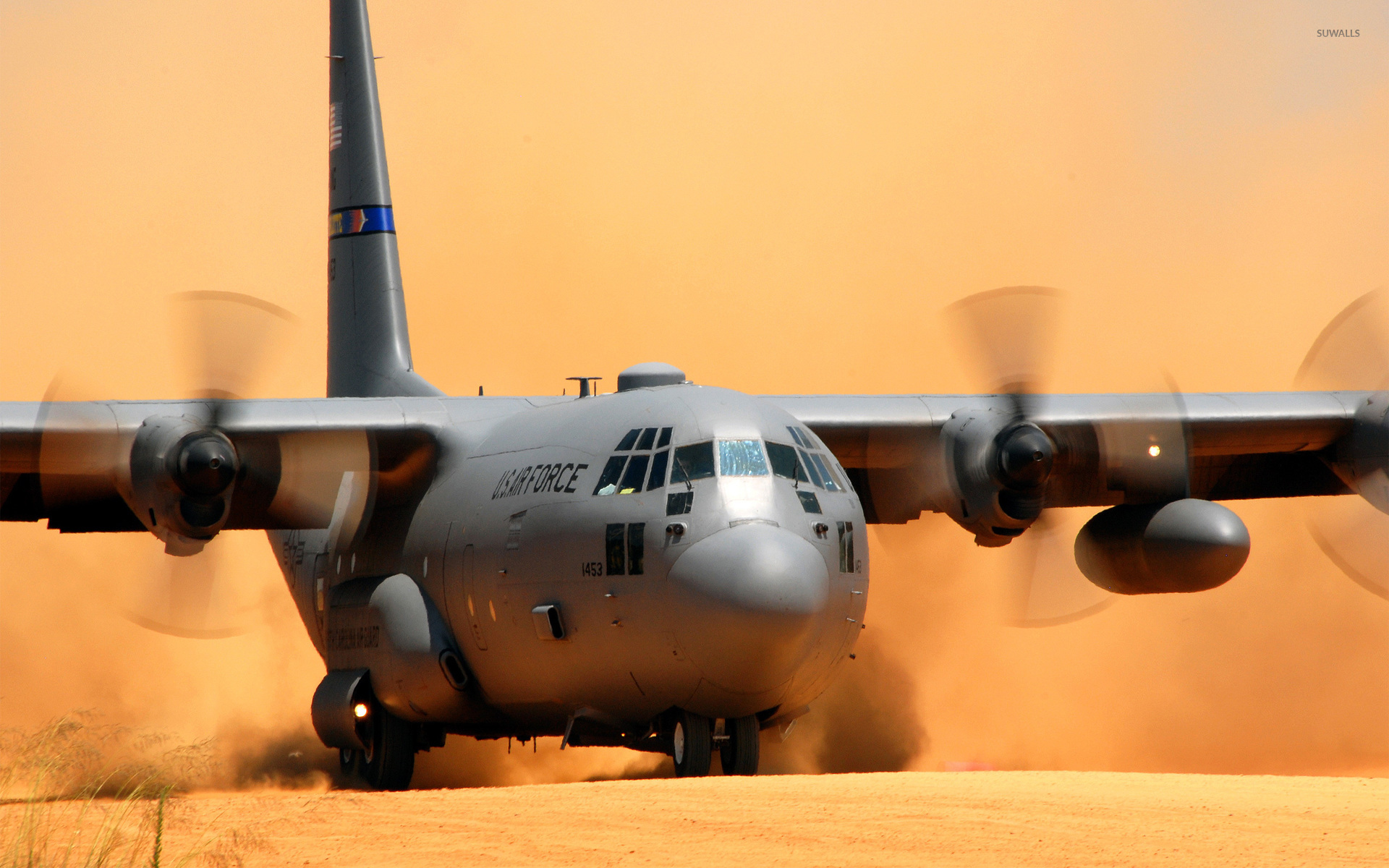
One time we had a C-130 land and we led it with our 'Follow Me' truck out into the desert. One of my guys jumped out of the truck and continued to marshal the aircraft and pointed him in the direction of the open desert where we were told to park him. The pilot was a full bird Colonial who was refusing to follow directions. He kept shaking his head in a "NO" gesture as my guy tried to get him to move. I parked the truck and went over stood where the pilot could see me and with hand gestures pointed to the desert and he stubbornly kept shaking his head. I then pointed directly at him and mouthed "YOU!" and pointed forcefully toward the desert. He gave me this disgusted look and reluctantly swung his aircraft into the desert and turned around facing the taxiway, shut down his engines and the loadmaster opened the main hatch. (See photo above)
I climbed aboard as the Colonial was angrily stepping down from the upper deck. The first thing out of his mouth was, "What in the hell do you think this is Sergeant, a four-wheel drive vehicle?" I returned sharply, "No sir, I think that it is a six-wheel drive vehicle!" Just about that time, our Operations Officer, a Captain, drives up. He had observed the pilot's hesitation following our directions.
The Captain boards the aircraft and steps up to where the Colonial and I had just completed our short exchange and asked, "What's the problem here Colonial?" The Colonial replied, "Why in the hell couldn't you park us on the ramp over there (pointing to the refueling aircraft ramp) instead of out here in the desert? Do you know what that sand can do to these engines?" My Operations Officer replied with a chuckle, "That ramp is reserved for the refueling aircraft and you were directed out here. MSgt Moland directs traffic on this ramp per my orders and this aircraft is designed for desert operations and I don't really see what the problem is. You will be uploaded shortly and you can get the hell out of here!"
Two parking spaces near the refueling ramp could be used temporally for parking C-130's. They had to leave before a certain time. One late afternoon, we had a C-130 that had sheared a shaft on a starter motor. The crew chief was fairly new on the aircraft and was having problems removing the starter. I took two of my guys over and removed the starter and capped off the oil lines for him. We put the engine cowling back on and secured it. He was pretty grateful. Unfortunately, there was no way to start the engine with the starter removed, other than….an old Vietnam method called "buddy start".
There was another C-130 sitting on the ramp and was getting ready to depart. I went over to him and asked if he would like to do a procedure that hasn't been done in a long time (See rare example above). He knew what I was talking about immediately. He taxied his aircraft to a position in front of the crippled C-130 with his tail pointing at the front. He feathered his props and backed up as close as possible to the other aircraft so that now we had two aircraft facing nose to tail. We placed and extra set of wheel chocks under both aircraft.
The good C-130 ran his engines up to full power creating a huge blast of wind onto the props of the crippled aircraft. The engine with the starter removed began to turn. It rotated with enough speed to finally start. The good C-130 reduced engine thrust and the other aircraft's crew chief pulled the chocks and the aircraft taxied out and took off. The other C-130 crew got a kick out of doing something that wasn't on the books and my guys got to see something unique.
One morning we had a Russian pilot in the II-76 (Russian rip-off of our C-141 aircraft- see photo below) try to taxi into our ramp.
I had to drive out and pull my vehicle into his path to stop him. The tower finally convinced him that he was going the wrong direction.
I had brought two airmen freshly out of Basic with me and I wanted them to experience as much as possible while they were there. I remember sitting at the end of the taxiway waiting on the next inbound aircraft with Airman John Morea. He was a newby from Stony Brook, New York. I looked up into the sky and saw a C-5A (See photo below) approaching.
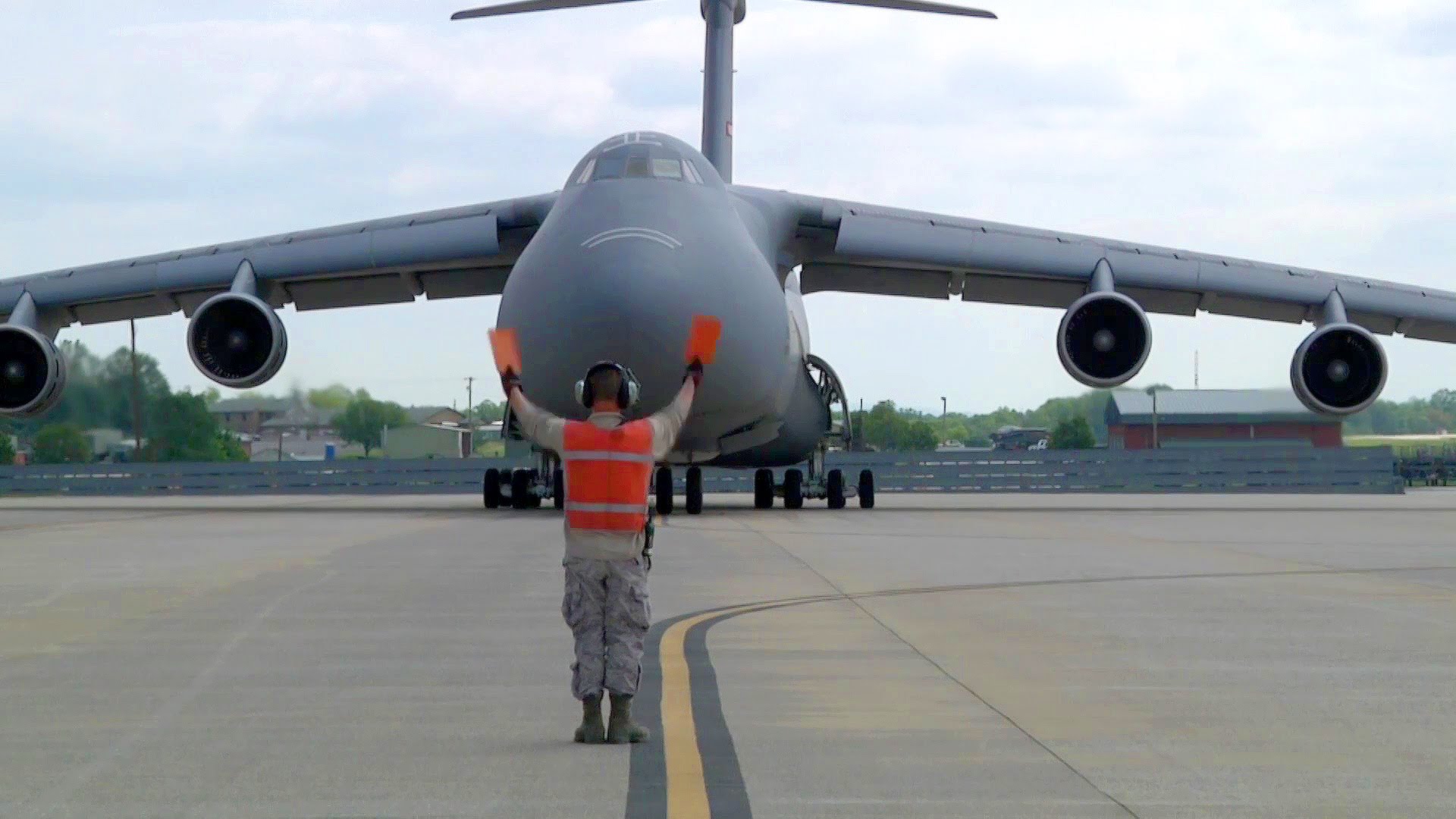
John had been a little apprehensive about parking aircraft, so I wanted him to get over that fear. I pointed to the huge aircraft on approach and said, "Do you see that aircraft?" He nervously asked, "Yeah, why?" I said, "Because you are going to park it." He stared back at me with wide eyes. In his New York cockiness, he was always making remarks about how good he was at everything and I thought I would give him a chance to prove himself.
As the aircraft got closer, it got larger and so did John's eyes. I drove over to where the aircraft was designated to park and parked the truck over to the side. We both got out and I handed him the marshalling vest and wands and said in a calm voice, "John. This aircraft is no different that any other. Don't be intimidated by its size!" I gave him some pointers as to when to turn the aircraft at points on the yellow taxi line. He was nervous, but willing to give it a try.
As the aircraft taxied nearer and nearer, its size grew. John was set and determined to show me his stuff. He turned the aircraft at the right time and pointed his right hand at a horizontal level and with his left motioned the aircraft into a left turn. He then moved both hands vertically above his head and motioned both hands for and aft equally to bring the monster closer and closer until its front gear rolled onto the mark that I had given John for stopping. He then moved both arms down to his side and brought them back up above his head and crossed them, which signaled the pilot to stop.
John was ecstatic that he had mastered the art of marshalling the largest aircraft in military inventory onto a crowded ramp and not fucked it up! Needless to say; his confidence level went sky high. He went back that evening and bragged to his ranking buddies about his conquering his fears. After that day, John wanted to park everything.
We got two hot meals per day, breakfast and dinner. Our lunch was delivered by a forklift on a plastic wrapped pallet and dropped in the middle of the hangar floor. Bon Appetite! MRE's (Meals Ready to Eat) were the cuisine of the day. Everyone tore through the stack of meals to scuff up the ham and turkey ala king packs first. Sometimes you would come off the flightline late and find the pallet pillaged through and nothing left except cold spaghetti.
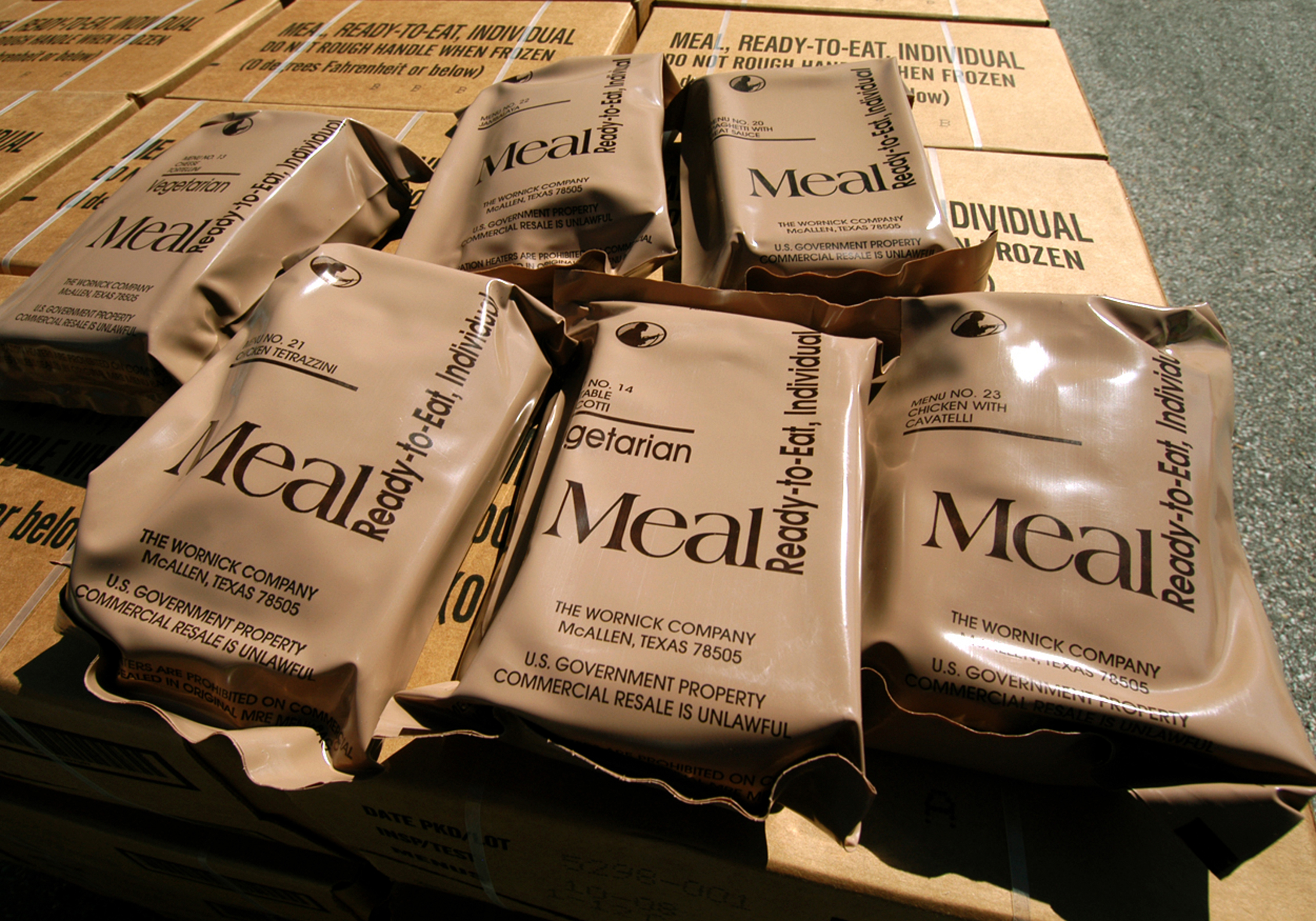
The MRE's were packaged years ago, but were supposed to be good for ten years. The first thing tossed out of the pack was the canned water. Nobody trusted aged water in a can. The favorite out of the pack was the discolored M&M
Bottled water was plentiful. Pallets of water were stacked everywhere you went. It was important to stay hydrated in the desert. It was January, but the temperatures were in the high 90's. The sun was the largest that I had ever seen it. It was reddish orange (See photo at left) and seemed to consume the evening horizon as the Earth rotated into nightfall. When the sun set it set very fast. You could literally see it moving downward below the horizon.
The camp included 700 tents that housed 26 people each. The tents were originally designed for 24, so it was a little cramped. At least the tents were air conditioned. The floors were rubber and there was an opening around the parameter of the tent that flapped when the wind blew. Each person had a military cot and a living space of 4 foot by 7 foot. Some people fashioned crude furniture from left over wooden crates (See photo below). I saw book shelves, cabinets with doors, and even decks outside of the tent. It was quiet a community. There were a couple of people who built decks with railings and setup an outdoors barbershop. You could get a haircut for only a buck.
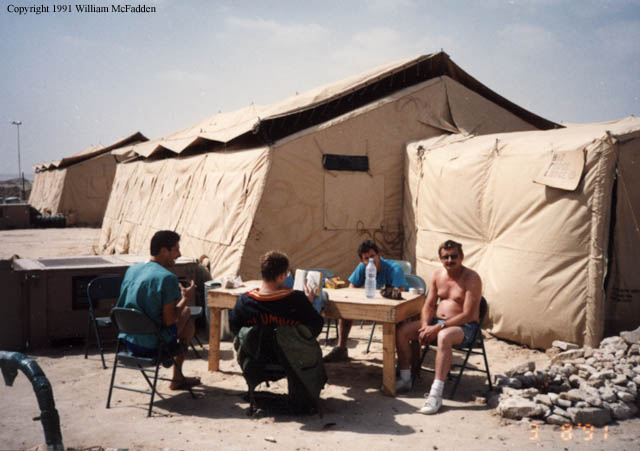
A few signs made of wooden planks stood in front of some of the local plant life. One bush that was covered with these long thorns had a sign in the gist of Wiley Coyote that said, "Longus Thorneous Busheous." Some nailed up crossroad signs with distances to home city locations, like New York, Los Angeles, Chicago, etc. People were pretty inventive when it came to tolerating the life at Camp Nacirema.
On January 27th, we had an unusual sandstorm that lasted all night and into the next day. I thought our tent was going to blow away. All you could hear during the night was the lower tent flaps flopping loudly. The wind died down the next day; however, it rained some of the largest raindrops that I had ever seen. I was at work and couldn't get off to check out the tent. I just knew that it was getting flooded.
I wasn't wrong. When I got off my shift, I took the bus back to camp and found people pushing water out of the tent with brooms. I went to my cot and found all of my personal belongings lying on my cot soaked. Under your cot was the only place that you had to store anything. The guys who were in the tent during the storm went around and picked up peoples stuff off the floor and put it up on the cots in an effort to protect it.
My camera and civilian clothes were all soaked. I didn't have anywhere to hang them to dry so I had to throw them away because they started to mildew and snaps began to rust.
One of the odors that I will never forget was the stench from the outdoor latrines. At high noon when the sun was at its hottest, the smell from the latrine would knock you over as you passed anywhere near it. If you had to piss, you had to walk all the way to the end of the tent city to the latrine tent and hold your nose while you did your thing. You pissed into a long horizontal metal trough that ran at a slight angle to direct the urine down into a pit under the tent.
There was no privacy when you had to take a shit. The toilets were a step up onto a platform that had about four toilet seats. There were no dividers between you and the next person. You could literally wipe his ass from your seat. About the only thing that you could do to offset the embarrassment of sitting that close was to have idle chit chat.
During our stay at the camp, my two airmen had latrine (toilet facilities) duty at least one time each. They said that it was the most disgusting thing that they had ever done. I felt for them.
Other than the variance in the handling of different aircraft during the day, the time spent from January 17 through April 6, 1991 was like déjà vu.
At the end of the war, we were given the opportunity to go downtown Seeb. We took a bus into town and got a look at the local life. On the way into town, I noticed that the highways were made of thick concrete and rows and rows of national flags decorated the center medium as far as you could see. The roundabouts (See photo at left) were beautifully decorated with mosaics of many types of art. I recall talking to the bus driver, who was Indian, and he told me that the Arabs do not do manual labor and that they import labor from the Philippines, India, and other countries. He told me that he was working to bring his family to Oman once he earned enough. The country was still ruled by Sultan Qaboos bin Said (Sah-eed). The driver told me that the Sultan would, at times, dress in common mans clothes and travel around in disguise and try and find out what his subjects thought of him.
Most of the men that I saw downtown wore the traditional white robes called a Thoub. Mercedes vehicles seemed to dominate the choice of the wealthy, but it was hard to tell who was wealthy and was not because wealth was abundant. The only automobile dealerships present were of course Mercedes, Jaguar, and BMW. Gasoline, after all, was only 15 cents per gallon. I visited one of their malls (See photo at left). It was very clean and modern. I purchase some cassette tapes from a store that had a wide variety of cloned music.
We stumbled upon a Pizza Hut. Yes, I said Pizza Hut. The pizza was pretty good, but because of their religion, you couldn't get pork sausage. The soda was not quiet the same, but it was better than what we had back at camp.
I found a couple of shops down this long alleyway that was off from the main shops. It had some interesting old jewelry. I picked up an oval piece with handmade silver work around the edges that I thought would look good with some of my wife's current jewelry. I talked the price down with the kid behind the counter (you were expected to haggle) to a reasonable price and bought it. His shop had some old Egyptian jewelry that I couldn't afford.
The next day at camp, we were briefed that the Sultan wanted to give the entire camp a treat and arranged for everyone to spend the night in a local luxury hotel at his expense. The treatment that we got at the hotel was amazing. We dined in this huge formal room with ice sculptures arranged around the food. Waiters took care of our every need and brought us beer, cola, or wine.
The rooms were bright and plush. It was hard to believe that the day before we were sleeping on tiny uncomfortable cots. I slept like a baby that night. I hated to leave the next morning, but the camp was being dismantled and we had to find a ride home.
We found the Grand Forks, North Dakota crew and worked out a ride home with them because they were closer to home than anyone else. I knew that the flight home was going to be long and that we would need some food, so I took my guys over to the chow tent and raided it. It felt very strange pilfering through what was earlier our source of sustenance. We took large cans of ham, bags of bread rolls, and jars of peanut butter. The plane was packed with all the equipment that Grand Forks had for their team plus as many passengers that they could cram onboard. We dragged all of our gear onboard and stuffed it in between any place that we could find to secure it. I never saw an aircraft that loaded before.
I thought the aircraft was a little overloaded but with the new engines on the KC-135R model, it was not a challenge to get airborne. We lifted off from Seeb and there was a simultaneous cheer from everyone onboard. We were finally on our way home. I buried my head into my bags and cried. Thankfully if was dark on the aircraft and people were so tired that most were crashing or possible doing the same.
Our food stash was a welcomed in-flight luxury. Through all the chaos of gathering their belongings and trying to find a ride home, most forgot all about food. We broke open the bags of bread rolls and popped the canned ham and with a pocket knife cut slices for everyone. One of my guys scuffed up a large block of butter and people were using their fingers to scoop out a spread onto their rolls.
We had to make a refuel stop in France. The crew chiefs on our jet were from Robins Air Force Base and decided to force change of crews. They manually caused a leak in one of the landing gear shock struts, which made the crew change their flight plan. They made the decision to fly into Robins instead of Grand Forks so that they could get the strut fixed.
My guys and I were unaware of it at the time, because if we had known what was going down, we could have fixed the strut by simply pumping more air into it and then letting the air out to roll the o-ring seal in the strut, which would have stopped the leak. The crew chiefs most likely ran a thin wire up between the seal and the outer strut causing a seeping leak. That little trick the crew chiefs pulled cause us to have to find additional transportation upon landing.
We landed at Robins AFB and a small Air Force band met us on the flightline. The only thing on our mind at that moment was to find a flight home. We got transportation over to the SATO (Scheduled Air Transportation Office -they arrange military transportation). They weren't normally open on the weekend, but there was an emergency contact number on the door. I called it and explained to them our situation. They came into the office and cut us tickets to Minot International Airport via Atlanta Hartsfield Airport and then Minneapolis.
We called for a military bus to pick us up and take us to Macon which was the closest civilian airport. It was a small airport and we arranged a small aircraft to take us to Atlanta. The pilot managed to get all our bags and us onto the small plane. I believe the plane was at or near its max takeoff weight. It struggled to get off the ground, but we got airborne. The flight was only 30 minutes.
We left out of Atlanta Hartsfield on Northwest and changed planes in Minneapolis and then onward to Minot International Airport. It was an amazing feeling coming home. I couldn't wait to see my family. The past four months in the Gulf had taken a great deal from me and at the same time given me something in return.
My rank was Master Sergeant and my duties where to ensure that aircraft took off on their scheduled times. This entailed managing about 200 specialized maintenance personnel who worked as electricians, avionics, hydraulics, jet engines, airframe and repair, sheet metal, machinists, survival equipment, and of course crew chiefs. Making a scheduled takeoff time was not always easy.
Sometimes when an aircraft landed from a previous mission, it didn't always land maintenance free, in fact, most of the time it didn't. When an aircraft had two scheduled missions in one day, it put a strain on the maintenance personnel to get it ready in time for its second mission. It was my job to prioritize work on a specific aircraft and to make sure that Tanker 2, the flightline expediter, dropped off crew chiefs and support equipment to the aircraft. I was an expediter for about four years before becoming a Production Supervisor, which was a demanding job in itself. As an Expediter, you managed the crew chiefs and called maintenance request in to Job Control.
I had a certain respect for those guys in Job Control, because I had been in their shoes. Two years later, I decided to retire from the Air Force.
Too many changes had taken place in the military; especially the maintenance life. I guess that I had been in about every level of maintenance by the time I retired.
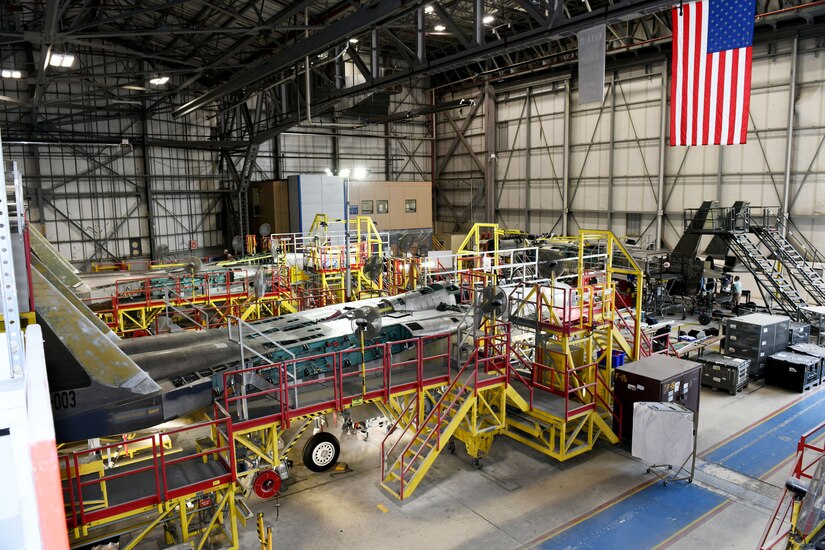
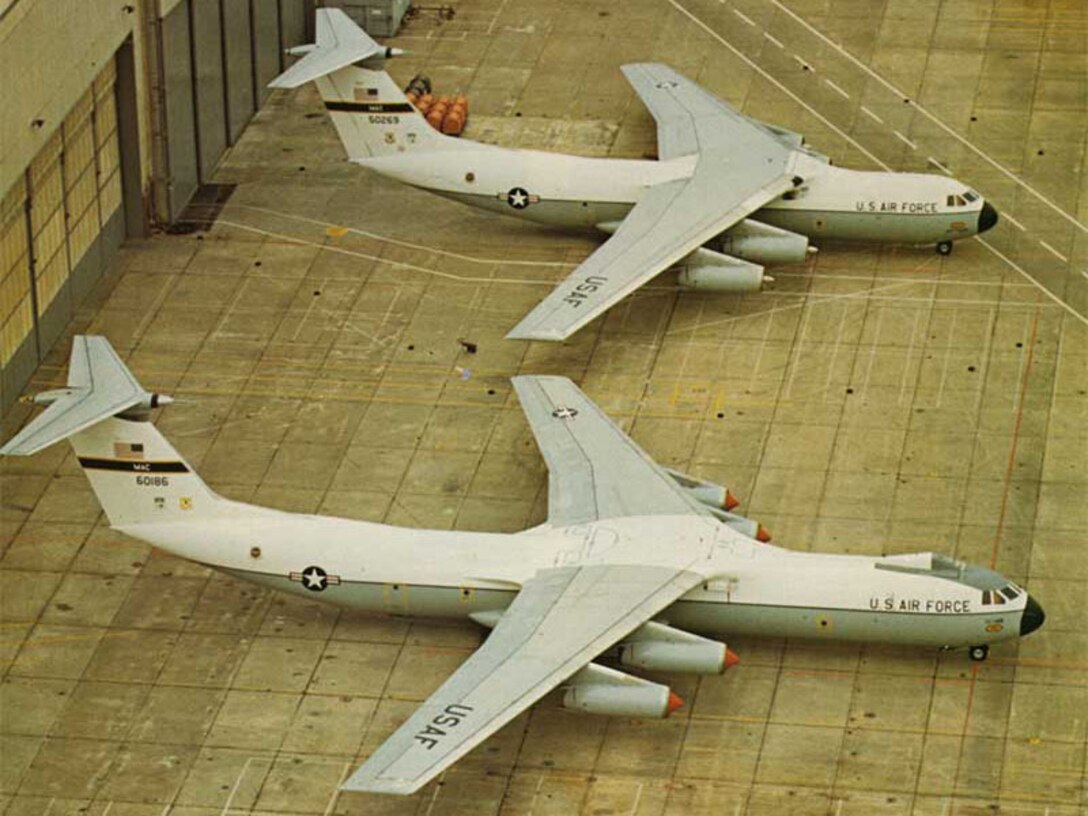
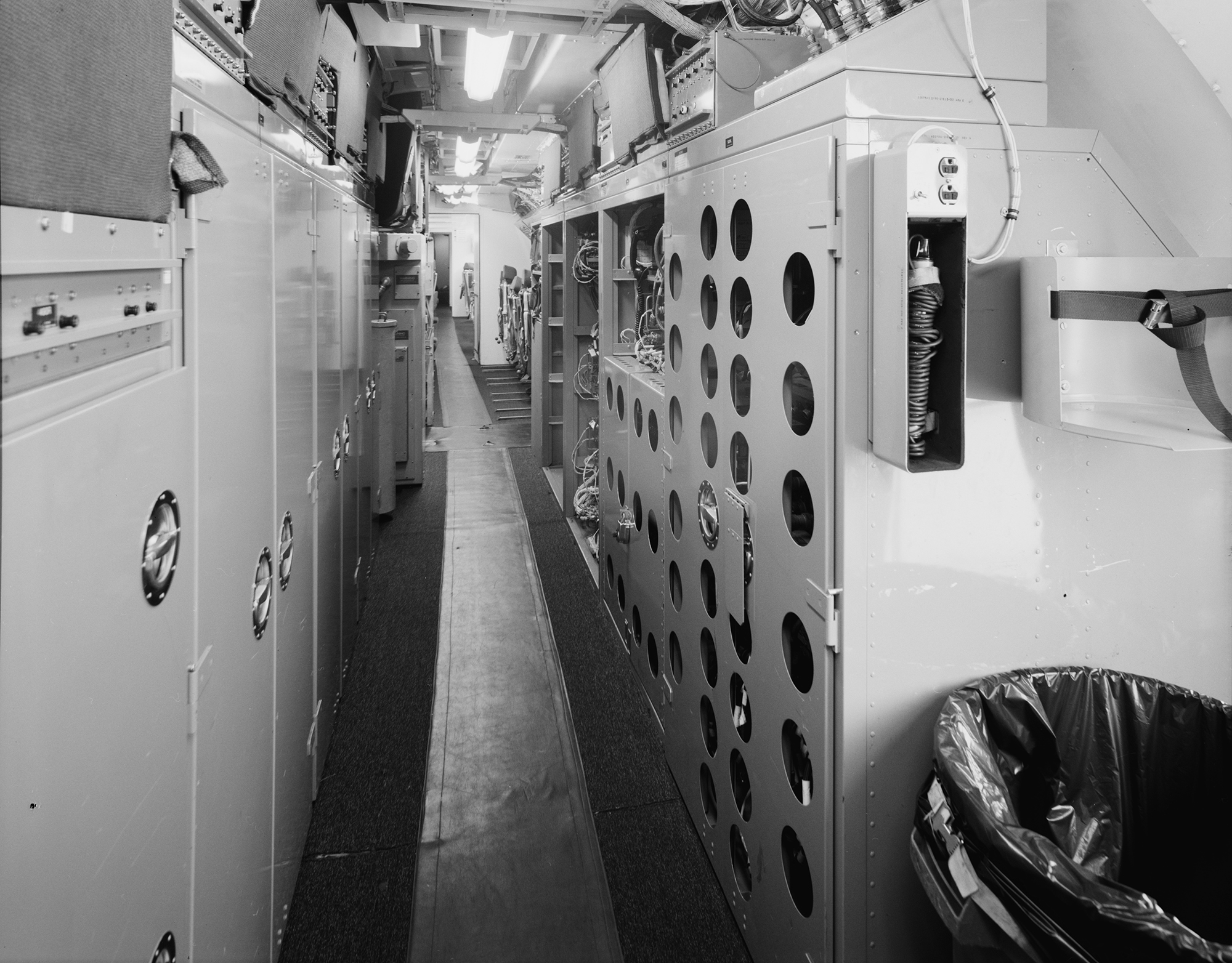
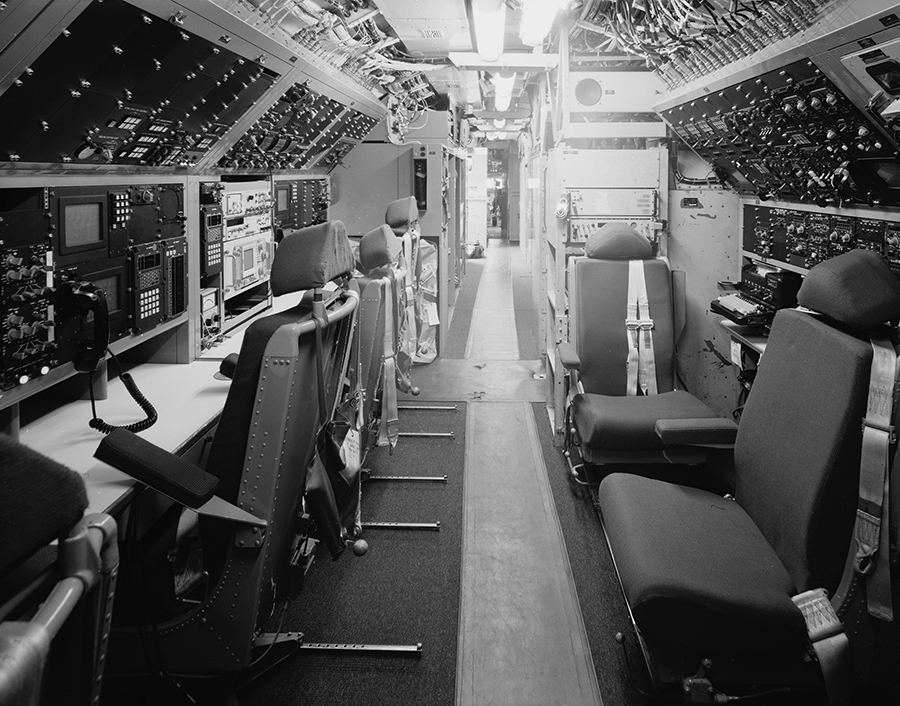
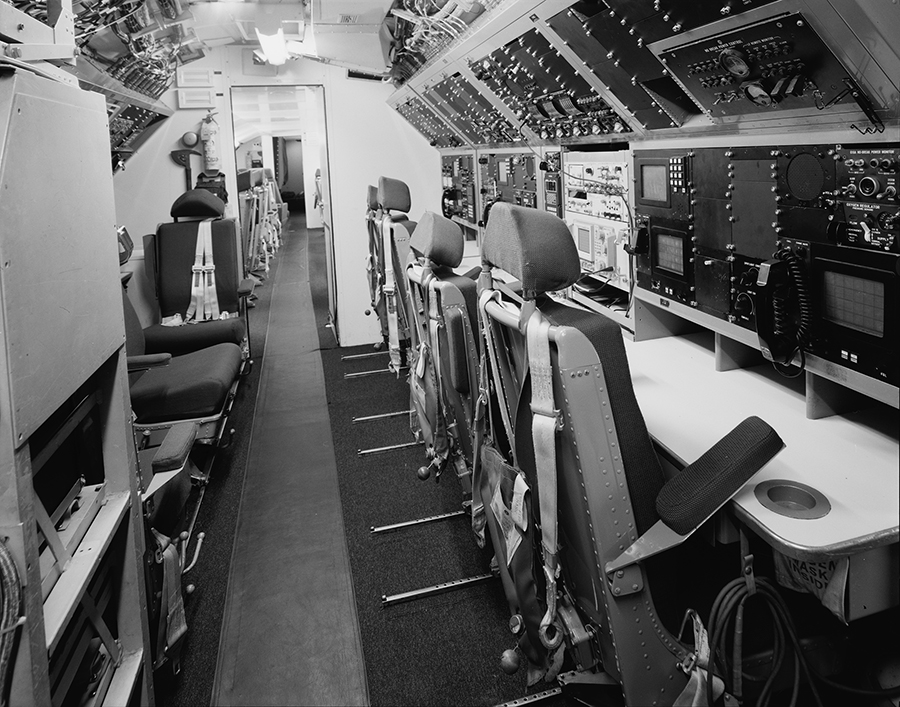
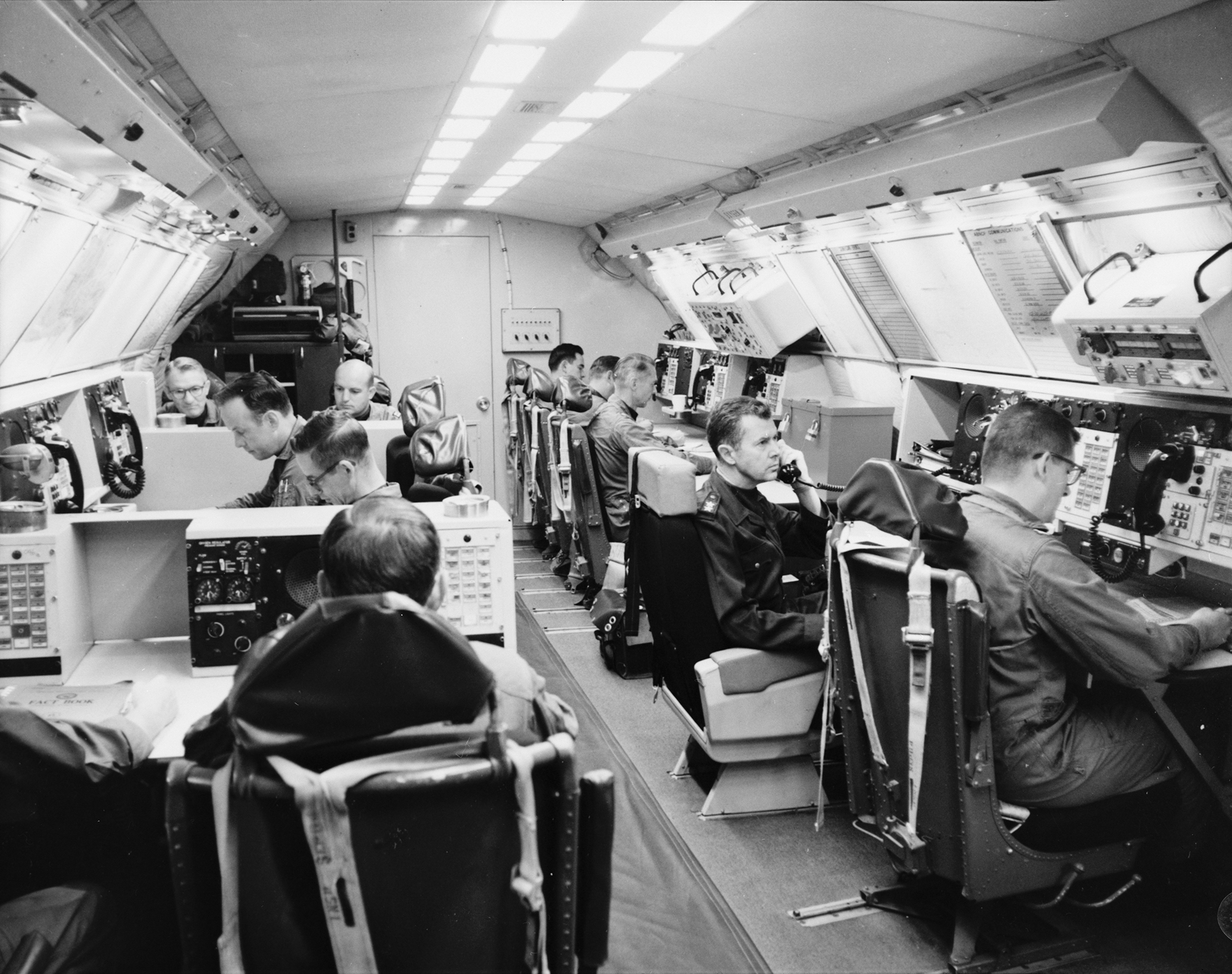
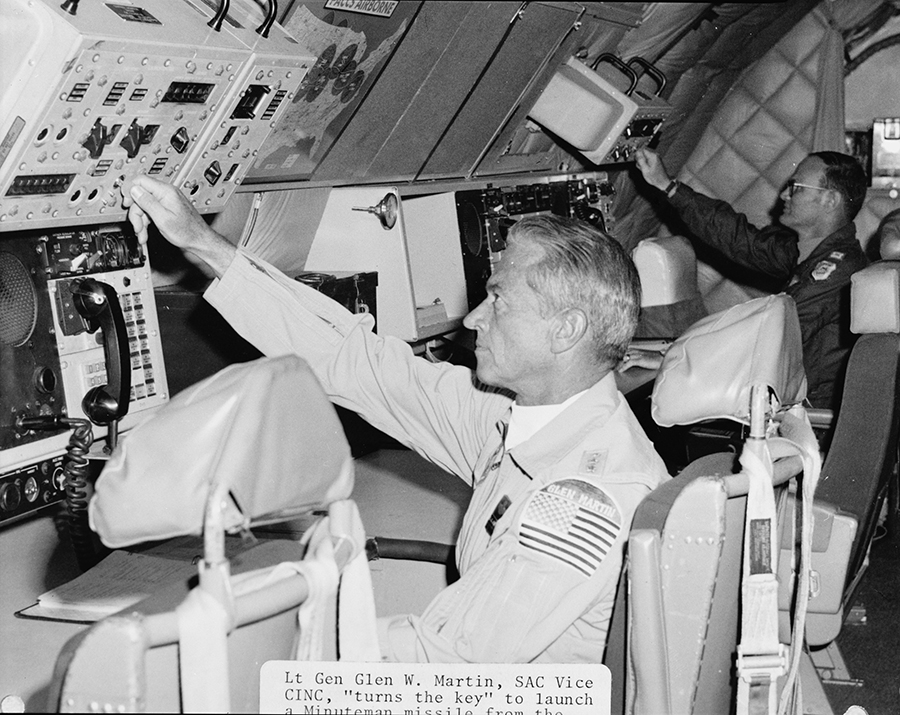
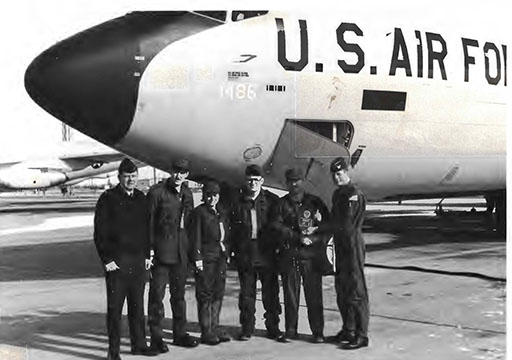
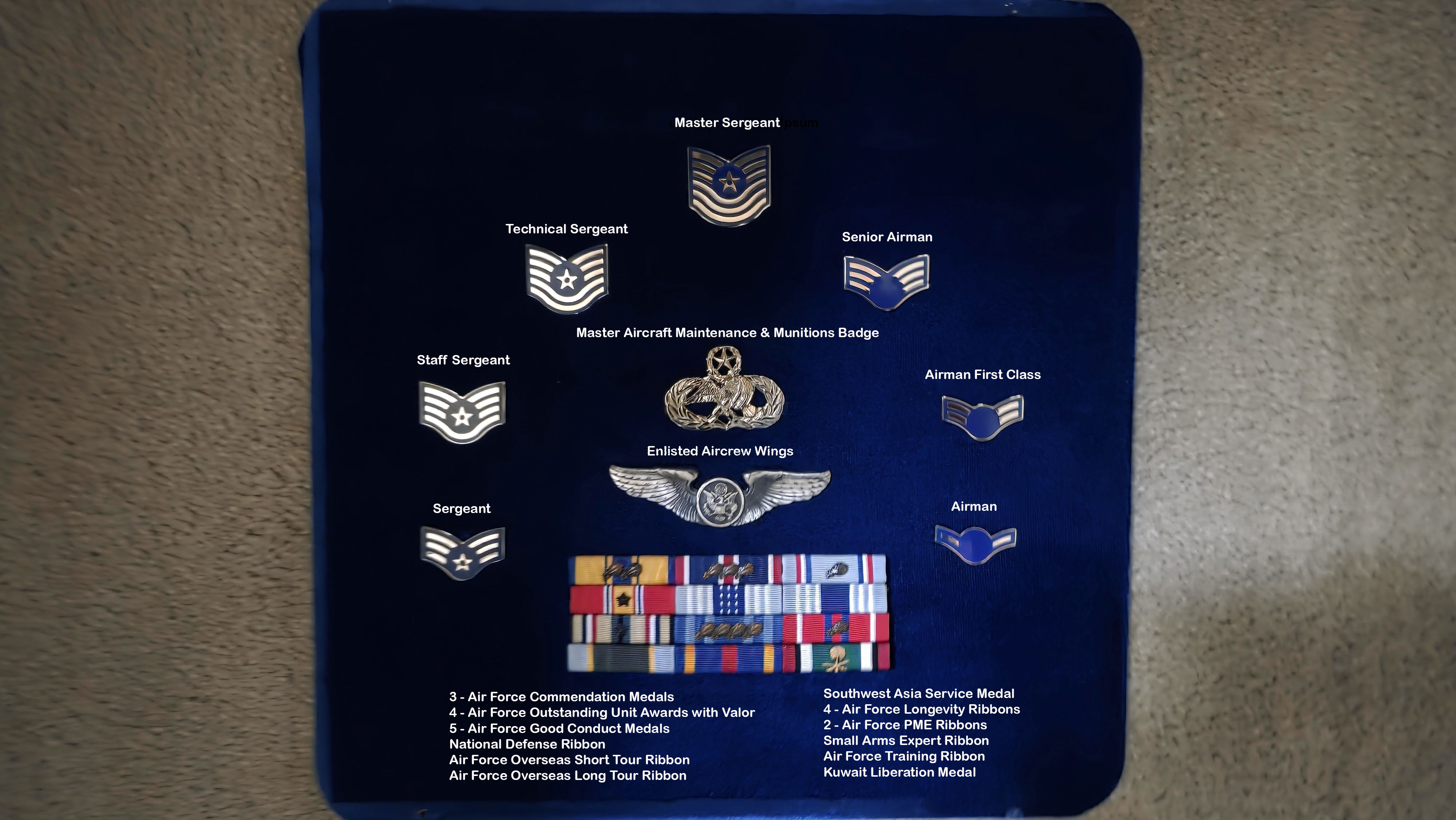
Awards & Certificates
- Honor Graduate Certificate for completing the Aircraft Maintenance Specialist - Sheppard AFB Training Jan 27, 1975
- Letter to parents for Honor Graduation from Aerospace Sciences at Sheppard AFB Training - Mar 11, 1975
- Certificate of Training for KC-135A Aircraft Maintenance Technician - Warner Robins AFB, GA. Jun 6, 1975
- Certificate of Training for Non-Commissioned Officer Orientation - Warner Robins AFB, GA. Aug 25, 1976
- Certificate of Training for Air Force Logistics Command NonCommissioned Officer Leadership School - Warner Robins AFB, GA. Sep 22, 1978
- Certificate of Appointment to Non-Commissioned Officer - Warner Robins AFB, GA. Aug 1, 1977
- Certificate of Training for OJT/Manager/Supervisor Orientation - Warner Robins AFB, GA. May 11, 1978
- Rudder Lock Award - Warner Robins AFB, GA. Oct 19, 1978
- Secretary of the Air Force Certificate - Castle AFB, CA. Oct 11, 1979
- Senior Aircraft & Munitions Maintenance Badge - Castle AFB, CA. Nov 1, 1979
- Commendable efforts during MSET - Castle AFB, CA. May 1980
- Citation for Outstanding Efforts in Maintaining the Cleanest Aircraft at Castle AFB, CA. from 15 Dec 80 - Castle AFB, CA. 15 Jan 81
- Letter of Appreciation for Outstanding Maintenance - Castle AFB, CA. Feb 24, 1981
- Letter of Appreciation from Deputy Commander for Maintenance - Castle AFB, CA. Mar 23, 1981
- Certificate of Training for KC-135A Command Aircraft Systems - Castle AFB, CA. Aug 31, 1982
- Letter of Recognition for Support of Orphan Project - Incirlik AB, Turkey Oct 16, 1982
- Aeronautical Orders - Hickam AFB, HI. Jan 1, 1985
- Certificate of Training for OJT Trainer Familiarlization Course - Hickam AFB, HI. Feb 22, 1985
- Certificate of Training - Completed Noncommissioned Officer Academy - Hickam AFB, HI. May 22, 1985
- Letter of Appreciation in Support of North Dakota Special Olympics - Minot AFB, ND. Feb 3, 1987
- Outstanding Contribution - Castle AFB, CA.
- Letter of Appreciation for Outstanding Support - Minot AFB, ND. May 14, 1987
- Letter of Outstanding Achievement - Minot AFB, ND.
- Letter of Appreciation for Support of Gen Lemay's Visit - Minot AFB, ND.
- Letter of Appreciation for Support of CEVG Evaluation - Minot AFB, ND.
- Certificate of Training - Completed KC-135A Engine Operation - Minot AFB, ND. Apr 3, 1987
- Certificate of Training - Completed Core Automated Maintenance System - Minot AFB, ND. July 9, 1987
- Certificate of Training - Completed Supervisor OJT Course - Minot AFB, ND. Oct 8, 1987
- Retirement Orders - Minot AFB, ND. May 22, 1993
- Mouse Over to View
- Air Passenger Service Specialist
Key Responsibilities
Passenger Management
Check-in Procedures: Responsible for checking in passengers and their baggage.
Manifesting: Prepare and maintain passenger manifests to track who is on board.
Coordination: Work with other transportation personnel to ensure smooth operations.
Safety and Compliance
Safety Regulations: Implement safety precautions for handling passengers and their belongings.
Documentation: Verify travel authorizations for validity and accuracy.
Operational Support
Scheduling: Assist in scheduling air transportation operations.
Cargo Handling: While primarily focused on passengers, may also involve some cargo management duties.
Skills and Qualifications
Attention to Detail: Essential for managing documentation and ensuring compliance with regulations.
Communication Skills: Important for coordinating with passengers and other team members.
Technical Knowledge: Familiarity with air transportation procedures and safety protocols.
This role is vital for maintaining the efficiency and safety of military air travel, ensuring that personnel can be transported effectively to their destinations. - KC-135A Phase InspectorRole Overview
A KC-135 Phase Inspector is a specialized maintenance technician responsible for conducting in-depth inspections of the KC-135 Stratotanker aircraft.
These inspections, known as Periodic Inspections (PIs) or Isochronal Inspections (ISOs), are critical for ensuring the aircraft's operational readiness and safety.
Key Responsibilities
Inspection Process: The Phase Inspector oversees the removal of aircraft panels and conducts thorough examinations of various systems, including engines, landing gear, and structural components.
Discrepancy Identification: They identify and document discrepancies, which can average between 700 to 1,200 issues per inspection, depending on the aircraft's usage and age.
Collaboration: The role involves working alongside other maintenance personnel from different Air Force Specialty Codes (AFSCs) to ensure comprehensive inspections.
Compliance: They ensure that all inspections meet Air Mobility Command and local technical guidance, adhering to strict safety and quality standards. - C-135A & B-52 Aircraft Phase Pratt & Whitney J57 Jet Engine InspectorRole Overview
A KC-135 Phase Engine Inspector is responsible for inspecting and maintaining the engines of the KC-135 Stratotanker aircraft. This role is crucial for ensuring the aircraft's operational readiness and safety.
Key Responsibilities
- Conduct thorough inspections of KC-135 engines during scheduled maintenance phases.
- Identify and document any discrepancies or issues found during inspections.
- Ensure compliance with safety standards and technical specifications.
- Collaborate with maintenance teams to perform necessary repairs and adjustments.
Qualifications
- Specialized training in aircraft engine inspection and maintenance is essential.
- Knowledge of quality assurance procedures and engine operation is important.
Inspection Types
- Routine inspections to assess engine performance.
- Post-overhaul inspections to ensure engines meet safety and operational standards.
- Pre-availability inspections before the aircraft is returned to service.
- Certified to conduct engine maintenance runs - KC-135A Aircraft Crew ChiefRole Overview
An Air Force aircraft crew chief is a noncommissioned officer responsible for the maintenance and readiness of military aircraft.
This role is crucial in ensuring that aircraft are safe and operational for flight missions.
Key Responsibilities
Maintenance Oversight: Crew chiefs supervise and perform various maintenance tasks, including inspections, repairs, and troubleshooting of aircraft systems.
Pre-Flight Checks: They conduct thorough pre-flight inspections to ensure that all components are functioning correctly before takeoff.
Coordination: Crew chiefs coordinate the efforts of the maintenance crew, ensuring that all tasks are completed efficiently and effectively.
Crew chiefs play a vital role in maintaining the safety and reliability of military aircraft, directly impacting mission success and pilot safety. Their commitment to excellence is often symbolized by their names being painted on the aircraft they maintain, signifying ownership and accountability. - KC-135A Aircraft Assistant Phase Dock ChiefRole Overview
The KC-135A Assistant Phase Dock Chief is a supervisory position within the maintenance operations of the KC-135 Stratotanker aircraft. This role is crucial for overseeing the periodic inspections and maintenance processes that ensure the aircraft's operational readiness.
Key Responsibilities
Supervision:The Assistant Phase Dock Chief leads a team of maintenance personnel, coordinating their efforts during extensive inspections.
Inspection Management:They are responsible for managing the periodic inspections (PIs), which involve detailed checks of the aircraft's systems and components.
Technical Guidance: The chief provides technical expertise and guidance to ensure compliance with maintenance standards and procedures.
Safety Oversight: Ensuring safety protocols are followed during maintenance operations is a critical aspect of the role.
Importance
The Assistant Phase Dock Chief plays a vital role in maintaining the KC-135A's reliability and performance, directly impacting mission success and aircraft longevity. This position requires a deep understanding of aircraft systems, maintenance practices, and leadership skills to effectively manage the maintenance team. - Shift Supervisor for Air Passenger ReservationsOverview of the Role
An Air Force Air Passenger Service Reservations Supervisor is responsible for managing the operations related to passenger reservations and services within the Air Force. This role is crucial for ensuring that military personnel and their families have a smooth travel experience. Key Responsibilities
Supervision and Management:
- Oversee the daily operations of passenger service agents.
- Ensure compliance with military travel regulations and policies.
- Train and evaluate staff performance to maintain high service standards.
Customer Service:
- Handle inquiries and resolve issues related to flight reservations and travel arrangements.
- Provide information on flight schedules, baggage policies, and travel documentation.
- Assist passengers with booking, modifying, or canceling reservations.
Coordination and Communication:
- Collaborate with other military departments and agencies to facilitate travel logistics.
- Maintain accurate records of passenger travel and reservations.
- Prepare reports on service quality and operational efficiency.
Qualifications and Skills:
- Experience in passenger service roles, preferably within the military or airline industry.
- Strong leadership and team management abilities.
- Excellent communication and problem-solving skills.
- Familiarity with reservation systems and military travel protocols. - Senior Weapons Systems ControllerOverview of the Role
A Senior Weapons Systems Controller in the Strategic Air Command would be responsible for operating and monitoring communications, detection, and weapons systems essential for controlling air, ground, and naval operations. This role involves maintaining critical communications between military forces and implementing emergency plans during wartime or natural disasters. Role Overview A Senior Weapons Systems Controller in the Strategic Air Command (SAC) plays a crucial role in military operations. This position focuses on the management and oversight of various systems that are vital for effective command and control.
Key Responsibilities
Operate and Monitor Systems: Responsible for the operation and monitoring of communications, detection, and weapons systems.
Maintain Communications: Keep critical communications flowing between military forces to facilitate effective decision-making.
Implement Emergency Plans: Develop and execute emergency plans during wartime or natural disasters, ensuring readiness and rapid response.
Required Skills
Technical Proficiency: Strong understanding of military communication and weapons systems.
Crisis Management: Ability to implement emergency protocols and manage high-pressure situations effectively.
Team Coordination: Work collaboratively with various military units to ensure operational success. - KC-135A Maintenance Flight ChiefOverview of Flight Chief
An Air Force Flight Chief is a leadership position within the United States Air Force, typically responsible for managing a flight, which is a smaller unit within a squadron. The Flight Chief oversees the personnel and operations within their flight, ensuring that all tasks are executed effectively and efficiently.
Key Duties
Leadership:The Flight Chief leads a team of Airmen, providing guidance and support.
Management:They manage daily operations, ensuring that all personnel are trained and prepared for their duties.
Supervision:The Flight Chief supervises the performance of Airmen, conducting evaluations and providing feedback.
Coordination:They coordinate with other units and leadership to ensure mission success.
Typical Structure
Rank:The position is often held by a non-commissioned officer, typically at the rank of Technical Sergeant (E-6) or higher.
Unit Composition:A flight usually consists of several Airmen, often organized around specific tasks or missions.
The Flight Chief plays a crucial role in maintaining operational readiness and fostering a positive work environment within their unit. - Team Chief for Desert Storm KC-135A Inspection TeamServed proundly during Desert Storm/Desert Shield from January 13, 1991 through April 5, 1991 where I led the deployment of an 8 man rapid inspection team where we completed eight consecutive contingency phase inspections under less than ideal conditions, such as, inbound SCUD missiles and the chance that enemy aircraft could invade our base at any time during our deployment. We provided support for transient maintenance operations involving over 236 aircraft moving 1,200 personnel and 1100 tons of cargo.
- Flightline ExpeditorOverview of a Flight Line Expeditor
A flight line expeditor is a professional in the aviation industry responsible for coordinating maintenance and repair activities on aircraft, ensuring that all necessary tools and parts are available for crew chiefs. They play a crucial role in streamlining operations and improving efficiency on the flightline.
Definition of Flightline Expeditor
A flightline expeditor is a key role in the aviation and military sectors, primarily responsible for coordinating aircraft maintenance and operations on the flightline. This position ensures that all necessary tools, parts, and personnel are available to perform maintenance tasks efficiently. - Flightline Maintenance Production SupervisorOverview of Flight Line Production Supervisor
A Flight Line Production Supervisor is responsible for overseeing aircraft maintenance operations on the flight line. This role is crucial in ensuring that aircraft are maintained to meet safety and operational standards.
Key Responsibilities
Maintenance Oversight:Supervise maintenance personnel to ensure compliance with safety and operational protocols.
Coordinate maintenance schedules: to ensure timely completion of tasks.
Training and Development: Plan and manage training programs for maintenance staff to enhance their skills and knowledge.
Provide technical direction and support: to ensure proficiency in aircraft maintenance.
Coordination and Communication: Work closely with other supervisors and management to align maintenance efforts with operational needs.
Communicate effectively: with team members to resolve issues and improve workflow.